STUDIO VISIT #4 • TAE PARVIT
06/23/2026
My Game, My Rules • เคลื่อนไหว(หวัง)ไกลกังวล กับ เต้ ภาวิต
Scroll down for English
≋-≋-≋-≋-≋-≋-≋-≋-≋-≋-≋-≋
สัมภาษณ์ร่วมกับ โรส–พวงสร้อย อักษรสว่าง
เรื่อง เรียบเรียง และ ภาพ: แพรว – กานต์ธิดา บุษบา
หนึ่งในบทสนทนาทั่วไปของการเริ่มต้นทำความรู้จักกันคงไม่พ้นว่ามาจากไหน และหากตอบไปว่าโตขึ้นมาในกรุงเทพฯ แต่ไม่ได้รู้สึกถึง “ความเป็นกรุงเทพฯ” ก็จะต้องอธิบายเพิ่มว่ากรุงเทพฯ ที่คนละเทพสร้างในความหมายของเราคืออะไร
การขอไปสัมภาษณ์พี่เต้ หรือ เต้-ภาวิต ซึ่งอาศัยอยู่แถวนวมินทร์ ย่านที่สำหรับเราติดอันดับคุ้นเคยน้อยที่สุดแม้ว่าจะเคยอาศัยอยู่แถวดอนเมืองและเรียนอยู่แถวหลักสี่ก็ตาม ทำให้รู้สึกเหมือนเป็นการเดินทางไกลแม้อันที่จริงจะเป็นการเดินทางแค่ในกรุงเทพฯ
วันที่สัมภาษณ์เป็นวันเดียวกับที่เดินทางกลับมาจากร้อยเอ็ด เราอดอาหารมื้อเช้าไปเพราะตั้งใจจะมากินอาหารเหนือที่พี่เต้เคยขายไว้ว่าอร่อยมาก เส้นทางขับรถจากสนามบินดอนเมืองไปนวมินทร์นั้นให้ภาพที่แปลกตาจากที่จำได้พอสมควร ถนนที่เคยใช้สัญจรเมื่อก่อนตอนนี้เปลี่ยนไปพร้อมกับโครงสร้างของรถไฟฟ้า ไม่นานหลังจากที่กินข้าวเสร็จฝนก็ตกลงมาโดยไม่ทันได้ตั้งตัวพร้อมกับพี่โรส-พวงสร้อย อักษรสว่าง ที่เดินมาจากบ้านเก่า เพื่อมาเสริมทัพนัดสัมภาษณ์ในวันนี้ โชคดีที่ร้านข้าวตั้งอยู่ใกล้กับบ้านในระยะที่เดินไปได้และเมื่อพวกเราไปถึง การเปิดบ้านออกมารับของพี่เต้ก็เรียกคืนความรู้สึกของการไปเที่ยวบ้านเพื่อนที่ห่างหายไปนานกลับมา
~~~
“สตูดิโอนี้น่าจะสร้างในช่วงปี 2560 ครับ สร้างก่อนที่จะทำนิทรรศการ Afternoon Person” พี่เต้หมายถึงนิทรรศการแรกที่ร่วมงานกับบางกอก ซิตี้ซิตี้ แกลเลอรี่ จัดแสดงเมื่อปี 2561 “ห้องนี้เคยเป็นห้องพักของพี่แม่บ้าน เป็นส่วนที่ต่อเติมออกมาจากโครงสร้างหลัก แต่พอเขาไม่อยู่แล้วก็ปรับมาเป็นที่ทำงานของเรา” บริเวณที่ใช้ทำงานขนาดไม่ได้กว้างมากนัก มีแสงธรรมชาติและมีพื้นที่มากพอให้เขาเก็บอุปกรณ์สำหรับการทำเพ้นท์ติ้ง
“ช่วงหน้าร้อนแทบไม่ได้ทำงานในสตูดิโอเลยเพราะว่ามันร้อนมาก แต่ก็พยายามเพราะว่าอยากทำงานตลอดเวลา เลยตัดสินใจทำทั้งที่อากาศร้อนๆ ซึ่งก็ทำได้แค่วันเดียว แต่ก็ถือว่าลองดูเพราะเราดึงความรู้สึกสู้กับความร้อนตรงนั้นมาใช้” พูดไปพลางมือก็ชี้ให้ดูงานเพ้นท์ติ้งชิ้นใหญ่ที่พิงกับผนังไว้อยู่ “เราไม่ชอบไฟในห้องนี้เท่าไหร่ หมายถึงว่าเราเลือกจะวาดในแสงธรรมชาติ ดังนั้นเวลาทำงานเราจะเลือกทำในเวลาเช้าหรือกลางวัน อย่างพวกซีรีส์งานที่จัดแสดงอยู่ในนิทรรศการ Neighbor (2569) ก็เป็นงานที่ทำในตอนเช้า เพราะว่าตื่นเช้า ทำถึงเที่ยง พักกินข้าวแล้วตอนบ่ายก็ไม่ได้ทำงานแล้ว ตอนเช้าเราจะ productive มากเพราะอากาศมันไม่ร้อนมากเลยจะทำงานได้เยอะ”
-
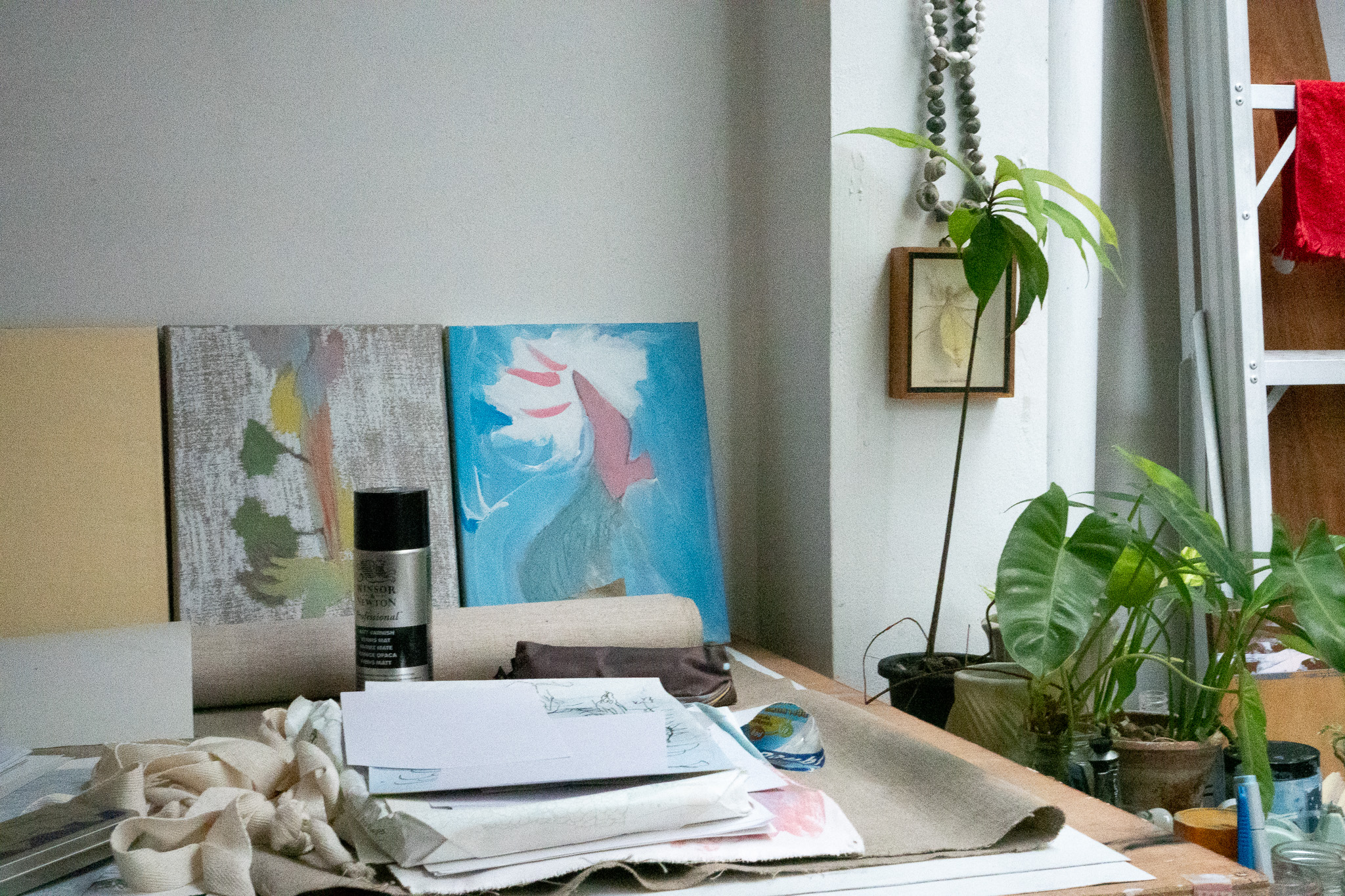
- มุมหนึ่งในสตูดิโอของเต้ที่เขายังคงเก็บงานสเก็ตช์หลายชิ้นเอาไว้
-
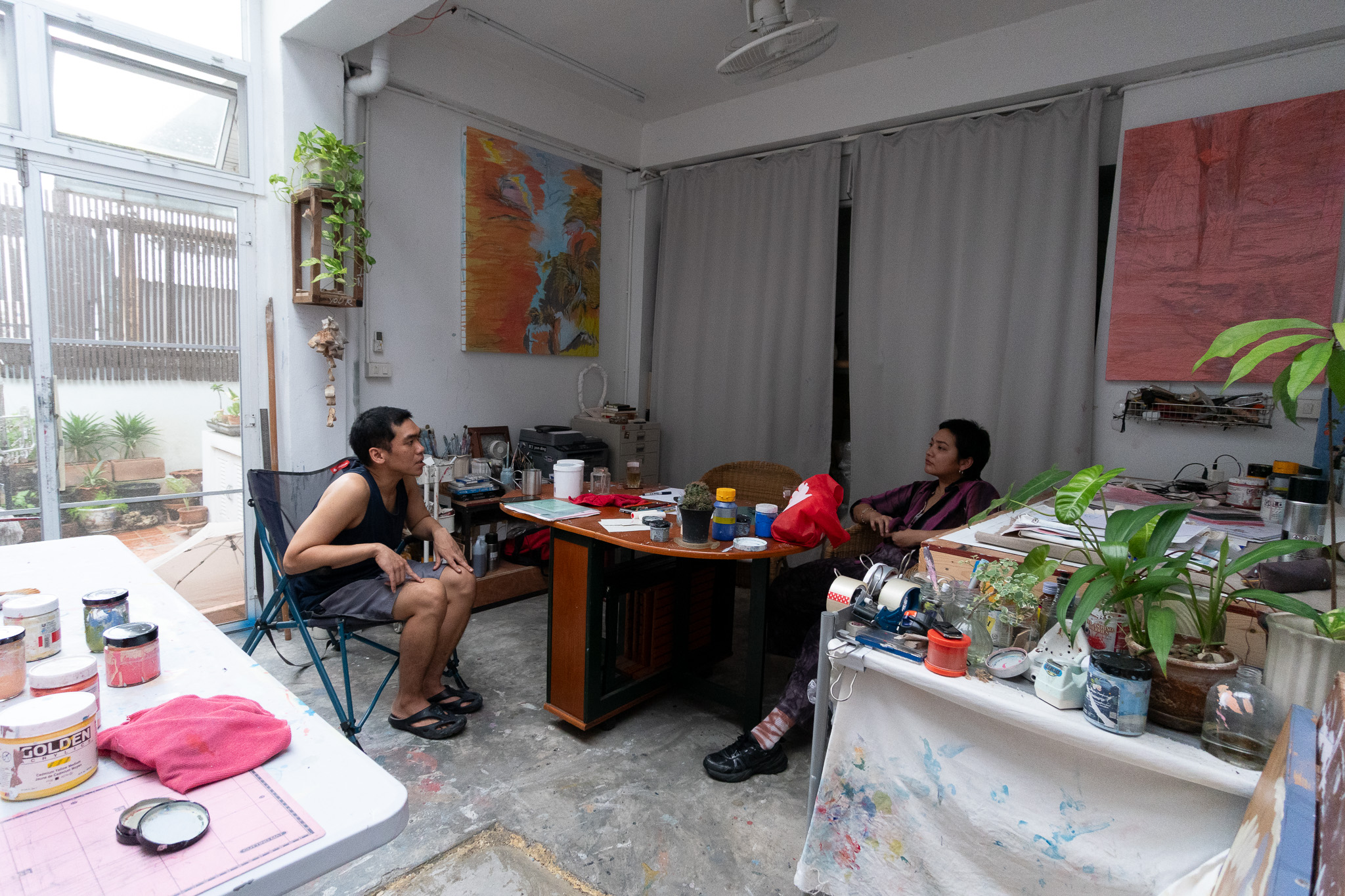
- บริเวณที่นั่งคุยกัน ดีที่ฝนตกทำให้แดดไม่แรงอย่างที่คิดไว้
แล้วตอนบ่ายทำอะไร<
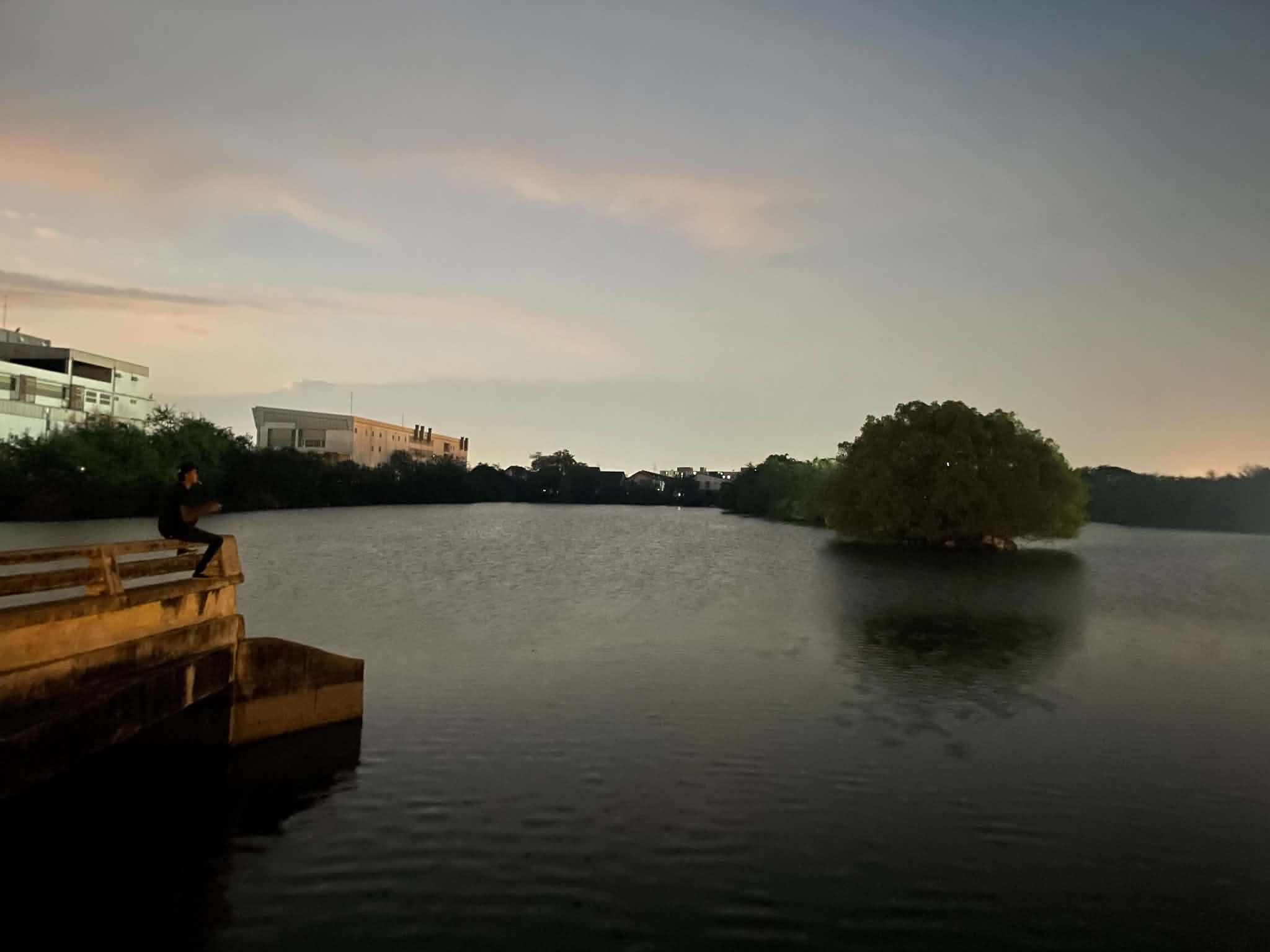
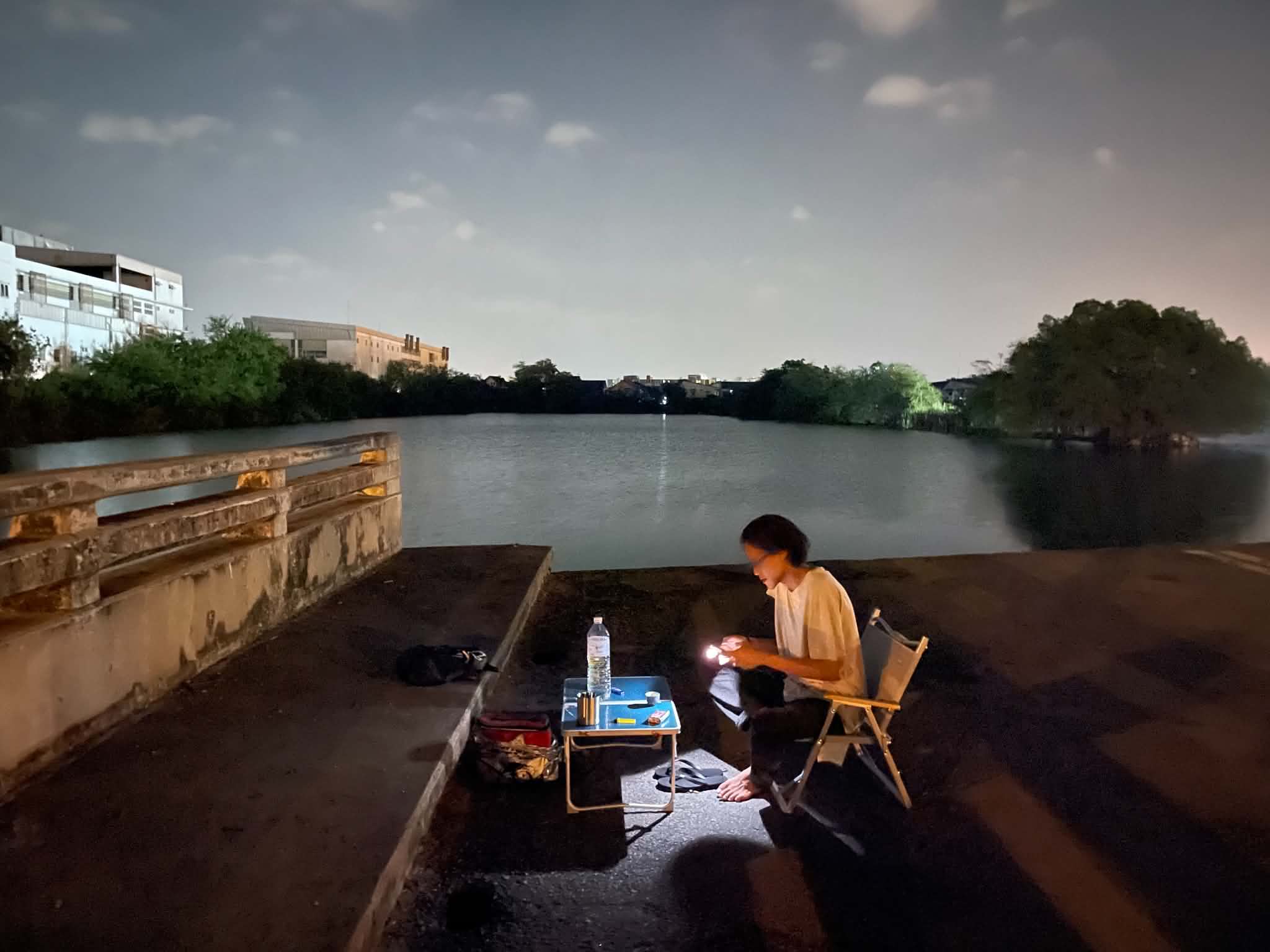
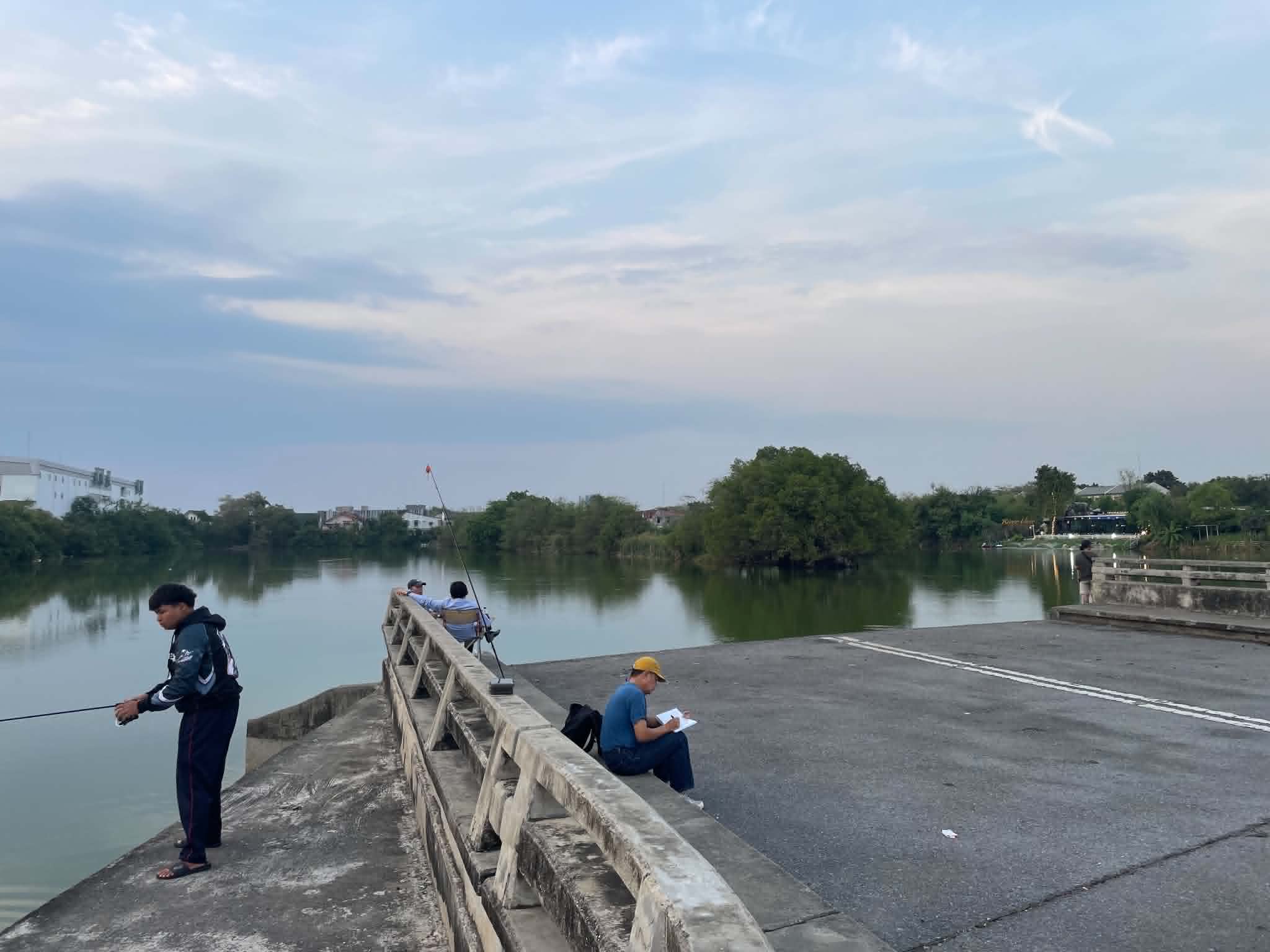
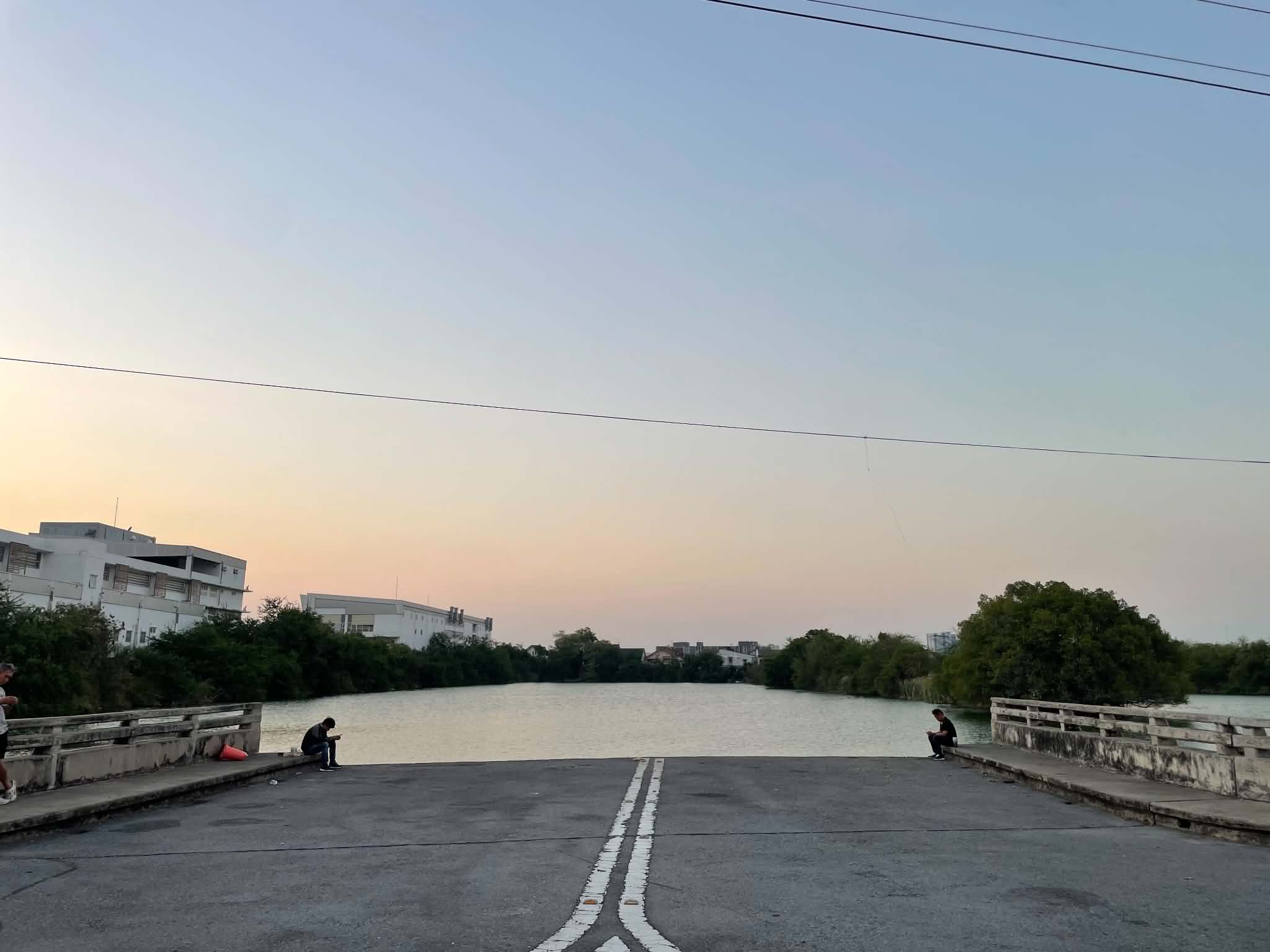
“ช่วงบ่ายก็จะทำอะไรในคอมพิวเตอร์ หาอะไรอ่าน ฟังเพลง รีเสิชค้นงาน แล้วก็ไปออกกำลังกายแถวบ้านตอนเย็น มีวิ่งบ้าง ขี่จักรยานบ้าง ว่ายน้ำบ้าง สลับไปสลับมา ไม่ไกลจากบ้านมันจะมีบึงที่เราชอบไปนั่งเล่น” บึงที่ว่าเป็นพื้นที่สาธารณะที่คนแถวนั้นชอบมานั่งชิว ตกปลากัน พี่เต้เล่าให้ฟังเพิ่มเติมว่าเขาเคยตั้งใจว่าจะกลับไปถ่ายซ้ำมุมเดิมเพื่อเก็บไว้ดูว่ามีกิจกรรมอะไรเกิดขึ้นบ้างที่นั่น
กิจวัตรแบบนี้หากเทียบกับตอนก่อนไปเรียน เปลี่ยนไปไหม
“ไม่เชิงนะ กิจวัตรเราเปลี่ยนไปเรื่อย อาจจะทุกๆ 3-4 เดือน คงเพราะว่าในทุกๆ 3-4 เดือนนั้นมันจะมีอะไรเข้ามาใหม่ มีงานเข้ามา ทำให้กิจวัตรเราเปลี่ยน”
หากลองนับดู คิดว่าเป็นเวลาเกือบสิบปีได้ที่ทำงานร่วมกับบางกอก ซิตี้ซิตี้ แกลเลอรี่ อยากรู้ว่าความสัมพันธ์นี้มันเริ่มมาได้ยังไง
“งานแรกที่ทำด้วยกันไม่ใช่นิทรรศการแต่เป็นงาน Hotel Art Fair ในปี 2560 ซึ่งก่อนหน้านั้นรู้จักกันเพราะว่า พี่อ๊อป–อรรคพล สุทัศน์ กับพี่ลูกตาล–ศุภมาศ พะหุโล มาดูนิทรรศการเราที่ Speedy Grandma งานนั้นเป็นนิทรรศการครั้งที่ 2 ที่เราได้แสดงที่กรุงเทพฯ หลังจากกลับมาจากเรียนที่ออสเตรเลีย นิทรรศการแรก Awkward Relationship ทำที่ JAM ในปี 2559 เราได้เจอกับพี่ลี–อัญชลี อนันตวัฒน์ เขาก็ชวนไปทำต่อที่ Speedy Grandma ในปีถัดมาใช้ชื่อว่า Mnus̄ʹychāti ซึ่งก็เป็นงานที่เราแฮปปี้นะ แต่จริงๆ พอมาถึงวันสุดท้ายงานไม่ได้ขายเลย เราก็เริ่มคิดแล้วว่าจะทำยังไงดี เพราะถ้าขายไม่ได้ก็ต้องกลับทำงานกราฟิกหรืออะไรสักอย่างที่เรียนมา
ทีนี้วันปิด ซึ่งฝนก็ตกแบบตอนนี้พอดี พี่อ๊อป พี่ลูกตาลเขามาดู พี่ลีก็ถามว่ารู้จักหรือเปล่า เราก็เดินเข้าไปคุย ซึ่งก็ไม่มีอะไร ต่อมาพี่ลูกตาลทักมาถามเรื่องงานประมาณว่างานเกี่ยวกับอะไร ทำอะไร ทำทำไม นู่นนี่นั่น ซึ่งเราคงเห็นเขาถามเยอะเลยชวนมาเที่ยวบ้าน มา studio visit ซึ่งตอนนั้นบ้านหลังนี้เราอยู่คนเดียว พ่อกับแม่ไปต่างจังหวัด แล้วพวกเขาก็มาที่บ้าน คุยกัน ก็ค่อนข้างคลิ๊กแหละมั้ง”
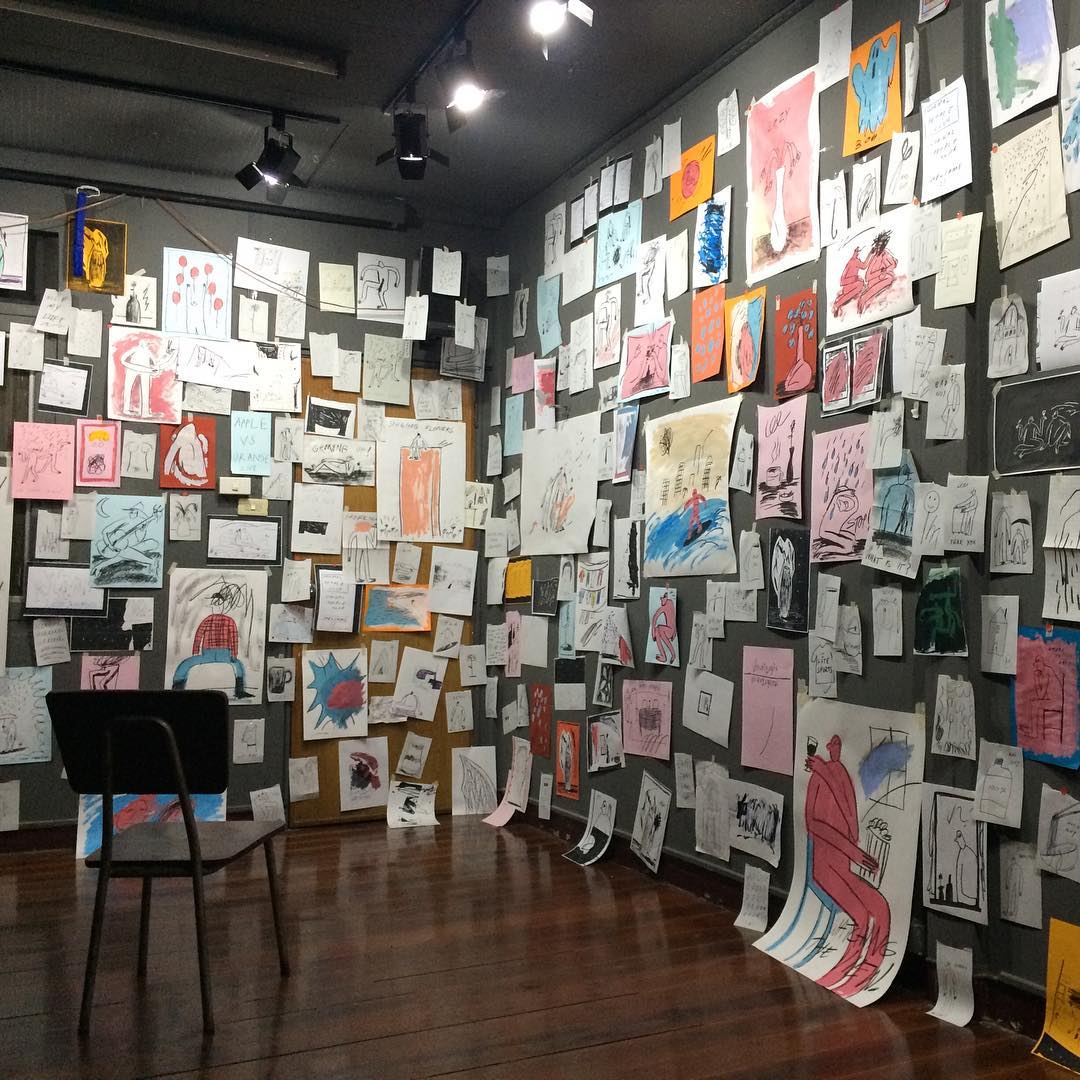
ภาพพถ่ายจากงานนิทรรศการ Awkward Relationship ที่ JAM © @taeparvit via instagram
ตอนนั้นอายุเท่าไหร่
“ตอนนั้นอายุ 22 หรือ 23 เอง กลับมาจากออสเตรเลียได้ปีเดียว ก็ไม่คิดว่าเขาจะชวนเราทำ เพราะรู้สึกว่าตัวเองเด็กไปนิดนึง ตอนแรกเราไปดูโชว์แรกที่แกลเลอรี่ ไม่นิทรรศการพี่เต๋อ–นวพล ธำรงรัตนฤทธิ์ ก็เป็นของพี่กฤต–กรกฤต อรุณานนท์ชัย นี่แหละ ซึ่งตอนนั้นก็แบบ เออยากโชว์ที่นี่นะ สักวัน อีกสัก 10 ปีมั้ง อยากทำที่แกลเลอรี่แบบนี้ ตอนนั้นพวกพี่เขาถามว่าอยากทำอะไร เราตอบว่าอยากเรียนต่อครับ อยากเรียนศิลปะ เพราะเราไม่เคยเรียน”
แล้วจากคนที่ไม่มีพื้นฐานด้านศิลปะมาสู่การทำงานศิลปะได้ยังไง
“เราเริ่มทำศิลปะ เริ่มวาดรูปเอง เริ่มอยากเป็นศิลปินโดยที่ไม่รู้อะไรเกี่ยวกับศิลปะหรอก แต่พอดีว่ามีเพื่อนตอนอยู่ออสเตรเลียชวนไปเพ้นท์กำแพง ชวนทำเสื้อ ทำ merchandise เล็กๆ น้อยๆ เริ่มต้นจากทำอะไรแบบนั้น เราก็ไม่คิดว่างานจะมาโชว์กับแกลเลอรี่ ทีนี้พอเขาถามว่าอยากทำอะไรแล้วเราบอกว่าอยากเรียนต่อครับ เขาก็แบบว่าเห้ย อย่าเพิ่งเลย ทำงานก่อน อยากแสดงที่นี่ไหม เราก็ได้พี่ โคตรตื่นเต้นเลย”
จากการพูดคุยในวันนั้นนำไปสู่การทำโปรเจกต์เล็กๆ และการทำงานนิทรรศการเดี่ยวในพื้นที่ที่ใหญ่ขึ้น พี่เต้มองการทำงานศิลปะในตอนนั้นเป็นแบบไหน
“เหมือนเส้นทางมันจะเป็นว่าเราแสดงงานที่ JAM รวมเพื่อนแกงค์ underground นิด ๆ โดยงานเราจะเป็นดรอวอิ้งหมดเลย ทำเป็นชิ้นเล็กๆ ติดเต็มห้อง แล้วก็มาที่ Speedy Grandma ก็จะมีความเป็น art space มากขึ้นแต่ยังไม่ถึงขั้นเป็น commercial gallery ที่นี่จะเป็นครั้งแรกที่เราได้ลองเพ้นท์บนแคนวาส ตอนนั้นยังเพ้นท์ในสวนข้างบ้านอยู่เลย เราเอาผ้าใบแขวนกับรั้วไว้แล้วเอาแคนวาสติดกับผ้าใบอีกทีนึง ตอนนั้นน่าจะใช้เวลาทำแค่อาทิตย์เดียว ซึ่งพอได้ลองกับแคนวาสรอบแรกก็ทำไซส์ใหญ่เลย ทำมันด้วยอารมณ์แบบลองดู เอาเต็มที่เลย มีงบแค่นั้นก็ซื้อแคนวาสมาม้วนนึง เอาใหญ่สุด ช่างมันไม่ต้องไปกลัว หลังจากนั้นพอมาเจอพี่อ๊อปกับพี่ลูกตาล พวกเขาก็มีความเป็นแกลเลอรี่มากขึ้น ซึ่งพอถึงช่วงที่จะต้องทำนิทรรศการเราก็คิดว่างานที่ทำมาก็มีความชัดเจนขึ้นแล้วก็อยู่ตัวประมาณนึง”
คำว่าชัดเจนไหนที่นี้หมายความว่าอะไร
“เรามีงานในยุคนั้นที่จะสนใจความก้ำกึ่งของความเป็น street art การทำ character และ abstract” พูดจบก็ลุกไปเอางานสเก็ตช์ที่มีเก็บไว้มาให้ดูเป็นตัวอย่าง “คือช่วงนั้นก็เริ่มรู้สึกอยู่ตัวกับสไตล์การทำงานของตัวเองพอสมควร และจริงๆ ก็แอบอยากลองทำอย่างอื่น แล้วพอดีนิทรรศการอันนั้นเป็นครั้งแรกก็เลยรู้สึกว่ามันเป็นเหมือนจุดพีคของการทำงานศิลปะที่เกิดขึ้น 3-4 ปีก่อนหน้านั้น”
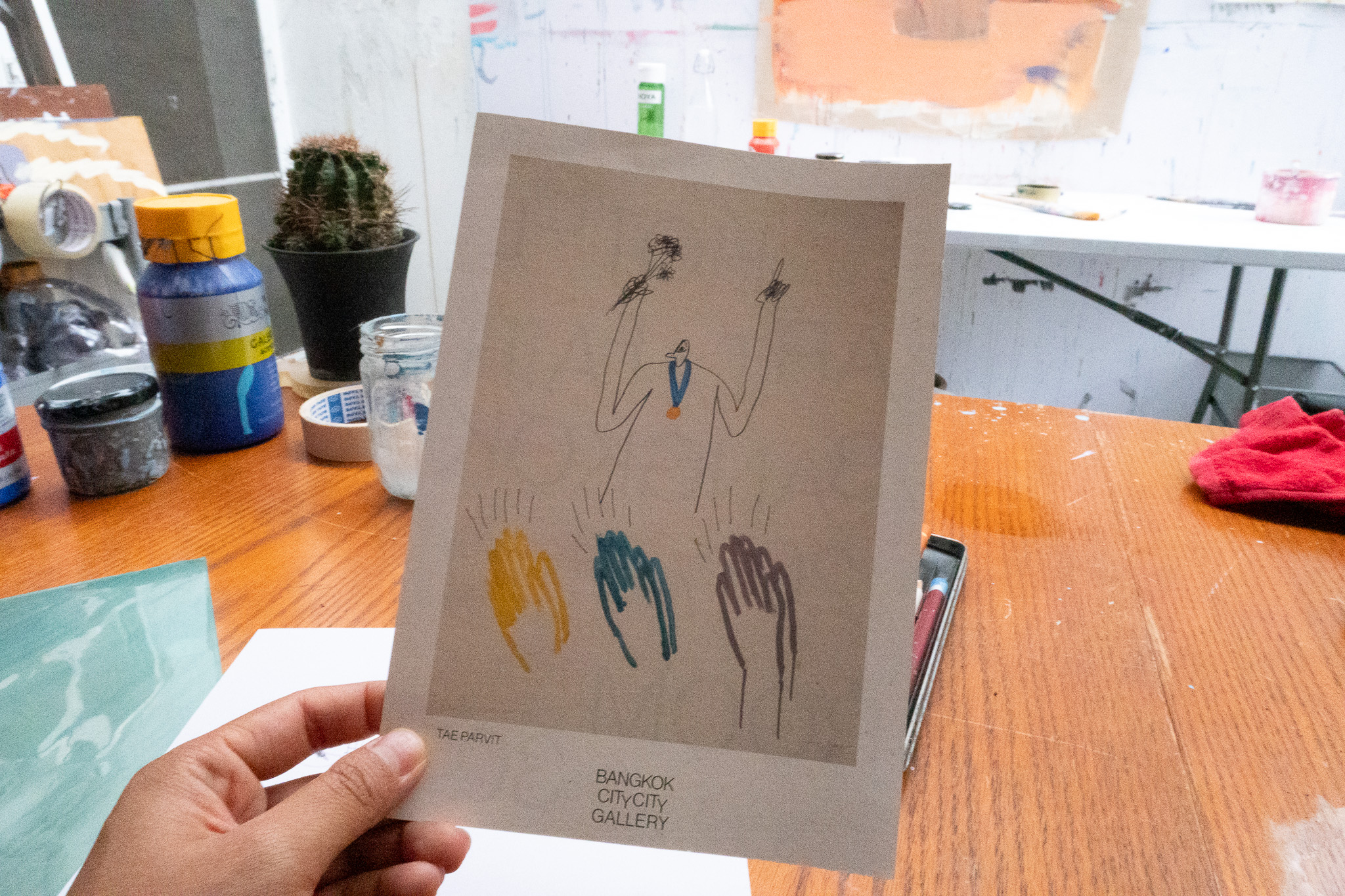
หลังๆ อาจจะได้เห็นงานเพ้นท์ติ้งของเต้บ่อยกว่างานสเก็ตช์บนกระดาษ อย่างลายเส้นในการ์ดใบนี้ก็จะยังคงคาแรกเตอร์คล้ายๆ กับงานที่เห็นในหนังสือทำมือที่เขาเคยทำอยู่ช่วงนึง
ก่อนหน้านี้ที่เมนชั่นถึงความกังวลเรื่องการขายเลยขอย้อนกลับไปถามนิดนึงว่าตอนที่ตัดสินใจทำนิทรรศการครั้งที่ 2 ที่ Speedy Grandma การทำครั้งนั้นคือการทดลองด้วยไหมว่าเราสามารถทำงานเป็นศิลปินเลี้ยงชีพได้หรือเปล่า หรือคืออะไร
“ปกติเราพยายามไม่คิดเรื่องการขาย ซึ่งตอนนั้นงานที่เลี้ยงเราได้คืองานกราฟิกหรืองานคอมมิชชั่นทำปกอัลบั้ม ขายของจุกจิก หรือเพิ่มเติมจากการขายงานภาพพิมพ์ที่ทำกับ The Archivist ซึ่งก็พออยู่ได้ แต่นิทรรศการที่สปีดี้ตอนนั้นเราตั้งใจทำในแบบที่อยากทำจริงๆ เรารู้สึกว่ามานั่งกังวลเรื่องการขายมันอาจจะทำให้งานออกมาไม่ดีเท่าไหร่ บวกกับเป็นคนชอบเสี่ยง ก็เลยเจ๊ง แต่เรื่องคนสนใจจะซื้อมันก็เป็นเรื่องของจังหวะเวลาด้วยแหละ”
ความที่เป็นคนที่ชอบวาดรูป แต่ไม่ได้คิดว่าจะเรียนไฟน์อาร์ตเลยทำให้เลือกจะเรียนกราฟิกดีไซน์แทน แต่หลายปีถัดมาตอนที่ต้องไปเรียนปริญญาโทต่อกลับเลือกเรียนไฟน์อาร์ต อยากให้อธิบายเพิ่มว่าความคิดหรือความอยากรู้ที่มันเปลี่ยนไปคืออะไร
“เราเลือกเรียนกราฟิกดีไซน์ในตอนนั้นเพราะรู้ว่าตัวเองชอบวาดรูปเลยอยากทำอะไรที่เกี่ยวรูปที่วาด แต่ไม่ได้คิดถึงการเรียนไฟน์อาร์ต เพราะว่าเราไม่เชื่อและไม่มั่นใจในการเรียนไฟน์อาร์ต ครอบครัวเราไม่มีใครที่เป็นศิลปินเลย ซึ่งก็คงเหมือนหลายคนที่คิดว่าเรียนไฟน์อาร์ตไปแล้วเราจะไปทำอะไรกินวะ จะทำงานอะไรวะ แล้วการเรียนกราฟิกดีไซน์มันเป็น practical ที่อย่างน้อยก็ยังให้สกิล ใช้หางานได้ ปรากฎว่าพอเรียนก็ไม่เวิร์คเลย เฟล”
พี่หมายถึงเฟลแบบไหน กับตัวเอง หรือกับระบบ
“รู้สึกว่าทำได้ไม่ดี เพราะทุกโปรเจกต์ที่เราได้โจทย์มาคืออยากวาดรูปใส่ไปให้หมด ซึ่งก็ไม่เวิร์ค เพราะเราไม่สามารถตอบโจทย์เขาได้ ครูก็บอกให้เราไปเรียนไฟน์อาร์ตเถอะ”
เคยมีความไม่มั่นใจในการทำกราฟิกเหมือนกับที่เคยรู้สึกกับการทำเพ้นท์ติ้งไหม
“สำหรับกราฟิกไม่เคยรู้สึกกลัวนะ ออกแนวรำคาญมากกว่า อาจจะเพราะว่ารู้ตัวว่าไม่ใช่คนที่ทำงานตอบโจทย์ได้ดีเท่าไหร่ ตอนนั้นน่าจะประมาณปี 2 ที่รู้ตัว แบบมาทำอะไรที่นี่เนี่ย ค่าเทอมก็แพง ทำยังไงดี จะแบบยกเลิกตอนนี้แล้วไปเรียนไฟน์อาร์ตก็รู้สึกแบบ อ้าวแล้วสองปีที่เรียนมาได้อะไร ก็เลยฝืนเรียนให้จบ โชคดีว่าได้เจอเพื่อนนอกโรงเรียน พวกคนที่อยากเป็นศิลปินเหมือนกันช่วงปี 3 ช่วงนั้นก็เลยแฮปปี้ละ มีคอมมูนิตี้เพื่อนที่ทำศิลปะด้วยกัน ส่วนเรื่องเรียนก็แค่เอาให้มันจบไป”
ถ้าสมมติว่ากราฟิกมันเป็นการทำที่มีโจทย์มากำกับ แล้วงานศิลปะที่ทำช่วงแรกๆ material ที่ทำให้เกิดงานมันมาจากอะไร
“จริงๆ ช่วงนั้นน่าจะเป็นคนชอบงานกราฟิกตามปกซีดีวงดนตรี หรือบนเสื้อยืด หรือปกไวนิล ผมจะชอบ culture ที่ขอเรียกว่า diy ที่มีความ punk ให้ aesthetic แบบ low-fi ไม่ได้เป็นไฟน์อาร์ตจ๋า ดิบๆ ไม่ต้องเพอร์เฟคมาก อะไรที่มันมีความเบี้ยวๆ ภาพที่ไม่ชัด รู้สึกว่าอะไรพวกนี้มันทำให้เรารู้สึกชอบ ซึ่งมันก็มากับดนตรีที่เราฟัง พวกดนตรีพังก์ ที่ไม่ต้องเล่นให้มันสมบูรณ์แบบ ไม่ได้แน่ใจขนาดนั้นว่าอะไรที่ดึงดูดให้เราสนใจในสิ่งนี้”
พอพูดถึงดนตรีก็ทำให้คิดถึงงานก่อนๆ ที่มักจะมีดนตรีเป็นส่วนหนึ่งของงาน อย่างเช่นในงาน Afternoon Person (2017) ก็ได้จัดกิจกรรม Afternoon Person Soundtrack ขึ้นในวันปิดนิทรรศการประกอบไปด้วยการเล่นดนตรีสดและเซสชั่นอิมโพรไวซ์ หรืองาน The Garden Club (2563) งานแสดงดนตรีต่อเนื่องไปกับการทำโยคะที่ต่อยอดมาจากการทำนิทรรศการ SAVAGE GARDEN (2562) ที่ pon ding ในไทเปเมื่อปีก่อนหน้า นอกจากดนตรีแล้วยังมีงานอนิเมชั่น งานวิดีโอ เป็นองค์ประกอบใน practice อยากรู้ว่าการถ่ายวิดีโอเริ่มมาตอนไหน
“เริ่มจากอนิเมชั่นก่อน ส่วนการถ่ายฟุตเทจน่าจะเริ่มตอนทำ Afternoon Person คิดว่าเพราะไปเห็นตัวอย่างมาแล้วก็คิดว่าตัวเองน่าจะทำได้ เราก็ไปเดินในบ้าน ในสวน ตอนนั้นก็ไม่ได้คิดอะไร ไม่ได้มองว่ามันสำคัญมากในงานเพราะว่าเราให้สิ่งนั้นกับเพ้นท์ติ้ง แต่ก็เลือกที่จะมีวิดีโอเลยเอามาใส่ในจอมอนิเตอร์ ให้วิดีโอเป็นแบคกราวน์ของภาพเพ้นท์ไป ซึ่งก็ทำแบบนั้นมาเรื่อยๆ แต่เอาเข้าจริง มาโฟกัสวิดีโอมากๆ ตอนไปเรียนต่อนี่แหละ เพราะว่ามันมีคอร์สฟิล์มวิดีโอ ซึ่งเราก็ชอบไปแจม เลยทำให้ได้ดูวิดีโอเยอะขึ้น เข้าใจวิดีอาร์ตมากขึ้น เข้าฟังเลคเชอร์มากขึ้น แล้วมันมีสตูดิโอให้เราได้ลองใช้ ก็เลยไปใช้ option ตอนนั้นเลยพักเพ้นท์ต้ิงไป 1 ปี โฟกัสมันน้อยลง”
แล้วถ่ายอะไรไปบ้างช่วงนั้น
“ถ่ายไปเรื่อยเหมือนเดิมเลย วันไหนคิดว่าอยากถ่ายก็จะพกกล้อง handycam ไป เหมือนมหาวิทยาลัยนี้เราจะสามารถยืมกล้องได้ 1 อาทิตย์แล้วค่อยคืน วันไหนเรารู้สึกว่า เห้ย ออกไปหาของถ่ายวิดีโอกว่า ก็จะเอากล้องติดตัวไว้ โดยที่ไม่รู้ว่าจะถ่ายอะไรหรอก แค่ขอมีติดตัวไว้ ไปเจออะไร spark ก็ถ่ายไว้ บางทีเพื่อนๆ นั่งอยู่ก็หยิบขึ้นมาถ่าย แล้วก็เอามาอีดิทรวมๆ กัน มันก็กลายเป็นเรื่องนึงได้ ปกติเวลาถ่ายเราจะทำงานกับโมเมนต์สิ่งที่เกิดขึ้นตอนนั้นเลย ไม่สามารถกลับมาหามันอีกรอบ ต้องทันที เพราะทำทีหลังก็อาจจะไม่ใช่ ไม่ว่าจะเป็นเพ้นท์ติ้งหรือถ่ายวิดีโอ
มีแสดงงานวิดีโอด้วยไหมตอนอยู่ที่นู่น
“มีนะ แสดงที่โรงเรียนนี่แหละ เราทำวิดีโอยาว 15 นาทีไว้ชิ้นหนึ่ง ฉายแบบ 4 จอผ่านโปรเจกเตอร์ 4 ตัว เพราะอยากเล่นกับไอเดีย installation ด้วย เหมือนเราต้องการภาพมัวๆ แล้วก็มี 4 ซีนทับซ้อนเล่นไปพร้อมกัน เราก็ตัดสลับกัน งานออกมาก็เหมือนเล่นไฟ มีเพื่อนมาทำเพลง เราก็ตัดเพลงคู่กับภาพ
อยากรู้ว่าแล้วมองเพ้นท์ต้ิงเปลี่ยนไปไหมหลังจากที่ทำงานวิดีโอมากขึ้น
“มันก็จะมีบางความคิดที่ยังติดค้างอยู่ในหัว แล้วก็เหมือนจะเอาออกมาได้พอมาทำเพ้นท์ต้ิง แต่คิดว่าไม่ถึงขนาดเปลี่ยนไปนะ ซึ่งพอกลับมาหาเพ้นท์ ก็จะเหมือนโฟกัสวิดีโอน้อยลงแล้ว
ถามเพราะว่าเวลาเราดูงานของเต้ ยกตัวอย่างชิ้นที่แสดงอยู่ในนิทรรศกร Neighbor ตอนนี้ รู้สึกว่าบางชิ้นภาพมันจะชัดมากในขณะเดียวกันบางชิ้นมันจะรู้สึกสั่นๆ เช่นภาพนกกำลังบิน หรือบางภาพอาจจะมีหลายเหตุการณ์ในชิ้นเดียว นั่นอาจจะเป็น montage หรือป่าว
“ใช่ คิดว่าตัวเองใช้เทคนิก montage ค่อนข้างเยอะ เหมือนเป็นวิธีเล่าเรื่องที่ถนัด เพราะว่า montage จริงๆ สำหรับตัวเองมันไม่ได้ชัดว่าจะได้คำตอบอะไร ชอบที่ทุกอย่างหยุดที่ตรงนั้น ไม่ได้ต้องการหาคำตอบ ก็เลยรู้สึกชอบวิธีนี้ หรืออย่างตอนเด็กๆ ก็ชอบทำงาน collage ตัดแมกกาซีนแล้วเอามาแปะรวมๆ กัน”
มันจะมีมุมนี้นิดนึงเหมือนกันนะ พี่โรสว่า นึกย้อนไปถึงตอนวันเปิดงาน “จะมีเพื่อนมัธยมที่ไม่ได้เป็นสายศิลปะที่มา แล้วก็เหมือนเป็นครั้งแรกที่เขามาดูงานพี่ เพราะว่าเขาไม่ได้เคยเห็นว่าโรสทำอะไร แล้วเขาก็ดูงานเต้ เสร็จแล้วก็ถามว่า อธิบายหน่อยว่างานนี้คืออะไร แล้วเขาก็ดูเหมือนจะมีความกลัวเล็กๆ ในความหมายที่กลัวเดาผิด หรือว่าไม่รู้คืออะไรก็จะเรียกเต้มา แล้วถ้าจำไม่ผิดเหมือนเต้ตอบประมาณว่า ไม่ได้คืออะไร อะไรประมาณนั้นไหม”
“เหมือนกับตอนนั้นเขาถามว่า คิดอะไรอยู่ กับมีถามว่า เหมือนไม่รู้ว่าต้องคิดอะไร ไม่รู้ว่าต้องเข้าใจอะไร เราก็ตอบว่า เราก็ไม่ได้คิดอะไรเหมือนกัน ไม่ได้เข้าใจเหมือนกัน ไม่ต้องเข้าใจก็ได้ หรือวันอื่นก็มีคนแชร์ว่าดูภาพไม่เป็น ดูยังไง เราก็ไม่แน่ใจว่าจะอธิบายยังไงก็เลยถามเขาว่าเขาเห็นอะไร เขาก็บอกว่าเหมือนภาพมันพยายามจะเล่าเรื่อง อยากจะบอกอะไรสักอย่าง เราก็บอกว่า แค่นั้นก็จะพอแล้วนะ ซึ่งสำหรับเราความอยากจะบอกอะไรสักอย่างเป็นความคลุมเครือที่เราโอเคนะ เพราะก็ไม่ได้มีอะไรที่อยากจะบอกชัดเจน ซึ่งเราว่ามันน่าสนใจเพราะมันจะถูกตีความไปเป็นอะไรก็ได้แล้วแต่คนหรือประสบการณ์ของเขา ว่าเขาจะตอบรับมันยังไง
ซึ่งในทางกลับกันหากพี่เต้กลายเป็น audience ของสิ่งอื่นมีคำถามกับสิ่งที่เราเผชิญหน้าอยู่ไหมว่ามันคืออะไร
“คิดว่าเป็นได้ทั้งสองแบบ อาจจะถามเพราะว่าอยากคุยกับศิลปินหรืออาจจะอยากฟังศิลปินพูด แต่เราก็ชอบสัมผัสกับประสบการณ์นั้นผ่านตัวเราเอง เช่น ฟังหรือดูสิ่งนี้แล้วเราเห็นอะไร ได้ยินอะไร ก็เอามาตอบตัวเอง คิดว่าสำหรับบางคน ความรู้สึกไม่ได้ความหมายหรือว่าไม่รู้ว่ามันคืออะไร มันทำให้รู้สึกอึดอัดนิดนึง เหมือนมันไปไม่ถูก เลยไม่ได้ comfortable ที่จะดูมันต่อ ในขณะที่บางคนจะรู้สึก enjoy กับมันไปเลยก็ได้ จริงๆ เราก็อยากให้งานเราคุยได้กับทุกคน ไม่ต้องเป็นคนที่เข้าใจศิลปะก้ได้ เพราะฉะนั้นเราก็เลยปล่อยให้งานมันเป็น open-ended ให้ทุกคนมา experience ได้หลายๆ แบบ งานมันก็โตได้ด้วย”
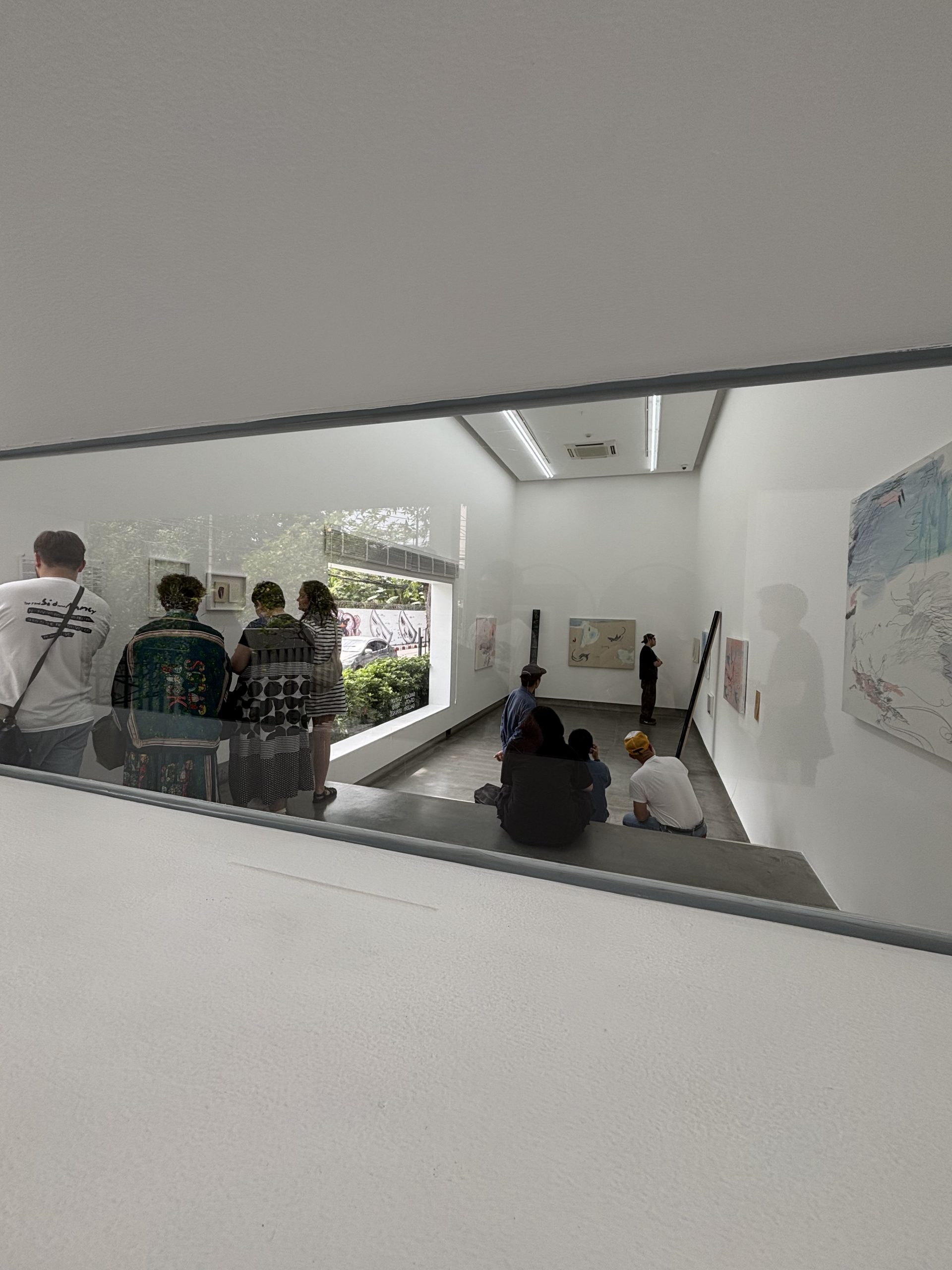
ภาพนี้จากงานวัดเปิดที่ถ่ายเก็บไว้ พอมาเปิดดูอีกครั้งจะพบว่าในฝั่งซ้ายมือจะเป็นครอบครัวของพี่โรสที่ยืนดูงานอยู่
~~~
“วันก่อนเห็นโพสต์โปสเตอร์งาน Hotel Art Fiar 2026 ซึ่งใช้งานเพ้นท์รูปโคมไฟของเราทำให้นึกได้ว่าจริงๆ ไม่ค่อยได้เพนท์งาน still life เท่าไหร่ แต่งานชิ้นนี้เกิดขึ้นพร้อมกับเหตุการณ์และช่วงเวลาที่ค่อนข้าง trigger ความรู้สึกเรามากพอสมควร คือช่วงนั้นเป็นช่วงเพิ่งเรียนจบ หลายคนก็ย้ายออกจากสตูดิโอไป ก็เหลืออยู่ไม่กี่คนที่ยังใช้สตูดิโออยู่ บรรยากาศก็ดีมาเลย แบบทั้ง campus จะเงียบๆ มีคนนิดหน่อย เป็นช่วงเวลาก่อนบอกลา แล้วก็เป็นช่วงหน้าร้อนพอดี แล้วช่วงนั้นเราก็เริ่มสนิทกับเพื่อนคนนึง แล้วเราก็ไปที่สตูดิโอเค้า แล้วไปเห็นหนังสือ David Hockney วางอยู่ ซึ่งเราไม่ได้ดูงาน Hockney มานานมากแล้ว คือเราชอบงานเค้ามาก แต่ด้วยเวลาผ่านไปก็อาจจะไม่ได้ให้ความสนใจมาก แต่สุดท้ายก็ยืมหนังสือของเพื่อนคนนั้นมา ซึ่งจริงๆ คือแค่อยากหาเรื่องไว้คุยกันต่อด้วยแหละ แต่ก็อยากยืมจริงๆด้วย ก็เลยทำให้ได้กลับมาตื่นเต้นกับงานของ David Hockney อีกครั้ง ก็เลยเพนท์โคมไฟที่อยู่ในสตูดิโอนั้นขึ้นมา”
-
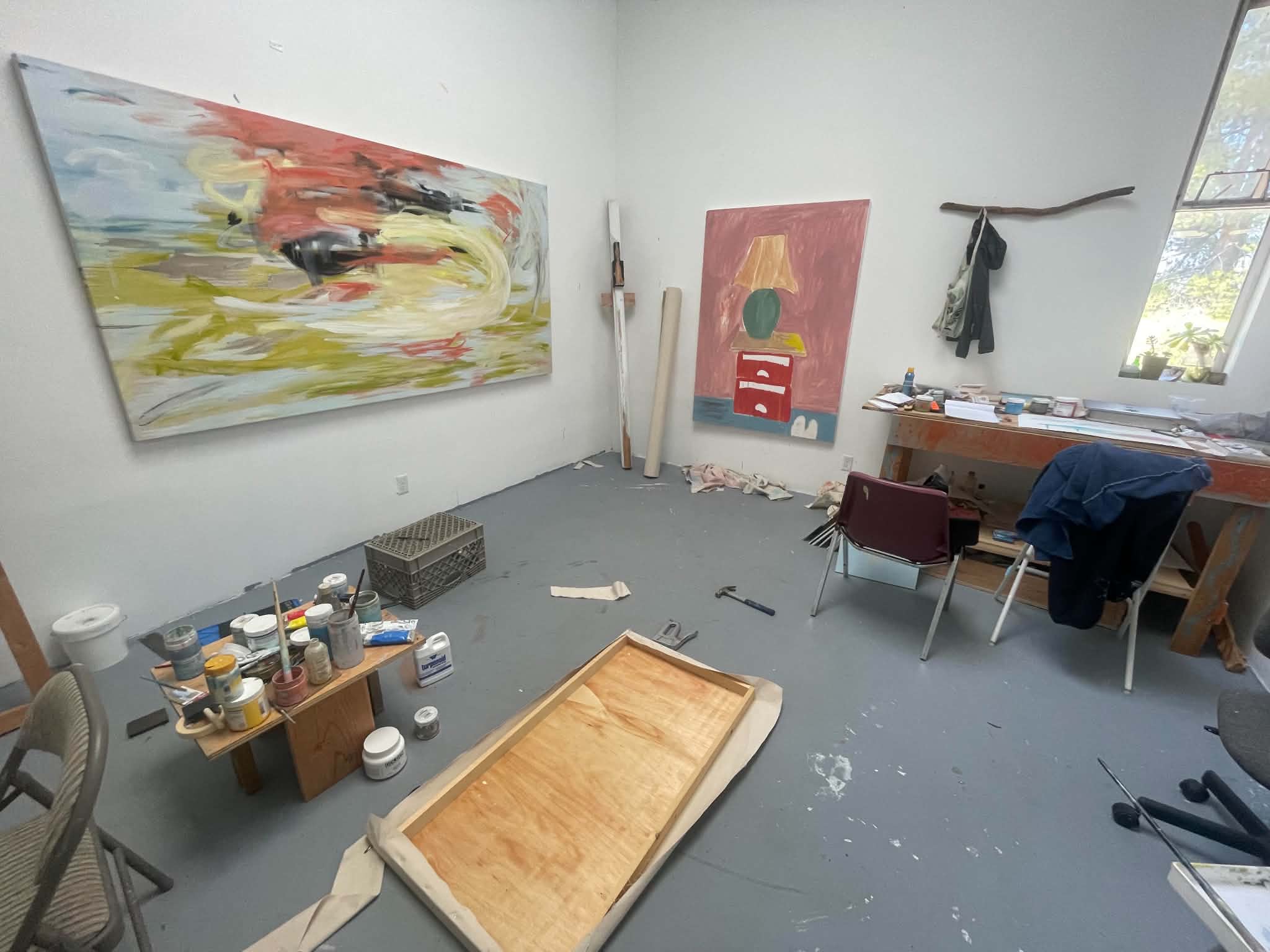
- ภาพวาดแจกันในสตูดิโอโดยทำขึ้นในปี 2567 ©Tae Parvit
-
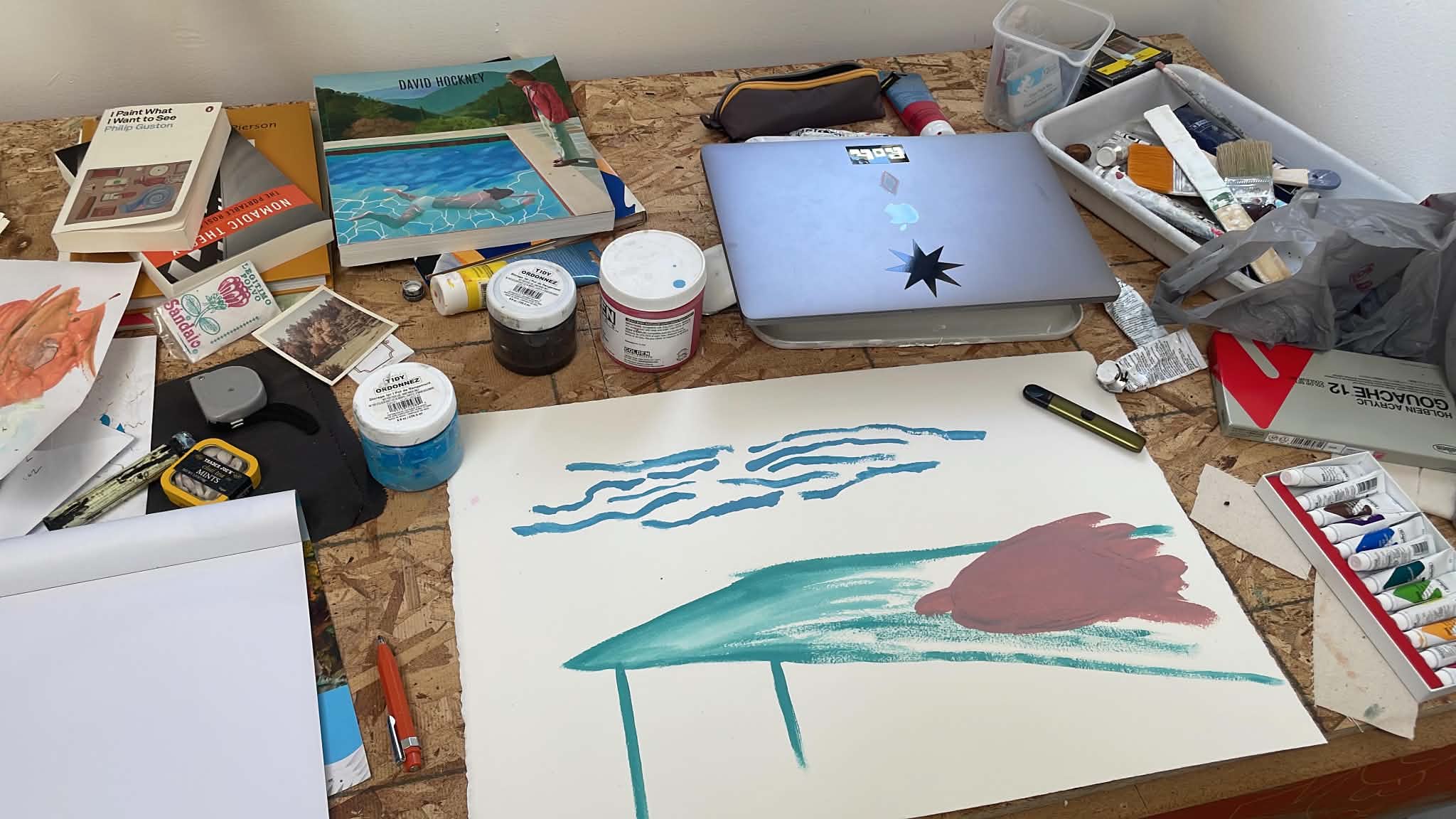
- สเก็ตช์ภาพพร้อมกับหนังสือ David Hockney ที่ยืมมา ©Tae Parvit
“แต่ถ้าให้พูดถึงงาน still life จริงๆ ในงานเราจะมีช่วงที่มาเพนท์แจกันดอกไม้ แต่ไม่ได้เพนท์แบบไปมองมันแล้วพยายามเพนท์แบบเก็บดีเทลนะ น่าจะเป็นการเพนท์แบบที่มันตรงกันข้ามคือมาจากจินตนาการมากกว่า และด้วยความตั้งใจด้วยแหละว่าไอ้สิ่งนี้มันคือของน่าเบื่อ เหมือนเวลาไม่รู้จะเพนท์อะไรก็จะเพนท์แจกันดอกไม้ ซึ่งก็คิดอย่างงั้นจริงๆ แต่มันก็ใช้เป็นการ exercise ไปด้วยในตัว แต่พอเพนท์ไปเรื่อยๆ หลายๆ ยุค ก็เริ่มรู้สึกว่าแจกันดอกไม้นี่มันเริ่มมีชีวิตที่แตกต่างกันไปในแต่ละยุค เหมือนมันเริ่มกลายเป็น self portrait ของเราไปด้วยในตัว นี่เดี๋ยวถ้าเข้าไปในบ้านจะเห็นว่ามีแจกันดอกไม้ทั้งของจริงและรูปวาดอยู่จำนวนนึงเลย ในหลายๆ มุมของบ้าน”
พอเราย้อนกลับไปพูดถึงงานเพ้นท์ติ้งที่ตั้งอยู่ตรงหน้าในห้องทำงานกันอีกรอบ ซึ่งพอฝั่งพี่เต้เล่าแล้วเลยทำให้นึกถึงตัวเองนิดนึง ด้วยความที่เคยติววาดรูปพื้นฐานมาบ้างตอนเด็กเพราะเคยอยากสถาปัตย์ ฯ กับศิลปกรรม เลยจะใช้การวาดสเกตช์เป็นตัวช่วยคลายเครียด เพราะเล่นดนตรีไม่ได้ แล้วก็ไม่ได้อยากอ่านหนังสือหรือนอนไปเลย ก็เลยจะชอบวาดพวกขวดน้ำ แก้ว แจกัน ของทรงกระบอกที่มันอยู่ตรงหน้า เพราะคิดว่ามันง่ายแต่ในขณะเดียวกันก็รู้สึกว่ามันยากเพราะมันหลอกตา “หรือว่าในยุคนั้นมันแจกันอาจจะเป็นของที่ง่ายที่สุดที่จะเทรนสกิลเพราะมันได้ทั้งฟอร์ม เงา เท็กซ์เจอร์ แสงที่ตกกระทบ มันเหมืนอวาดหนึ่งสิ่งแล้วอาจจะได้ครบหมด มันก็เลยเป็นฟอร์มที่เราอาจจะเห็นอยู่บ่อยๆ แจกันดอกไม้ตั้งอยู่บนโต๊ะ แล้วถ้าตอนนี้เต้วาดแจกัน เป็นพี่จะชอบถ่ายน้ำ คือถ้าเห็นน้ำเมื่อไหร่จะชอบถ่ายเป็นวิดีโอเก็บไว้” พี่โรสแชร์เพิ่มเติม
นอกเหนือจาก David Hockney ที่เล่ามาก่อนหน้านี้พี่เต้เคยอยู่ในโหมดที่อยากจะทำความรู้จักหรือเรียนรู้งานเพ้นต์ติ้งจากศิลปินคนอื่นผ่านการเปิดหนังสือดูบ้างไหม
“ถ้าศิลปินที่เราดูงานเพ้นท์เขาก็มีบ้าง อย่างเราชอบฟรานซิส เบคอนมาก รู้สึกว่าเป็นเพ้นท์เตอร์ที่เราเซฟรูปไว้ในโทรศัพท์ แล้วเป็นคนที่เรามองเห็นกี่ทีก็ยังรู้สึกกับรูปเขาอยู่”
แล้วพอได้ไปเรียนในโรงเรียนศิลปะจริงๆ ตอนปริญญาโท รู้สึกยังไงหรือมันให้อะไรกลับมาบ้าง
“โรงเรียนนี้ดีอย่างหนึ่งคือมันไม่ค่อยมีกรอบเท่าไหร่ เขาจะค่อนข้าง experimental เหตุผลที่เลือกไปก็เป็นเรื่องนี้ส่วนหนึ่ง ที่เหลือก็เป็นเรื่องความเป็น diy punk lofi แล้วทีนี่มีทุกอย่างเลย แต่สิ่งหนึ่งที่เราชอบมากคือความหลากหลาย อย่างรุ่นเราสมมติมี 20 คน แต่ละคนทำงานที่ไม่มีเหมือนกัน ไอเดียไม่เเหมือนกันเลย พูดคนละเรื่องหมดเลย แล้วการที่ต้องมานั่งคุยหรือวิจารณ์กับคนที่คิดอะไรไม่เหมือนเรา รู้สึกว่าสิ่งนั้นมัน open mind มากๆ มันไม่ใช่ลัทธิของคนที่เชื่อสิ่งเดียวกันหรือทำอะไรเหมือนกัน การเชื่อคนละแบบแล้ววพูดถึงงานของแต่ละคนในสิ่งเราเห็น พูดในสิ่งที่เราเข้าใจ แล้วทุกคนก็ฟังตอบโต้กัน เราคิดว่าสิ่งนั้นมัน wonderful มากในโรงเรียนศิลปะ มันก็เลยทำให้เชื่อว่าเราไม่ได้ต้องการความเข้าใจอะไรมากหรือว่าเรียกร้องพื้นฐานทางศิลปะเพื่อที่จะเป็นศิลปิน แล้วสิ่งที่สำคัญมากๆ คือ support จากคนรอบข้าง ก็จะมีคนที่เด็กกว่าที่ดูไม่มั่นใจในสิ่งที่ตัวเองทำ แต่ว่าเรามีเซสชั่นที่มาพูดถึงงานที่เจ้าของก็ไม่รู้ว่ามันคืออะไรเป็นชั่วโมง สุดท้ายงานมันก็กลายเป็นอะไรขึ้นมาทันทีเลย”
พอพ้นการเตรียมงานสำหรับนิทรรศการ Neighbor ไปแล้ว ตอนนี้กำลังทำอะไรอยู่
“ช่วงนี้ซ้อมเปียโนอยู่ครับ อยากส่ง MUSIC PROJECT (หัวเราะ)
คือเราซ้อมเปียโนเพราะมันมีอยู่แล้วที่บ้าน แล้วก็เคยเรียน เหมือนเราเรียนเปียโนมา 9 ปี แต่รู้สึกว่าตัวเองเล่นไม่ได้ รู้สึกว่าที่ตัวเองเล่นมันผิดไม่เหมือนกับที่เทรนมา เราเคยต้องขึ้นเวลาทีแสดง แต่จำโน๊ตไม่ได้ งานนั้นก็เลยเจ๊ง ตอนนี้ก็เลยกำลังพังกำแพงนั้นอยู่ พยายามเข้าใจมันอีกแบบ หัดเล่นใหม่และดูว่าสิ่งที่เราเคยเทรนมามันให้อะไร พยายามจับว่าตัวเรา react กับเปียโนยังไง แต่จริงๆ เราไม่ใช่คนที่เล่นเพลง classical หรือ pop หรือเล่นตรงคีย์ได้ แต่มันคงเหมือนเพ้นท์ติ้งคือใส่หรือกดแป้นไปเรื่อย”
เหมือนเป็นการ improvisation แล้ววิธีการคล้ายกับการทำเพ้นท์ต้ิงไหม?
“ใช่ แล้วแต่ mood คือเราก็ไม่รู้ว่าที่กดลงไปคือโน๊ตหรือคอร์ตอะไร แต่เราชอบเสียงนี้ก็จะกดไปเรื่อยๆ ช่วงนี้เลยชอบฟังเพลงของศิลปินที่ทำ demo หรือเพลงที่คอร์ดพังๆ เราก็ชอบฟัง ก็คิดว่าเพลินดีเหมือนฟังคนพูดไปเรื่อย พึมพำพึมพำอยู่ในแบคกราวน์ แต่ละวันก็จะกดไม่เหมือนกันก็จะพยายามอัดไว้ ซึ่งเราคิดว่ากระบวนการก็คล้ายกับการทำเพ้นท์ติ้งมากเลย”
แล้วนอกจากนี้ได้เขียนหรือมีหนังสือที่แนะนำไหม
“เขียนก็มีบ้าง เคยอยากลองเขียน poem ดู มีช่วงนึงพยายามเขียนไดอารี่ตอนเรียนอยู่ น่าจะเพราะเครียดด้วยมั้งไม่รู้จะทำยังไงก็เลยเอาออกมาบนกระดาษ หรือจะมีช่วงที่ชอบไปดูงานเท็กซ์ หมายถึงว่างานที่ใช้เท็กซ์เป็น medium หรือการมองมันเป็น sculpture คือมันคงเหมือนเปียโนแหละว่าถ้าให้ทำตาม structure หรือออกมาเป็นพารากราฟ จะคิดว่าทำไม่ได้ แต่ถ้าโยนโยนเข้าไปคิดว่าพอทำได้
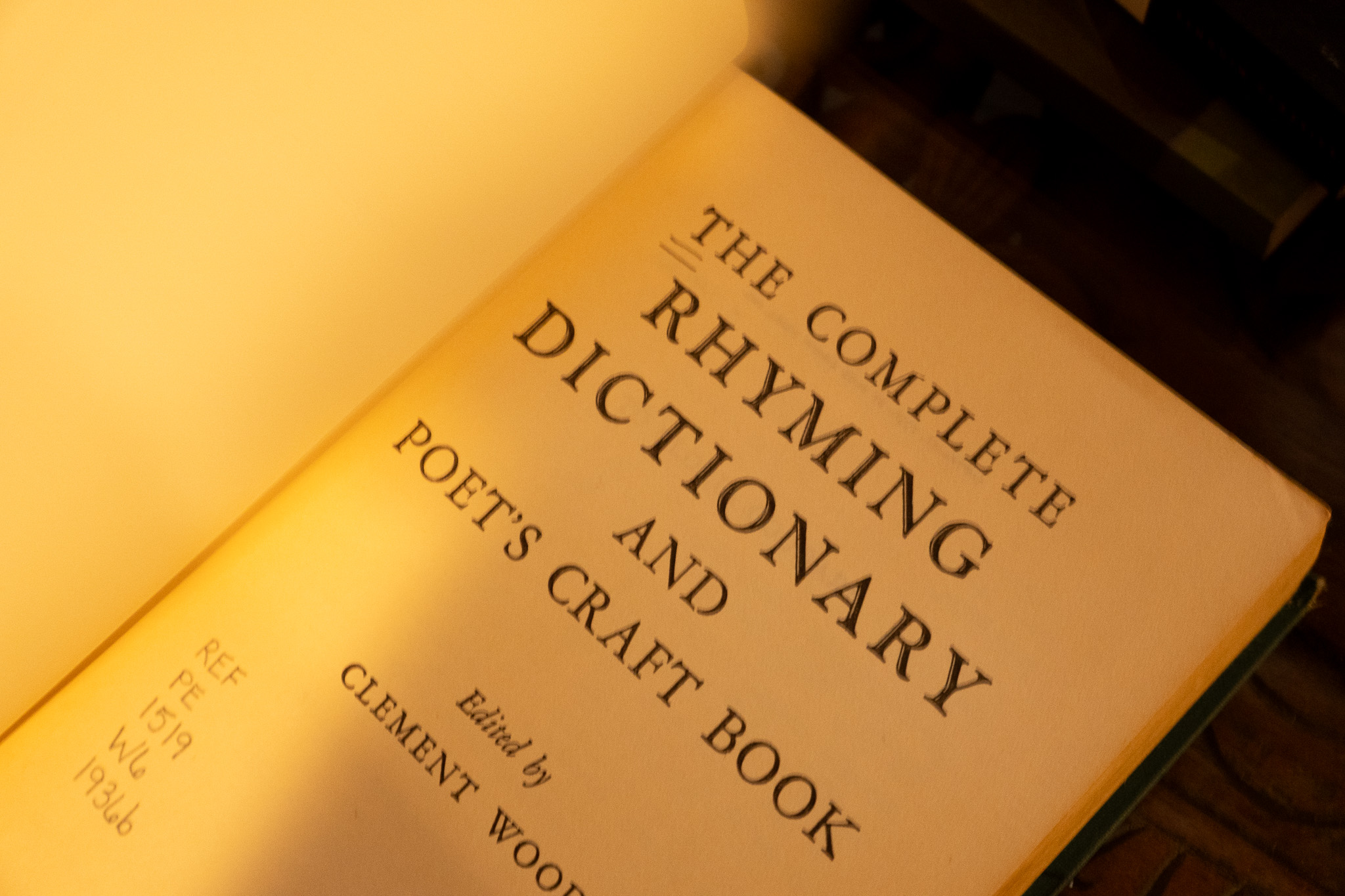
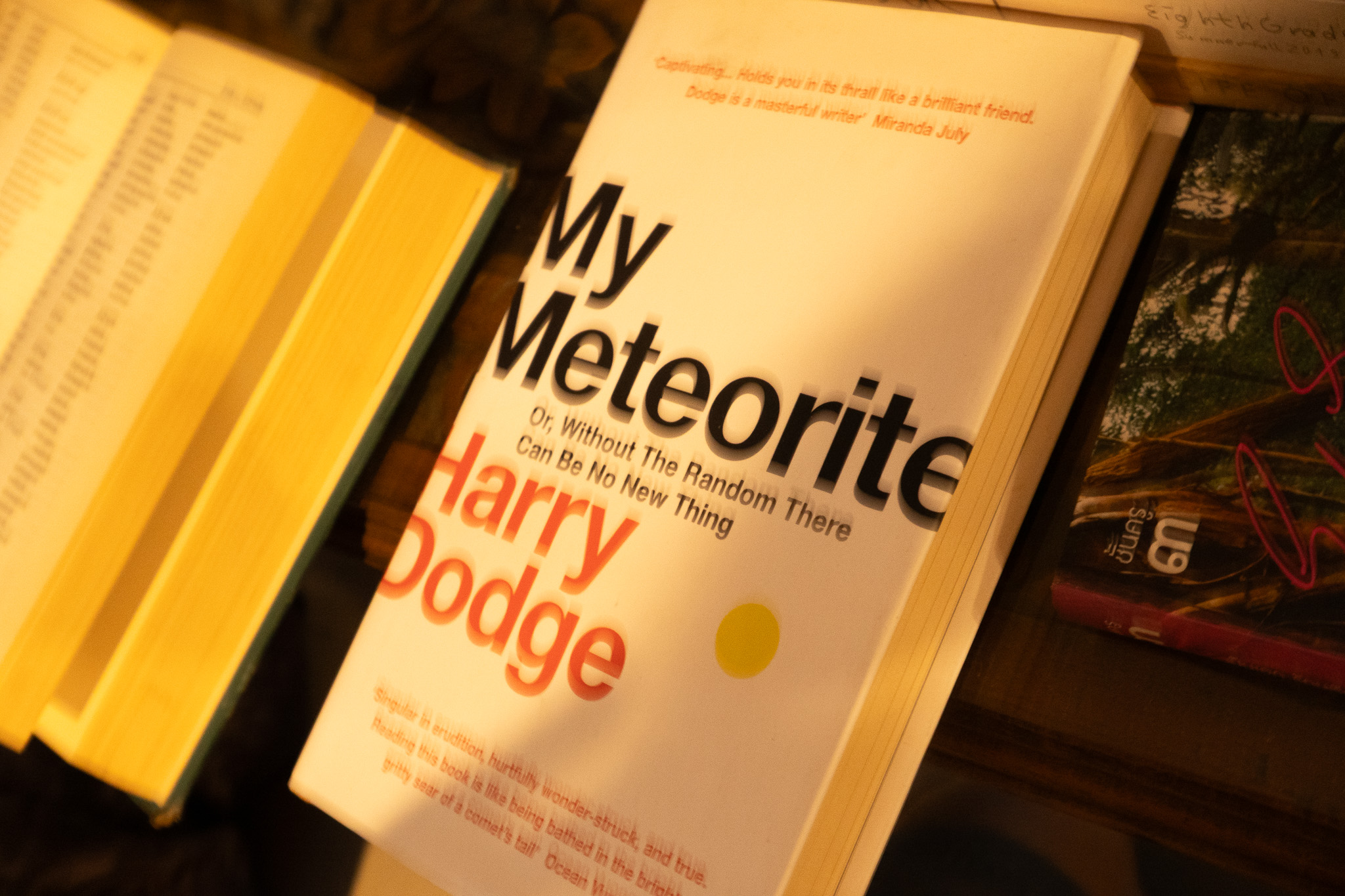
มีหนังสือที่ขนกลับมาจากที่นู่น อย่างเล่นนี้ The Complete Rhyming Diction and Poet Craft Book ซื้อมา 1 เหรียญ คือบางทีเราจะชอบเสียงของคำที่มันไม่ได้มีควาหมาย บางทีเหมือนความหมายมันไม่ต้องมีก็ได้นะ แค่เราเอาคำที่เราชอบเสียงมาอยู่ด้วยกัน หรือแค่ชอบตัวอักษรแล้วเอามาเรียงกัน อันนี้เป็นอีกเล่มที่ชอบอ่าน My Meteorite เขียนโดย Harry Dodge เขาเป็นอาจารย์ที่ปรึกษาของเรา ตัวเขาเป็น scluptor เรียนกับเขา 2 ปี หนังสือเล่มนี้เป็นเรื่องของเขาในยุค 90s เขาเป็นเด็กกำพร้าแล้วก็มีวันหนึ่งเขาอยากไปตามหาแม่ตัวจริงที่ San Fransisco จะมองว่าเป็น autobiography ก็ได้แต่วิธีการเล่าเรื่องของเขาดีมากเลย คือมันเหมือนเรื่องสั้นหลายๆ ช่วง แล้วมันไม่ได้เรียงต่อเวลากันขนาดนั้นซึ่งเราก็เข้าใจว่ามันเกี่ยวข้องกันยังไง เราชอบเขามากเลย เป็นคนที่ทำให้เรารู้สึกว่าชอบการอ่านเพราะว่าวิธีการเล่าเรื่องและการที่ไม่แคร์ว่าภาษาจะเป็นยังไง”
~~~
นวมินทร์ first time ของเราที่เป็นการใช้เวลาอยู่ในพื้นที่ ไม่ใช่แค่การสัญจรผ่านจบลงร้านอร่อยอีกครั้งก่อนกลับบ้าน หลังจากสัมภาษณ์พี่เต้เสร็จ พวกเราทั้งสามคนเดินไปที่บ้านวัยเด็กของพี่โรสต่อ ด้วยระยะทางที่ใกล้กันมากในระยะที่เดินถึง ผนวกกับร้านอาหารมื้อเย็นที่ตั้งใจจะไปฝากท้องในตอนแรกซึ่งเป็นอีกร้านที่พี่เต้แนะนำ ก็ดันเป็นร้านเพื่อนของคุณน้าพี่โรส (ที่สุดท้ายแล้วเราจะไม่ได้ไปกินเพราะร้านปิด) พวกเราจึงมานั่งคุยสัพเพเหระเรื่องอื่นๆ กันต่อในร้านอาหารป่าที่ได้ทำการจดลิสต์ไว้ในใจแล้วว่าต้องมาซ้ำ
-
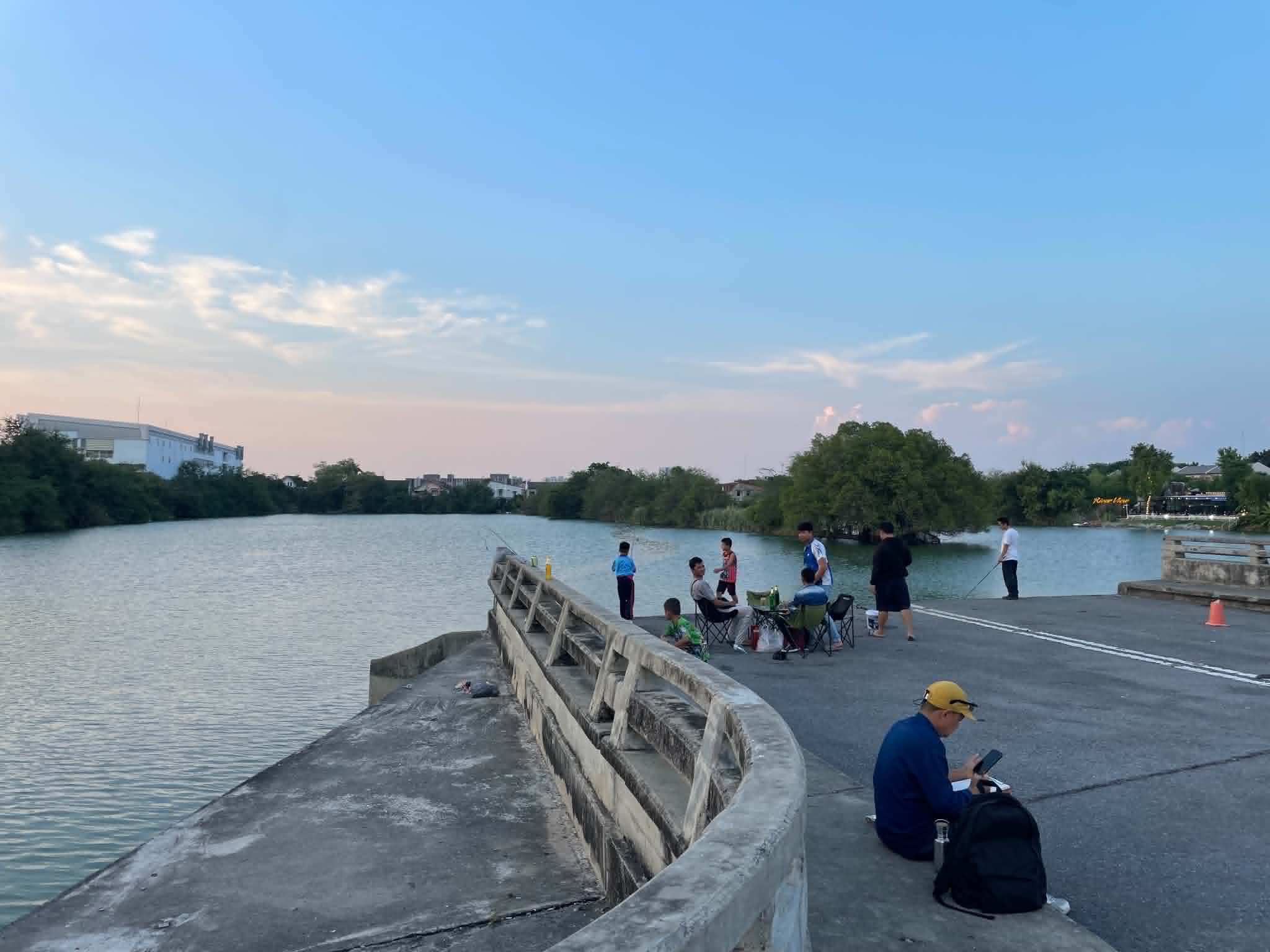
- ภาพของบึงแถวบ้านที่เล่าให้ฟังช่วงต้น
≋-≋-≋-≋-≋-≋-≋-≋-≋-≋-≋-≋
Interview with Rose–Puangsoi Aksronsawang
Story and photography by Praew–Kantida Busaba
One of the most common ways of beginning to get to know someone is to ask where they are from. And if the answer happens to be that one grew up in Bangkok, but does not necessarily feel a sense of “Bangkokness,” then further explanation is usually required as to what Bangkok, the city built by a different deity, means in my own perception and experiences.
The request to interview Tae—or Tae-Parvit—who lives around Nawamin, an area that ranks among the least familiar parts of the city for me, even though I once lived around Don Mueang and studied near Lak Si, made it feel like a long journey, despite the fact that it was, in reality, only a trip within Bangkok.
The day we arranged the interview was the same day I returned from Roi Et. I skipped breakfast because I had planned to try the Northern Thai food that Tae had insisted was excellent. The drive from Don Mueang Airport to Nawamin felt strangely unfamiliar, as roads I had once used had changed alongside the construction of the elevated train lines.
Not long after we finished eating, rain began to fall without warning. Joining us for the interview that day was Rose–Puangsroi Aksornsawang. Fortunately, the restaurant was close enough to Tae’s house to reach on foot. And when we arrived, entering his home felt like visiting an old friend’s house after not having this kind of feeling for a long time.
~~~
“This studio was probably built around 2017, before Afternoon Person,” Tae said, referring to his first exhibition with Bangkok CityCity Gallery, presented in 2018. “This room used to be the housekeeper’s room. It was an extension added onto the main structure. But after she moved out, I turned it into my workspace.” The area used for work is not particularly large, but it allows the natural lights to come in and provides enough room to store the equipment needed for painting.
“During the hot season I can barely work in the studio because it’s so hot. But I still try. There’s this piece here that I made during a particularly hot period because I wanted to keep working all the time. So I decided to make it despite the heat. In the end I could only work on it for a single day, but I wanted to see what would happen if I used that struggle against the heat as part of the work.” As he spoke, he pointed toward a large painting leaning against the wall.
“I don’t really like the lighting in this room. I mean, I choose to paint in natural light. So when I paint, I usually work during the day, especially in the morning. So the series currently on view in Neighbor (2026) was also made in the mornings. I wake up early, work until noon, have lunch, and then I stop working for the day. Mornings are when I’m most productive because it’s not too hot. That’s when I get the most work done.”
What do you do in the afternoons then?
“In the afternoons I do things on the computer, look for things to read, listen to music, do research, and then go exercise near the house in the evening. Sometimes I run, sometimes I cycle, sometimes I swim. I alternate between them. Not far from here there’s a pond that I like to sit by.” The pond he mentioned is a public space where local residents often come to relax or fish. Tae added that he once considered returning regularly to photograph the exact same spot in order to document what kinds of activities took place there over time.
Has this routine changed compared to before you went away to study?
“Not really. I think my routine changes all the time. Maybe every three or four months. Because there will be something new coming along. New work arrives. And that changes the way I structure my days.”
It’s been almost ten years now since you’ve worked with Bangkok CityCity Gallery. How did that relationship begin?
“The first project we did together wasn’t an exhibition. It was a presentation at Hotel Art Fair in 2017. Before that, I already knew them because Op–Akapol Sudasna and Louktan–Supamas Pahulo—came to see one of my exhibitions at Speedy Grandma. It was the second exhibition I showed in Bangkok after returning from studying in Australia.
The first exhibition, Awkward Relationship, was at JAM in 2016. That’s where I met Lee–Anchalee Anantawat. She invited me to do another exhibition at Speedy Grandma the following year called Mnus̄ʹychāti. I was very happy with that exhibition. But when it came to the final day, nothing had sold. That’s when I started thinking, what am I supposed to do? Because if the work doesn’t sell, then maybe I have to go back to doing graphic design or some other job related to what I studied.
Then on the closing day which happened to be raining, just like today, Op and Louktan came to see the exhibition. And ‘Lee asked if I knew them, so I went over and introduced myself. Nothing much happened at the time. Later, Louktan messaged me to ask about the work like what it was about, what I was doing, why I was doing it, and things like that. I think I noticed how many questions she was asking, so I invited them to come visit the house and do a studio visit in which I was living alone back then. My parents had gone to another province. So they came over, we talked, and I guess we clicked pretty well.”
How old were you at that time?
“I was only twenty-two or twenty-three. I’d been back from Australia for just a year. I didn’t think they would invite me to work with them because I felt a bit too young. The first exhibition I saw at the gallery was either Nawapol Thamrongrattanarit’s or Korakrit Arunanondchai’s. At the time I remember thinking, yeah, I’d like to show work here someday. Maybe in another ten years. They also asked me what I wanted to do, and I said I wanted to continue my studies. I wanted to study art because I’d never formally studied it.”
How did someone with no formal art background end up making art?
“I started making art, started drawing on my own and wanting to become an artist without really knowing anything about art. When I was in Australia, I had friends who invited me to paint walls, make T-shirts, make small merchandise and things like that. That’s how it started. I never imagined my work would end up being shown in a gallery.Then they asked me what I wanted to do, and I said, ‘I want to continue studying.’ And they were kind of like, ‘Maybe not yet. Make work first.’ Then they asked, ‘Would you like to exhibit here?’ And I was like, yes. At that time I was unbelievably excited.”
That conversation eventually led to smaller projects and, later, a solo exhibition in a larger space. How did you think about making art at that time?
“It felt like the trajectory was this: first I exhibited at JAM with a group of underground friends. Everything was drawings. Small pieces covering the entire room. Then I exhibited with Speedy Grandma, which felt more like an art space, though not yet a commercial gallery. That was the first time I tried painting on canvas. I made the work right there in the garden beside the house. Back then I was still painting outdoors. I’d hang a tarpaulin on the fence and then attach the canvas to it. I think the whole thing took only about a week. And for my first attempt at painting on canvas, I immediately went big. It was done with a kind of ‘let’s see what happens’ attitude. Go all in. I only had enough money to buy one roll of canvas, so I thought, let’s make the biggest work possible. No need to be afraid.
Then, after meeting Op and Louktan, things became more connected to the gallery context. By the time I was preparing for that exhibition, I felt that the work had become clearer and more settled.”
What do you mean by clearer?
“In that period I was interested in the in-between space between street art, character-making, and abstraction.” After saying this, he got up and brought over some sketchbooks as examples. “At that point I was beginning to feel fairly settled in my own way of working. But at the same time I secretly wanted to try something else. And because that exhibition was my first major one, it felt like the peak point of my artistic development that had been building over the previous three or four years.”
Earlier you mentioned being worried about sales. Let me go back for a moment. When you decided to do your second exhibition at Speedy Grandma, was part of that decision an experiment to see whether you could actually make a living as an artist?
“Normally I try not to think about sales. At that time, what supported me financially was graphic design work, commissioned album covers, and selling small things here and there. There was also some additional income from print editions I made with The Archivist. It was enough to get by. But the exhibition at Speedy Grandma was something I genuinely wanted to make. I felt that if I sat there worrying about sales, the work probably wouldn’t turn out very well. Plus, I’m someone who likes taking risks and sometimes it fails. But whether people become interested in buying work is also a matter of timing.”
You’ve always enjoyed drawing, but instead of studying Fine Art, you chose Graphic Design. Then several years later, when you decided to pursue a master’s degree, you chose Fine Art. What changed?
“I chose Graphic Design because I knew I liked drawing and wanted to do something related to drawing. But I never really considered studying Fine Art because I didn’t believe in it, and I wasn’t confident about it. No one in my family was an artist. I think I might had the same concerns many people have: if you study Fine Art, how are you going to make a living? What kind of job are you going to get? That sort of questions. Graphic Design felt practical. At least it gave you skills that could help you find work. But once I got there, it didn’t work out at all. It was a failure.”
A failure in what sense? For yourself, or within the system?
“I felt like I wasn’t good at it. Every project assignment we were given, all I wanted to do was fill it with my own drawings which didn’t work. Eventually my teachers started telling me, ‘You should probably go study Fine Art.’”
Did you ever feel the same lack of confidence about graphic design that you later felt about painting?
“With graphic design I was never afraid. It was more that I found it annoying. Maybe because I knew I wasn’t very good at solving other people’s problems through design. I realized pretty quickly that it wasn’t really me. I think I knew by my second year. I kept thinking, what am I even doing here? The tuition is expensive. What should I do? But if I dropped out and switched to Fine Art right then, I would have thought, what was the point of the last two years? So I forced myself to finish. Luckily, around my third year, I met friends outside the university. Those people who also wanted to become artists. That was when things became much happier. I found a community of friends making art together. As for school, I just wanted to get through it.”
If graphic design was a practice structured by briefs and assignments, then where did the material for your early artworks come from?
“Honestly, at that time I was mostly interested in graphic design as it appeared on CD covers, T-shirts, and vinyl sleeves. I was drawn to what I would call a DIY culture, something with a punk sensibility, a low-fi aesthetic. It wasn’t Fine Art with a capital F. It was raw. It didn’t have to be perfect. I found myself attracted to those kinds of things. Things that were slightly crooked. Images that weren’t completely clear. And they came together with the music I listened to—punk music that didn’t need to be played perfectly.
I’ve always loved music. I grew up within music culture. Maybe that’s why I wanted to draw. And perhaps it’s related to that low-fi quality I mentioned earlier. I like the cracks in things. The distortion. The same goes for sound. I like distorted sounds. Though I’m still not entirely sure what it is that draws me toward imperfection.”
Talking about music brought us back to some of his earlier works, where music often formed part of the project itself. In Afternoon Person (2018), for example, the closing day featured Afternoon Person Soundtrack, an event consisting of live music performances and improvisation sessions. Later, The Garden Club (2020), a music performance combined with yoga practice, grew out of SAVAGE GARDEN (2019), an exhibition presented at pon ding in Taipei the year before. Beyond music, animation and video have also become part of his practice. I was curious when video-making first entered the picture.
“Actually, animation came first. As for filming footage, I think that started around Afternoon Person. I saw some examples and thought maybe I could do something like that myself. So I walked around the house and the garden filming things. At the time I didn’t think much about it. I didn’t consider it particularly important because painting still occupied that position for me. But I wanted to include video, so I put it on monitors and used it as a kind of backdrop for the paintings and kept doing that for a while.
The point when I really began focusing on video came when I went abroad to study. There were film and video courses, and I liked attending these classes. That led me to watch more video work, understand video art more deeply, attend more lectures, and experiment with the equipment available in the studios so I started taking advantage of those options. During that period I almost stopped painting for a year. My focus shifted elsewhere.”
So what did you film back then?
“I just kept filming like always. On days when I felt like filming, I would bring a Handycam with me. At the university, you could borrow a camera for one week and then return it. On days when I felt like, okay, I want to go out and shoot video, I would just take the camera with me. I didn’t really know what I was going to film—I just wanted to have it with me. If something sparked, I would film it. Sometimes my friends were just sitting there and I’d suddenly point the camera at them and film. Then I would edit everything together, and it would become something like a single story. Normally when I film, I work directly with the moment itself like what is happening right then. I can’t go back and recreate it. It has to be immediate. If I do it later, it might not be the same anymore. Whether it’s painting or video, it’s the same.”
Did you also exhibit video work while you were there?
“Yes, I did. I showed it at the school. I made one 15-minute video piece and screened it across four channels using four projectors, because I wanted to play with the idea of installation as well. It was like I wanted a blurred image, and four overlapping scenes playing at the same time. I cut between them. The work ended up feeling like light play. I had friends making music for it, and I edited the sound together with the image.”
Did the way you paint change after you started working more with video?
“There were some ideas that stayed in my head, and when I came back to painting, they would come out through it. But I don’t think it changed completely. When I returned to painting, it was more like video became less of the focus.”
The reason I’m asking is because when I look at your work for example, the pieces currently shown in Neighbor—some images feel very clear, while others feel shaky, like birds in motion. Some images also seem to contain multiple events in a single frame. That might be montage, right?
“Yes, I think I use montage quite a lot. It’s a way of storytelling that I’m comfortable with. For me, montage doesn’t necessarily lead to a clear answer. I like that everything just stops at that point. There doesn’t have to be a resolution. That’s why I like this method. Even when I was younger, I liked collage—cutting magazines and sticking things together.”
There’s also this angle I remember from the opening day. Some of your high school friends who aren’t from an art background came to see the show. It was the first time they saw my work. They looked at Tae’s work and asked, “Can you explain what this is?” And there seemed to be a slight fear—like fear of getting it wrong, or not knowing what it was so they called you over. If I remember correctly, you said something like, “It’s not anything,” right?
“Yeah. At that time they asked me, ‘What were you thinking?’ or ‘What are we supposed to think?’And I said I wasn’t really thinking anything either. I didn’t really understand it either. And you don’t have to understand it. Or another time, someone said they couldn’t ‘read’ the image, and asked how to look at it. I wasn’t sure how to explain it, so I asked them what they saw instead. They said it felt like the image was trying to tell a story, trying to say something. I told them that that alone is already enough. For me, this desire to say something is itself a kind of ambiguity that I’m okay with. Because there isn’t really anything specific I want to say. I find it interesting because it can be interpreted in many different ways depending on each person’s experience and how they respond to it.”
On the other hand, when you become an audience of other works, do you ever feel the need to ask what something is?”
“I think it can be both. Maybe someone asks because they want to talk with the artist, or maybe they just want to hear the artist speak. But personally, I prefer to experience things through myself: when I listen to or look at something, what do I see, what do I hear and then I answer those questions within myself. For some people, not feeling a clear meaning or not knowing what something is can create a slight discomfort, like being at a loss, making it hard to keep engaging. While others might simply enjoy that feeling. I actually want my work to speak to everyone . You don’t have to be someone who understands art. So I let the work remain open-ended, so that people can experience it in many different ways. And through that, the work can also grow”
~~~
” A few days ago I saw a poster for Hotel Art Fair 2025 that used an image of my painting–a lamp, and it reminded me that I actually don’t paint still life all that often. But this particular piece came about alongside a certain period of events that stirred up quite a lot of feelings. It was right after graduation that a lot of people had moved out of the studio, and only a few of us were still using the space. The atmosphere had really faded; the whole campus was quiet, with barely anyone around. It felt like that in-between time just before saying goodbye, and it happened to be summer as well. Around then, I was also getting closer to a friend, and I went to her studio one day and noticed a David Hockney book sitting there. I hadn’t looked at Hockney’s work in a really long time — I’ve always loved it, but I suppose as time went by I just hadn’t been paying much attention. In the end I borrowed the book from her, which honestly was partly just an excuse to keep the conversation going, but I genuinely did want to borrow it too. It brought me back to being excited about David Hockney’s work all over again. So I ended up painting the lamp that was there in that studio.”
“But if I’m talking about still life work properly — there’s been a period in my practice where I’d paint vases of flowers, though not in the way where I’d sit in front of one and try to capture every detail. It was more the opposite, actually It was painted from imagination, and with the deliberate idea that this is something mundane. Like when you don’t know what to paint, you just paint a vase of flowers. I genuinely thought of it that way. But it also worked as an exercise in itself. And then as I kept painting them across different periods, I started to feel like each vase of flowers had taken on a different kind of life depending on the era as if they’d quietly become a sort of self-portrait of me along the way. Actually, if you were to walk into my house right now, you’d find quite a few vases of flowers both real ones and painted ones —scattered across different corners of the space.”
As we went back to talk about the painting in front of us in the studio room, after hearing Tae speak, it made me think a bit about myself as well. When I was younger, I used to take basic drawing tutoring because I once wanted to study architecture and fine arts. So I would use sketching as a way to relieve stress because I couldn’t play music, and I didn’t want to just read or sleep. So I liked drawing things like bottles, glasses, vases, any cylindrical objects in front of me. I thought they were easy, but at the same time difficult, because they trick the eye. “Or maybe at that time, the vase was the easiest object to train skills with, because it gives you form, shadow, texture, and reflected light. It’s like drawing one thing but getting everything in it. So it’s a form you see quite often. A vase with flowers on a table. Rose shared her thoughts “And if Tae paints a vase now, I personally like taking pictures of water. If I see water, I like filming it and keeping it as video.”
Have you ever been in a mode where you wanted to learn painting by looking at other artists’ books besides David Hockney that you mentioned above?
“There are some painters I look at. I really like Francis Bacon. I feel like he’s a painter whose images I save on my phone, and no matter how many times I look at them, I still feel something”
When you finally studied in an art school for your master, how did you feel?
“One good thing about that school is that it didn’t really have strict rules. It was quite experimental. That was part of why I chose it. The rest was the DIY punk lo-fi culture I liked. It had everything. What I liked most was the diversity. In my year, there were maybe 20 students, and each person’s work was completely different. No one was doing the same thing. Everyone was talking about different ideas. Having to sit and discuss or critique with people who think differently from you felt very open-minded. It wasn’t a belief system where everyone believes the same thing or makes the same kind of work. People believed different things, and talked about each other’s work based on what they saw and understood. And everyone listened and responded. I thought that was wonderful in an art school. It made me believe that you don’t necessarily need full understanding or formal art knowledge to be an artist. And what’s really important is support from the people around you. There were younger students who seemed unsure about their work, but we had sessions where we talked about work for hours—even when the artist themselves didn’t fully know what it was. And suddenly, the work just became something.”
After finishing preparations for Neighbor, what are you working on or trying to do now?
“Lately I’ve been practicing piano. I want to submit to MUSIC PROJECT (laughs).
I’m practicing piano because there’s one at home, and I used to study it. I studied piano for nine years, but I feel like I still can’t really play. It feels like what I play is wrong, not aligned with how I was trained. There was once a performance I had to do, but I couldn’t remember the notes. So it failed. Now I’m trying to break that wall, to understand it differently again, to relearn it and see what that training actually gave me. I’m trying to observe how I respond to the piano. But I’m truly not someone who can really play classical or pop music properly or stay in key. It’s more like painting, just pressing keys randomly.”
Like improvisation?
“Yes. It depends on mood. I don’t really know what I’m pressing, whether it’s notes or chords but I like the sound, so I keep pressing. Lately I like listening to musicians who make demos or broken-chord songs. I find it enjoyable, like listening to someone mumbling in the background. Each day I play differently, and I try to record it. And I think the process is very similar to painting.”
Besides that, do you write or have any books to recommend?
“I do write a bit. I tried writing poems. There was a period when I tried keeping a diary while studying, maybe because I was stressed and didn’t know what else to do, so I put it on paper. There was also a period when I liked looking at text-based works, something that used text as a medium, or treating text as sculpture. It’s probably like the piano: if I have to follow structure or write paragraphs, I feel like I can’t do it. But if I throw myself into it, I think I can.
There are books I brought back from the US. One is The Complete Rhyming Dictionary And Poet’s Craft Book. I bought it for one dollar. Sometimes I like the sound of words that don’t necessarily have meaning. Sometimes meaning doesn’t have to be there. Just putting words together because I like how they sound. Or arranging letters because I like how they look.
Another book I like is My Meteorite by Harry Dodge. He is a sculptor and was my advisor. I studied with him for two years. The book is about his life in the 1990s. He was an orphan, and one day he decided to look for his biological mother in San Francisco. It could be read as an autobiography, but the way he tells it is very interesting. It feels like a series of short stories, not strictly linear. And I still understand how they connect.
I really like him. He’s someone who made me enjoy reading again, because of the way he tells stories and because he doesn’t really care about how language should be structured.”
~~~
My first time at Nawamin meaning actually spending time in the area, not just passing through ending up at another good restaurant before heading home. After finishing the interview with Tae, the three of us walked over to Rose’s childhood home, which was close enough to reach on foot. On top of that, the dinner restaurant we had originally planned to eat at — another place Tae had recommended turned out to be a friend of Rose’s aunt (which in the end we didn’t get to go to because it was closed). So we ended up sitting and chatting about this and that at a forest-style restaurant that I had already mentally noted down as a place to come back to.