STUDIO VISIT #3 • PUANGSOI AKSORNSAWANG
06/23/2026
Partly, the audience is also me • ดูไปด้วยกันกับ พวงสร้อย อักษรสว่าง
Scroll down for English
≋-≋-≋-≋-≋-≋-≋-≋-≋-≋-≋-≋
สัมภาษณ์ร่วมกับ เต้ ภาวิต
เรื่อง และ ภาพ: แพรว – กานต์ธิดา บุษบา
ครั้งหนึ่งเคยได้ติดตามพวงสร้อยไปอัดรายการสัมภาษณ์ จำได้ว่าตั้งใจฟังในช่วงที่เธอพูดถึงการเขียน ซึ่งเธอเขียนมาตั้งแต่เด็ก แต่ที่เหลือกลับจำอะไรไม่ได้ เลยได้แต่ปลอบใจตัวเองด้วยการบอกว่าเดี๋ยวค่อยฟังซ้ำตอนช่องปล่อยออกมาแล้วกัน แต่อะไรหลายอย่างไม่เป็นใจ สรุปใจความได้ว่าเป็นปัญหาทางเทคนิคที่ทำให้เทปนั้นไม่ได้ปล่อยออกมา ได้แต่นึกก็เสียดาย หวนให้กลับมาคิดว่าอะไรที่หลงลืมไปบ้างระหว่างทางทั้งที่ตั้งใจและโดยพลการ
พวงสร้อย หรือ โรส อาจจะเป็นชื่อเดียวในชีวิตนี้ก็ได้ที่คงไม่เจอซ้ำอีก ระยะระหว่างเราเคยถูกกั้นโดยจอ ที่นั่ง และความมืดในโรงหนัง พวงสร้อยเป็นใคร หน้าตาเป็นยังไงเราไม่รู้ จำได้ก็แต่สิ่งที่ได้ดูในโรงกับบทสนทนาสั้นๆ ของเรากับพี่ที่อยู่ตรงฟร้อนท์ขายตั๋ว ซึ่งเท่าที่จำได้ตอนนี้ก็ลางเลือนเต็มที “เอ้า เป็นนักศึกษามาดู นคร-สวรรค์ (2561) หรอ เดี๋ยวคิดราคาพิเศษให้ อยากสนับสนุนคนทำหนังแบบนี้ด้วยกัน” มีความสงสัยแต่ก็ไม่ได้ถามออกไป ผู้กำกับที่ทำงานแบบไหนถึงได้ฉายในโรงหนังทางเลือกแบบนี้ ระยะถัดมาระหว่างเรากับพวงสร้อยถูกคั่นด้วยหน้ากระดาษและตัวอักษร หนังสือเล่มแรกของเธอ (ที่ไม่ได้หมายถึงเล่มแรกที่เธอเขียน) เราได้อ่านมันในช่วงเวลาที่เวฟหนังสือบอกเล่าประสบการณ์นักเรียนนอกยังเป็นที่นิยม คำบอกเล่าประสบการณ์ของเธอในเยอรมนี ต่อให้เรารู้ว่าความรู้สึก ไม่ว่าจะความสุข ทุกข์ กดดัน เศร้า ในบางครั้งสิ่งที่เกิดขึ้นจริงมันเกินกว่าที่ตัวหนังสือจะรองรับไว้ได้ไหว ในฐานะคนอ่าน เราก็ขอบคุณนักเขียนคนนี้อยู่กลายๆ ที่มาช่วยเติมจินตนาการชีวิตในที่อื่นให้มีมิติมากขึ้น ระยะสุดท้ายก่อนจะไม่ได้รู้สึกถึงระยะน่าจะถูกคั่นด้วยโต๊ะและเตาหมูกระทะ นั่นเป็นช่วงเตรียมงาน ก่อนที่เธอจะทำการแสดงสดครั้งแรกที่บางกอก ซิตี้ซิตี้ แกลเลอรี่ ในปี 2567
…
“แพรวอยากกินอะไรไหม หรือเดี๋ยวพี่ไปซื้อน้ำเต้าหู้ไว้ให้” ข้อความที่เด้งขึ้นมาระหว่างเดินทางไปหา พี่โรส-พวงสร้อย อักษรสว่าง ในช่วงหลังเลิกงาน ที่อยู่ใหม่ของเธอไม่ไกลจากที่ก่อนหน้ามาก แต่สิ่งแวดล้อมโดยรอบทำให้ความรู้สึกเปลี่ยนไปพอสมควร “ย้ายมาอยู่ได้ไม่นานเท่าไหร่ ก็ยังปรับตัวอยู่เหมือนกัน” เธอว่า
-
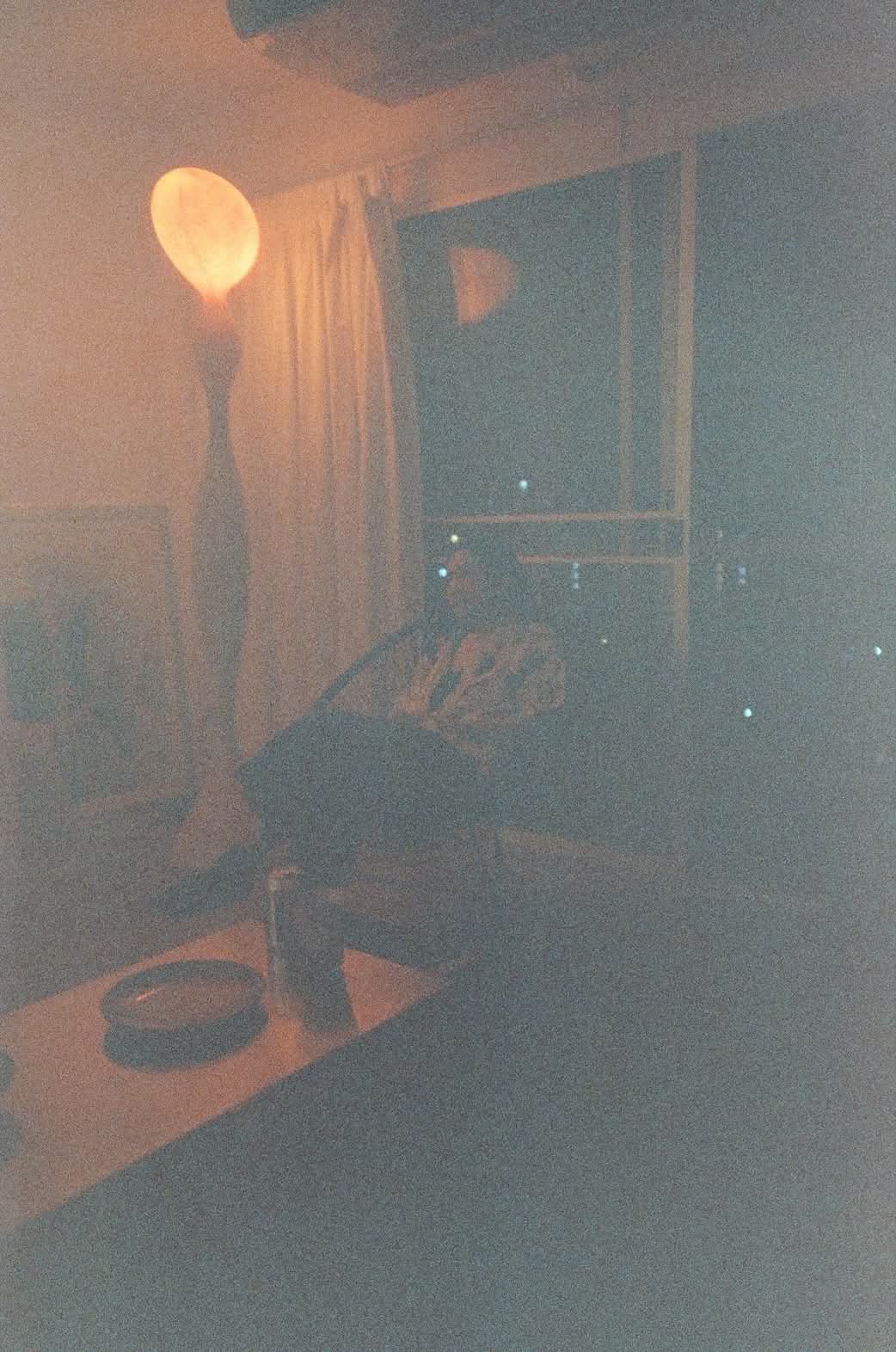
- มุมหนึ่งในห้องเก่าของโรส (เอื้อเฟื้อภาพโดยศิลปิน)
-
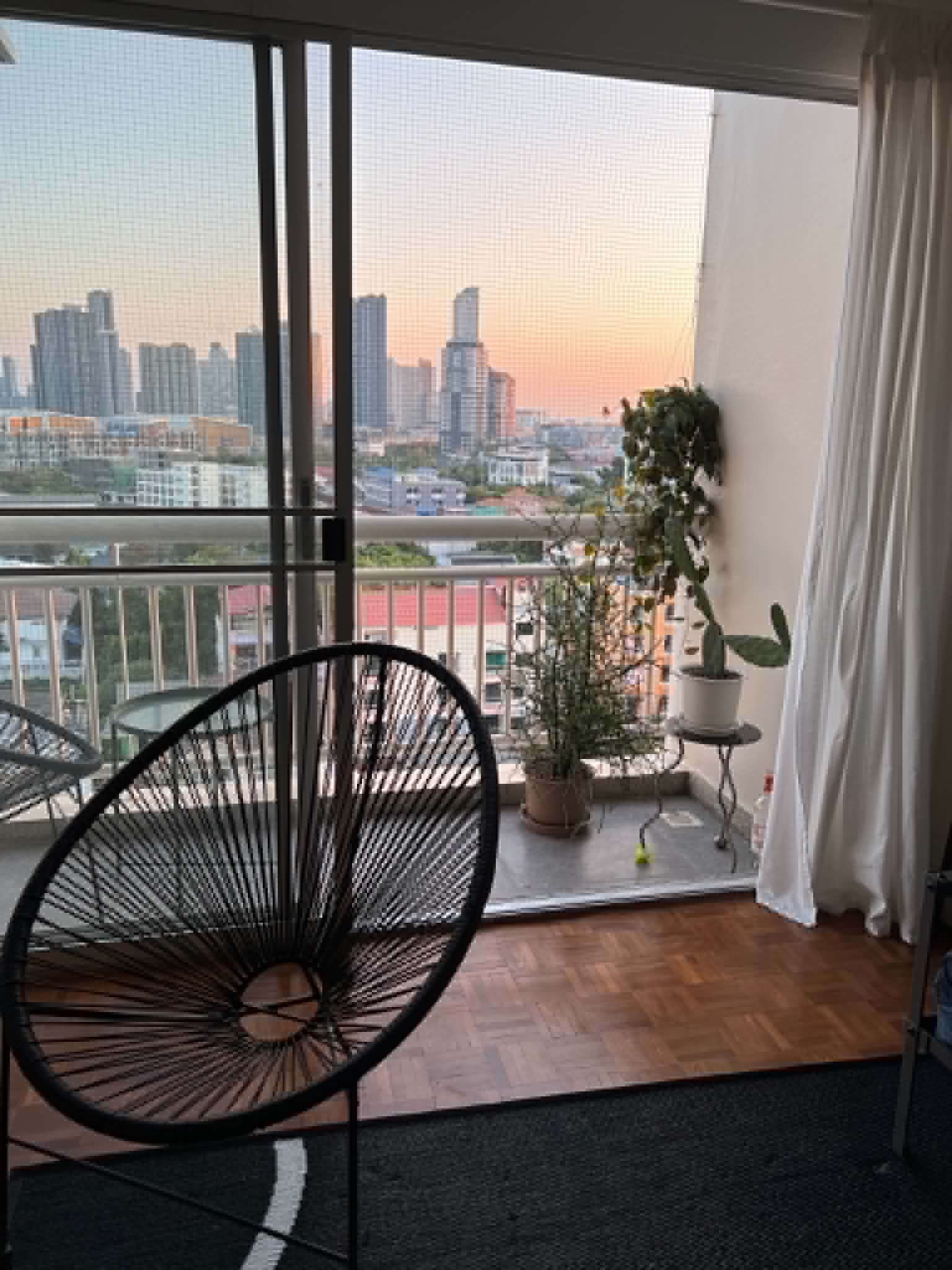
- ห้องเก่าจะมีระเบียงที่กว้างกว่าและสามารถเปิดออกไปรับลมข้างนอกได้ (เอื้อเฟื้อภาพโดยศิลปิน)
-
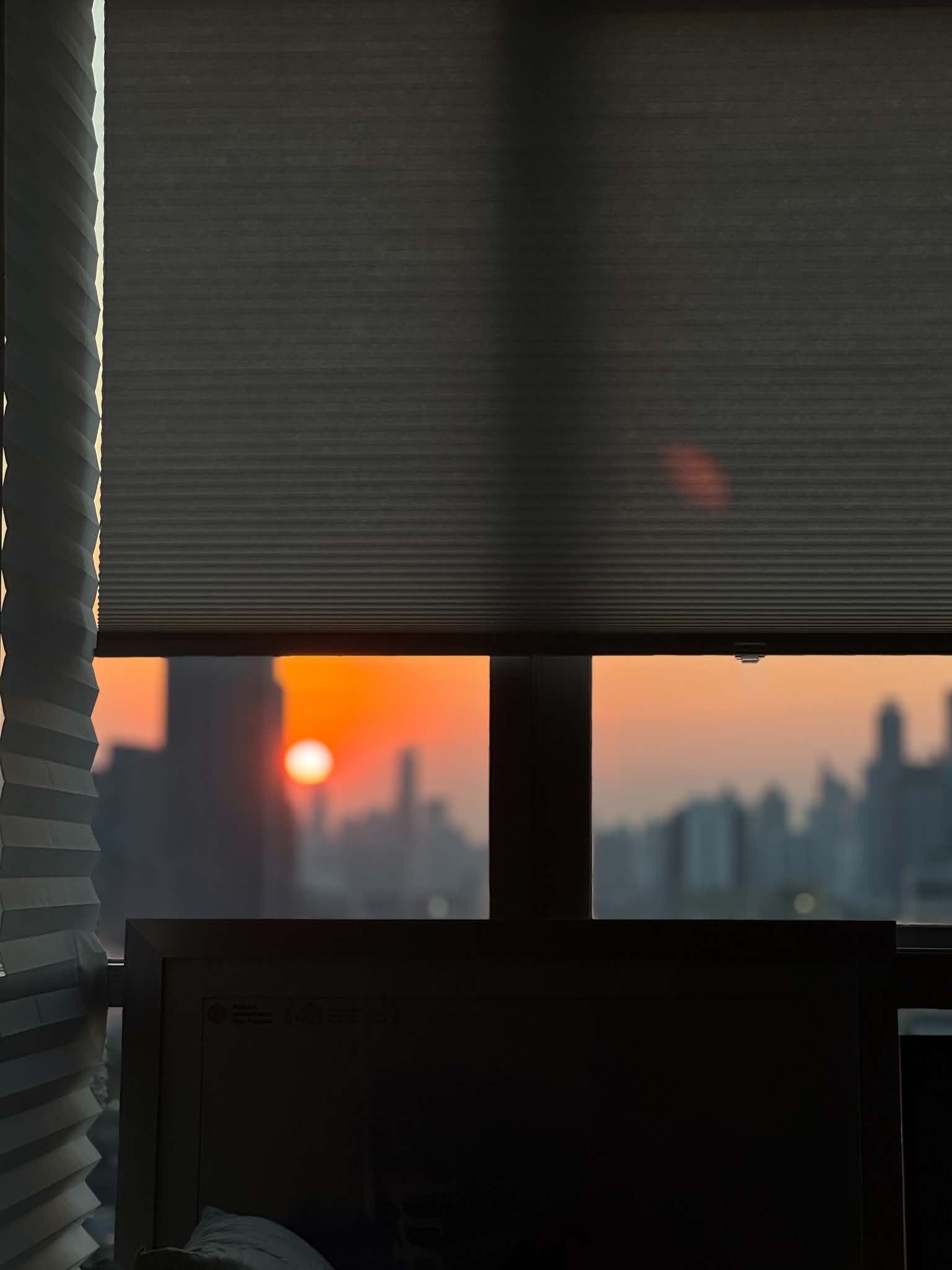
- มุมจากห้องปัจจุบัน พอเลย์เอาท์ของห้องเปลี่ยน เมืองที่เห็นข้างนอกเลยมีเฟรมที่เปลี่ยนไปด้วย (เอื้อเฟื้อภาพโดยศิลปิน)
ช่วงที่เราขอนัดเข้าไปหาพี่โรส เราขอให้คำจำกัดความว่าเป็นช่วงพัก เพราะเท่าที่เข้าใจเธอเพิ่งผ่านทั้งช่วงการทำโปรเจกต์ที่เชียงใหม่ งานทางฝั่งคอมมอเชียลที่ดูทรงแล้วต้องใช้วิทยายุทธ์อีกแบบในการรับมืออีก รวมไปถึงเรื่องสุขภาพที่ไปข้องแวะกับเตียงผ่าตัดมา เสียงของเธอจึงขึ้นจมูกอยู่หน่อยๆ ในวันนั้น “นี่ยังเก็บชิ้นส่วนกระดูกที่ผ่าออกมาไว้อยู่นะ ยังไม่ได้ล้างเลือดออกเลย”
หากจะไล่เรียงของที่เธอโชว์ให้ดู นอกจากของที่ย้ายมาจากห้องเก่าแล้ว ยังมีบรรดาจดหมาย เทปวิดีโอ รูปที่วาดเมื่อตอนเด็ก ไปจนถึงแผงเสียบบัตรตอกพนักงาน “พอดีกับที่เตรียมทำนิทรรศการนี้เลยได้โอกาสกลับไปค้นบ้าน ก็ได้เจออะไรหลายอย่างที่บางทีเราก็ไม่รู้ว่ามีอยู่” นิทรรศการที่เธอเอ่ยถึงคือ Neighbor ที่จัดแสดงร่วมกับเต้-ภาวิต ที่บางกอก ซิตี้ซิตี้ แกลเลอรี่ “ตั้งแต่ช่วงป่วยเป็นต้นมาจนถึงเตรียมงานและตอนนี้ มันเหมือนเป็นช่วงรียูเนี่ยนกับที่บ้านนิดนึง เจอกันบ่อย น้าๆ เขาก็มาเฝ้าที่โรงพยาบาล และพอต้องมาทำ Neighbor ก็ต้องกลับบ้าน ไปขุดดูนู่นนี่ แล้วเป็นช่วงที่น้องสาวกลับมาพอดี สำหรับพี่นะงานนี้มันมีมวลเหมือนงานรับปริญญา”
บ้านที่ว่าคือที่พักอาศัยและที่ทำงานของครอบครัวในตอนเด็กซึ่งอยู่บริเวณฝั่งตะวันออกของกรุงเทพฯ โซนนี้เปลี่ยนไปพอสมควรนับตั้งแต่ที่เธอโตมา ผู้คน บ้านและกิจการสับเปลี่ยนเวียนกันไปแต่ถึงอย่างนั้นพี่โรสก็ยังพอจำประสบการณ์หรือสิ่งที่เคยเกิดขึ้นในพื้นที่นั้นได้แม้มันจะฟังดูห่างไกลออกไปมากแล้วก็ตาม
“บ้านสำหรับพี่มัน fragment มากๆ”
“นั่นเพราะว่าพี่ย้ายบ่อยหรือเปล่า” หมายถึงการย้ายตั้งแต่เด็กของพี่โรส จากบ้านตายายที่สตูลก่อนขึ้นมากรุงเทพฯ มาบ้านทาวน์เฮ้าส์ บ้านควบโรงงานผลิตเสื้อมาถึงห้องที่อยู่ด้วยตัวเอง
“ย้ายบ่อยด้วย และถ้าเรามองบ้านในเชิงพื้นที่ พี่ไม่ได้รู้สึกถึงความ solid เหมือนกับพี่ไม่ได้มีสิ่งนั้นมานานมาก ในความหมายคือ บ้านที่อยู่ติดพื้น คนในบ้านอยู่ห้องนึง เรานั่งทำงานอยู่อีกห้องนึง พี่ห่างจากชีวิตแบบนั้นมากแบบจำไม่ได้ เลยรู้สึกว่ามันเป็น memory ไปแล้ว สำหรับพี่เลยมองว่ามันเป็น nostalgia แบบหนึ่งโดยที่เราไม่ได้ไป romanticize หรือโหยหามันนะ แต่มันคือความทรงจำจริงๆ ที่อาจจะลบมากกว่าบวกด้วยเพราะมันเกี่ยวไปถึงคนอื่นๆ ไม่ใช่แค่ตัวเรากับบ้าน”
“ทั้งๆ ที่บ้านหลังนั้นถูกสร้างมาด้วยความรัก แต่ once เมื่อมันหายไปทั้งในแง่ความเป็นตัวบ้านและความเป็นมนุษย์ที่ไปพร้อมกัน”
ตอนที่ฟังเรื่องของเธอกับบ้านก็พาให้ไปนึกถึง ‘Two Birds’ (2569) หนึ่งในงานกระดาษที่จัดแสดงอยู่ในนิทรรศการ Neighbor ซึ่งพี่โรสได้เล่าถึงบ้านและเพื่อนแถวบ้านเอาไว้ เดาว่าส่วนหนึ่งคงมาจากสิ่งที่เธอจำได้เกี่ยวกับพื้นที่ตรงนั้นในช่วงเวลาหนึ่งวัยเด็ก
“สนามบาสเคยมีน้ำท่วม จำได้ว่ามี รองเท้านักเรียน ของ เด็กชาย ล อ ย น้ำ
ไร้ ที่ไป ไร้ ที่มา
ไม่รู้ว่าเป็นของใคร ของ บ้าน ไหน
ของ เพื่อนบ้าน ไหม” *
และสนามบาสนี้คงติดอยู่ในใจเธอจริงๆ เพราะว่าอีกวันที่ต้องขับรถผ่านบริเวณบ้านเก่าของเธอด้วยกัน พี่โรสก็ชี้สนามบาสให้ดูแถมเล่าเพิ่มเติมว่าเห็นมันมีอยู่แต่ไม่เคยเล่นเลย
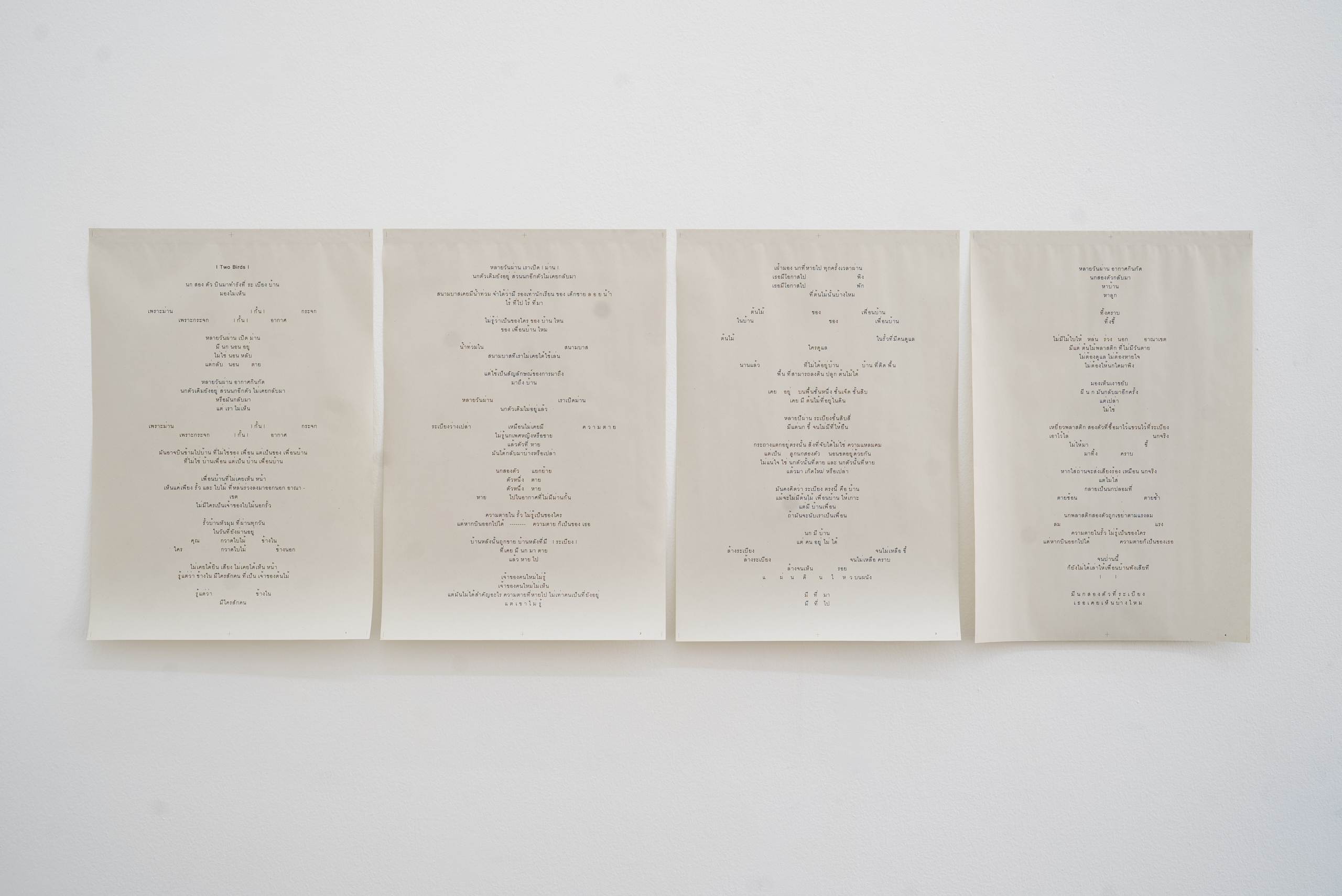
Two Birds (2026), Digital print on paper, 44.5 x 30.5 (ea.), Set of 4, Edition of 3. เอื้อเฟื้อภาพโดยศิลปินและบางกอก ซิตี้ซิตี้ แกลเลอรี่
~~~
“ใครเป็นคนถ่ายรูปพวกนี้อะพี่”
มองไปตรงหน้ามีอัลบั้มรูปถ่ายเก็บไว้เรียบร้อยเต็มตู้ และอีกส่วนหนึ่งกองอยู่บนโต๊ะ ลองเปิดดูก็จะเป็นอัลบั้มครอบครัวและส่วนใหญ่จะเป็นภาพของเด็กหญิงพวงสร้อยท่ามกลางผู้ใหญ่ในบ้าน
“นั่นน่ะสิ ไม่แน่ใจเหมือนกัน น่าจะวนๆ กันถ่ายนะ ช่วงที่เตรียม Neighbor เรากลับมาที่นี่ค่อนข้างบ่อยและให้น้าช่วยแยกอัลบั้มภาพออกมาให้” ที่นี่ของพวกเราคือบ้านที่พักอาศัยของคุณน้าทั้งสามของพี่โรส สถานที่แห่งนี้ในอดีตเป็นโรงงานผลิตเสื้อวงที่ทำออกมาขายทั้งปลีกและส่ง แต่ละชั้นของบ้านหลังนี้ยังเก็บเครื่องทำสกรีน บล็อกสกรีนเอาไว้ รวมไปถึงผลงานศิลปะของเด็กหญิงพวงสร้อย ที่ติดเรียงรายอยู่เต็มผนังคั่นด้วยบางชิ้นของคุณน้ากล้วย อดีตเด็กเรียนช่างศิลป์ ซึ่งก็เป็นหนึ่งในผู้อาศัยปัจจุบันของบ้านหลังนี้ “น่าจะอนุบาลสองที่ขึ้นมาอยู่กรุงเทพฯ ซึ่งน้าก็จะดูเป็นหลัก คอยขับรถไปรับไปส่งที่โรงเรียน ส่วนแม่ก็ไปขายของกับพ่อ” สินค้าก็คือเสื้อวงที่ผลิตจากบ้านหนังนี้โดยที่มีหน้าร้านอยู่แถวรามคำแหง แล้วก็เป็นอีกหนึ่งอย่างที่ถูกบันทึกไว้ในงานกระดาษ ‘Gun N’ Roses’ (2569) “แต่ก่อนที่จะเขียน ซึ่งก็เขียนตั้งแต่เด็กแล้วแหละ คือพี่วาดรูป ตอนเด็กชอบวาดรูปมาก นั่นเลยเป็นที่มาของภาพที่ติดอยู่ตามผนัง”
งานบนผนังพวกนั้นเป็นเหมือนการฟรีซเวลาเอาไว้ ถ้าให้เราเดา มันน่าจะเป็นภาพที่วาดตอนเด็กมากอยู่ เพราะไม่ว่าจะเป็นบ้าน รถ ต้นไม้ ภูเขา รูปทรงของมันยังถูกประกอบขึ้นมาจากทรงเรขาคณิต โตขึ้นอีกหน่อยอาจจะมีนางเงือกเข้ามา แต่ไม่ได้เห็นอะไรที่ชัดเจนกว่านั้นในเชิงเทคนิคหรือองค์ประกอบศิลป์จากบรรดาภาพทั้งหลาย ราวกับว่าการวาดรูปมันไม่ได้ไปต่อต่างจากการเขียนที่ยังคงอยู่กับเธอจนถึงตอนนี้
“เพราะชอบเขียนและทำมานานเลยเคยมีความคิดว่าอยากเรียนอักษรฯ ซึ่งตอนนั้นมองว่ามันเป็นการเทรนเรื่องการใช้ภาษาของเราเหมือนกันนะ แต่มันกึ๋ยมากพอมองตอนนี้ เพราะการเขียนของเราก็อินมาจากสิ่งที่อ่านในตอนนั้น อีกเรื่องคือจริงๆแล้ว พี่อยากทำงานเป็นก๊อปปี้ไรท์เตอร์ (Copywriter) อยากทำโฆษณา เพราะเทรนด์การทำงานในเอเจนซี่มันบูมมากๆ ตอนั้น ก็เลยเบนสุดๆ คิดว่าจุดสำคัญคือได้อ่านหนังสือจาก a book, a day หรือสารกระตุ้น ชอบมากกก อย่างอันหลังก็จะมีความเป็น experimental แล้วมันก็จะเป็นนิตยสารที่มีเนื้อหาและวิธีการเขียนล้ำ แต่ก็ไม่รู้สึกว่าจะเป็นนักเขียน คงเพราะว่ามองมันเป็นงานอดิเรกมากกว่า เพราะอย่างนั้นตอนเข้ามหาวิทยาลัย ซึ่งสมัยพี่ยังต้องเลือก 4 อันดับก็เลือกนิเทศศาสตร์ไปเลยสามอันดับ”
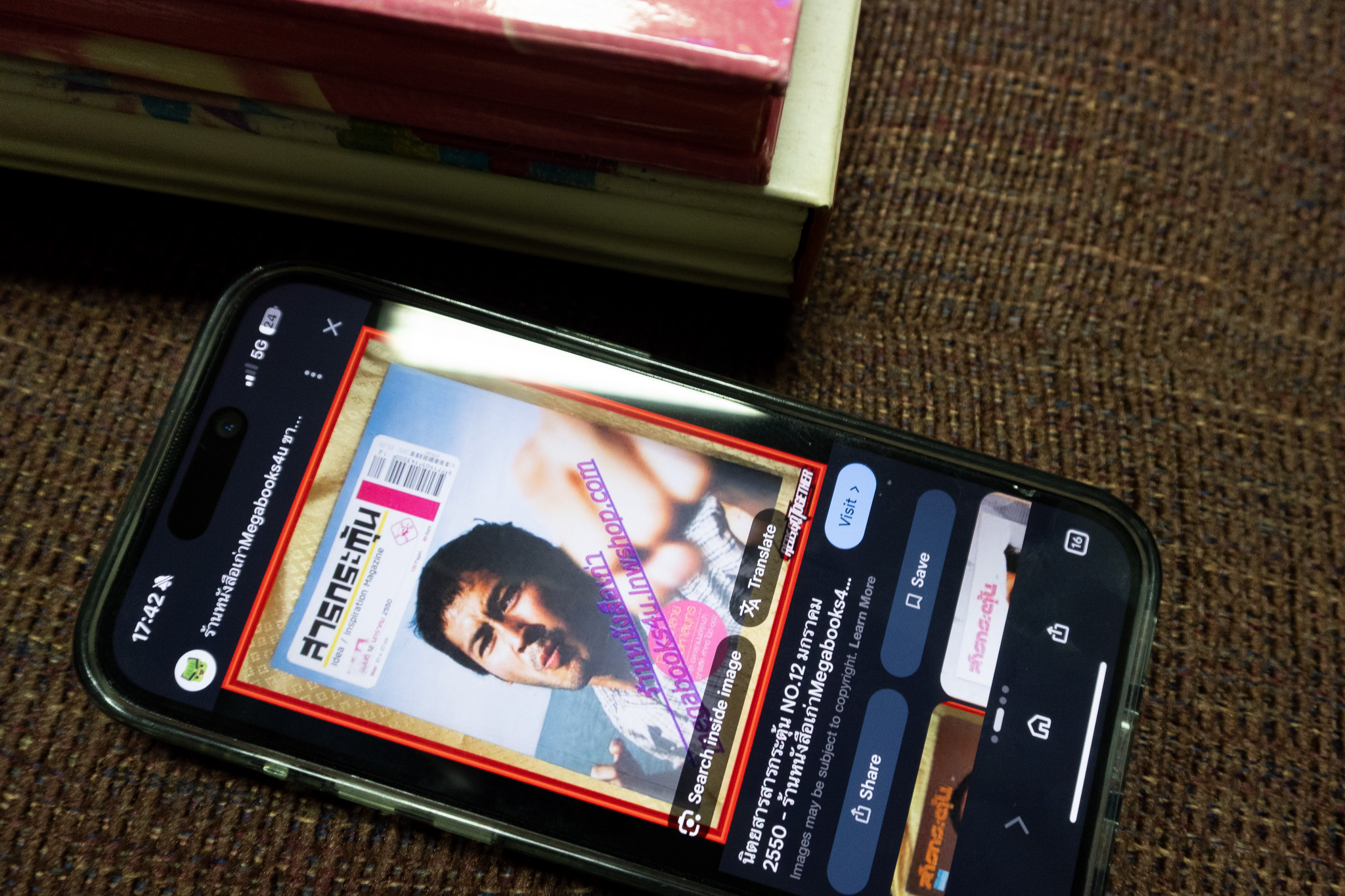
ตัวอย่างหน้าปกนิตยสาร ‘สารกระตุ้น’ ที่พี่โรสเปิดดู ซึ่งสารภาพไปว่าเราโตมาไม่ทันเจอสิ่งนี้
“ความเป็นก๊อปปี้ไรท์เตอร์ก็อยู่ในใจมาตลอดแต่จุดเปลี่ยนมันมาจากการที่พี่ไม่เห็นชื่อตัวเองอยู่หน้ากระจกห้องสอบภาษาอังกฤษ ซึ่งมันเป็นวิชาบังคับถ้าจะเรียนเอกโฆษณา ไม่อย่างนั้นก็ต้องยอมเรียน 5 ปี นึกภาพเป็นซีนหนัง หนึ่งคนในมหาลัย เดินลงมานั่งโรงอาหาร แบบใบไม้ปลิวอ่ะ แล้วตอนนั้นอาจารย์ก็ โอ้ยนี่มีภาพยนตร์นะ ไม่ต้องเรียนภาษาอังกฤษ ส่วนโฆษณาหนูก็เรียนเป็นวิชาโทไป ซึ่งตอนนั้นเครียดมาก เพราะเราไม่ได้เป็นคนมองโลกแบบหนังเลยต่อให้จะเป็นคนชอบดูหนังหรือไปดูคอนเสิร์ต การแสดงอะไรแบบนี้ แต่สุดท้ายก็เอกภาพยนตร์ไป จุดเปลี่ยนถัดมาคือมีวิชาที่ได้ลองทำโปรเจกต์ส่วนตัวตอนปี 3 ซึ่งพี่มองว่ามันเป็นเหมือนครั้งแรกในชีวิตที่ตัวเองสามารถทำอะไรก็ได้ ชิ้นที่ทำตอนนั้นก็เพ้อๆ เลย อัดเสียงตัวเองแล้วก็ถ่ายแก้ว เทน้ำไปด้วยพร้อมกับพูดว่า ‘น้ำเต็มแก้ว น้ำไม่เต็มแก้ว’ ไปเรื่อยๆ คือก็กึ๋ยอยู่ แต่มันเป็นจุดที่เรารู้สึกจริงๆ ว่า เห้ย หรือนี่คือภาพเคลื่อนไหว คือมันไม่ต้องเป็นหนังหนังแบบนั้นก็ได้ อีกวิชาที่เจอแล้วชอบคือการเขียนบท พี่ก็เลยกลับไปสู่การเขียนนิยายที่เคยทำตอนเราเด็กๆ เอาจริงมันก็ใช้ภาษาเหมือนกันนี่นาแต่แค่มีฟอร์มใหม่”
พวงสร้อยเด็กเอกภาพยนตร์ในช่วงมหาลัยได้ทำโปรเจกต์ทั้งข้างนอกและข้างใน จนมาถึงช่วงที่ทำให้เธอคิดว่าตัวเองน่าจะอยู่ทางภาพยนตร์จริงๆ “มันจะมีการประกวด Thai Short Film แล้วได้รางวัล พี่ว่าตอนนั้นมันเป็นยุคที่การส่งหนังเข้าประกวดมันจะค่อนข้างเฉพาะกลุ่มโดยที่ทางหอภาพยนตร์ฯ จะเป็นคนส่งให้กับเทศกาลที่ติดต่อเข้ามาโดยเขาก็จะเลือกจากงานนักศึกษา เขาก็ส่งหนังพี่ไปฝรั่งเศสครั้งแรก เราก็เชี่ย หนังเราได้ไปฝรั่งเศสเลยหรอ แต่มันก็หนังที่กึ๋ยๆ อีกอ่ะนะ มีความ coming of age เพ้อเจ้อเรื่องความสัมพันธ์ ไปๆ มาๆ หลังจากนั้นพี่ก็เป็นคนจัดกางจอ (งานจบของนิสิตคณะนิเทศศาสตร์ จุฬาลงกรณ์มหาวิทยาลัย) แล้วยุคนั้นยังไม่มี Google Drive พี่เลยก็ไรต์ซีดีของเพื่อนทุกคนส่งให้ commentator หนึ่งในนั้นคือพี่เต๋อ (นวพล ธำรงรัตนฤทธิ์ แล้วพอเรียนจบพี่เขาก็ทักมาถามประมาณว่า พวงสร้อยเธอมีงานทำหรือยัง มาเป็นผู้ช่วยไหม”
-
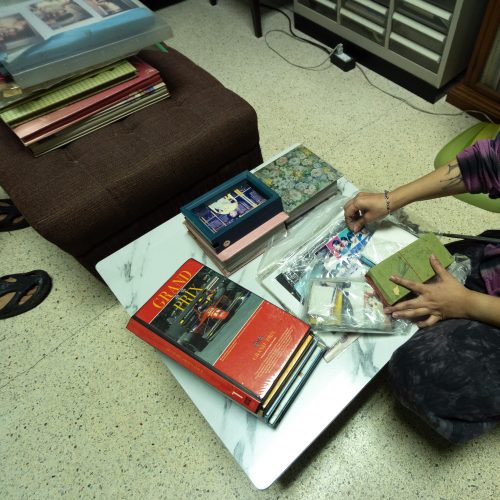
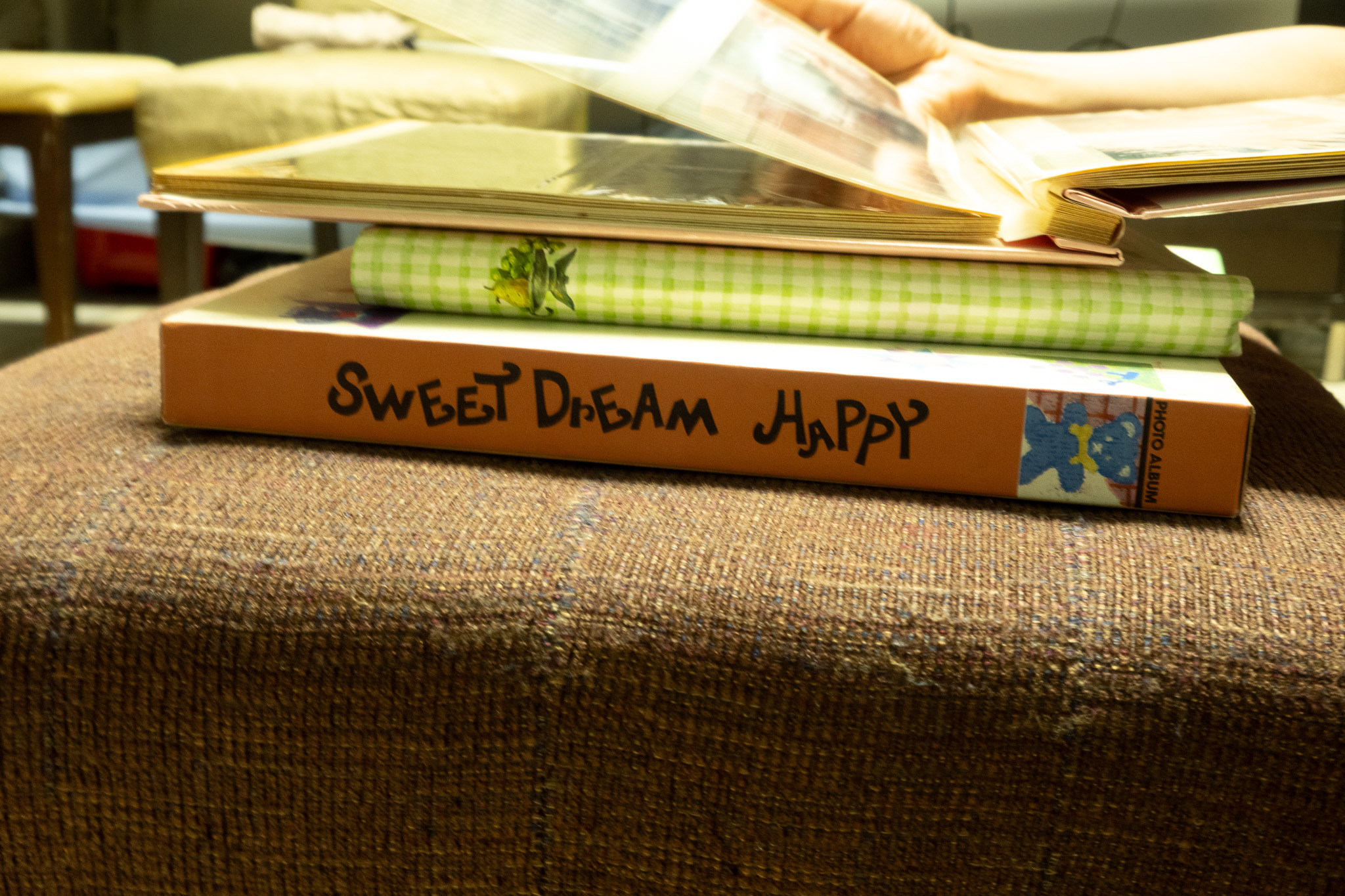
- ส่วนหนึ่งของอัลบั้มรูปที่แยกออกมา
-
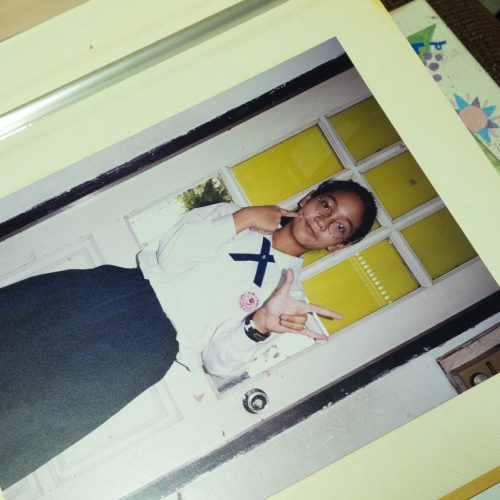
- มีรูปถ่ายของเด็กหญิงพวงสร้อยมากมายในหลายสถานที่ ไม่รู้ว่าท่าโพสต์แบบนี้นับว่า กึ๊ย ในความหมายของเธอหรือเปล่า
เราอาจจะไม่ได้มีเวลาร่วมกันในการคุยถึงงานแต่โปรเจกต์เท่าไหร่ แต่พอพี่โรสเมนชั่นถึงเรื่องการเขียนขึ้นมา เลยสนใจการเขียนที่ไม่ใช่ไดอารี่หรือเรื่องสั้น แต่เป็นการเขียนบทโดยเฉพาะอย่างยิ่งการที่บทมาอยู่ในกระบวนการคิดงานและแสดงออกมาตัวงาน เราเลยย้อนถามกลับไปถึงโปรเจกต์การแสดง Velvet Kingdom (2568) ที่เป็นส่วนหนึ่งของเทศกาลหนังทดลองกรุงเทพฯ ครั้งที่ 7 (Bangkok Experimental Film Festival 2025) “สำหรับงานชิ้นนั้นพี่สนใจความก้ำกึ่งที่อยู่ในกระบวนการ Read Through หรือการอ่านบท ซึ่งจะเป็นสิ่งที่เป็นปกติอยู่แล้วในฝั่งของการทำหนังแต่คนดูจะไม่ได้เห็น ซึ่งสิ่งที่เราได้เห็นในกระบวนการนั้นคือความก้ำกึ่งในหลายระดับตั้งแต่น้ำเสียงหรือท่าทางของนักแสดง เวลาพวกเขาอ่านบทมันเหมือนการกำลังหาเสียงของตัวเอง ในขณะเดียวกันผู้กำกับก็กำลังหาเสียงของตัวเองเหมือนกัน ตัวบทสำหรับโปรเจกต์นี้มันเลยเป็นเหมือนเครื่องมือกลางที่ทุกคนมีส่ิงนี้ร่วมกัน ทุกคนอ่าน และเห็นประโยคที่อยู่ในบทไปด้วยกัน แต่การตีความ สิ่งที่คิดต่อมันอาจจะเป็นคนละเรื่องไปเลยก็ได้”
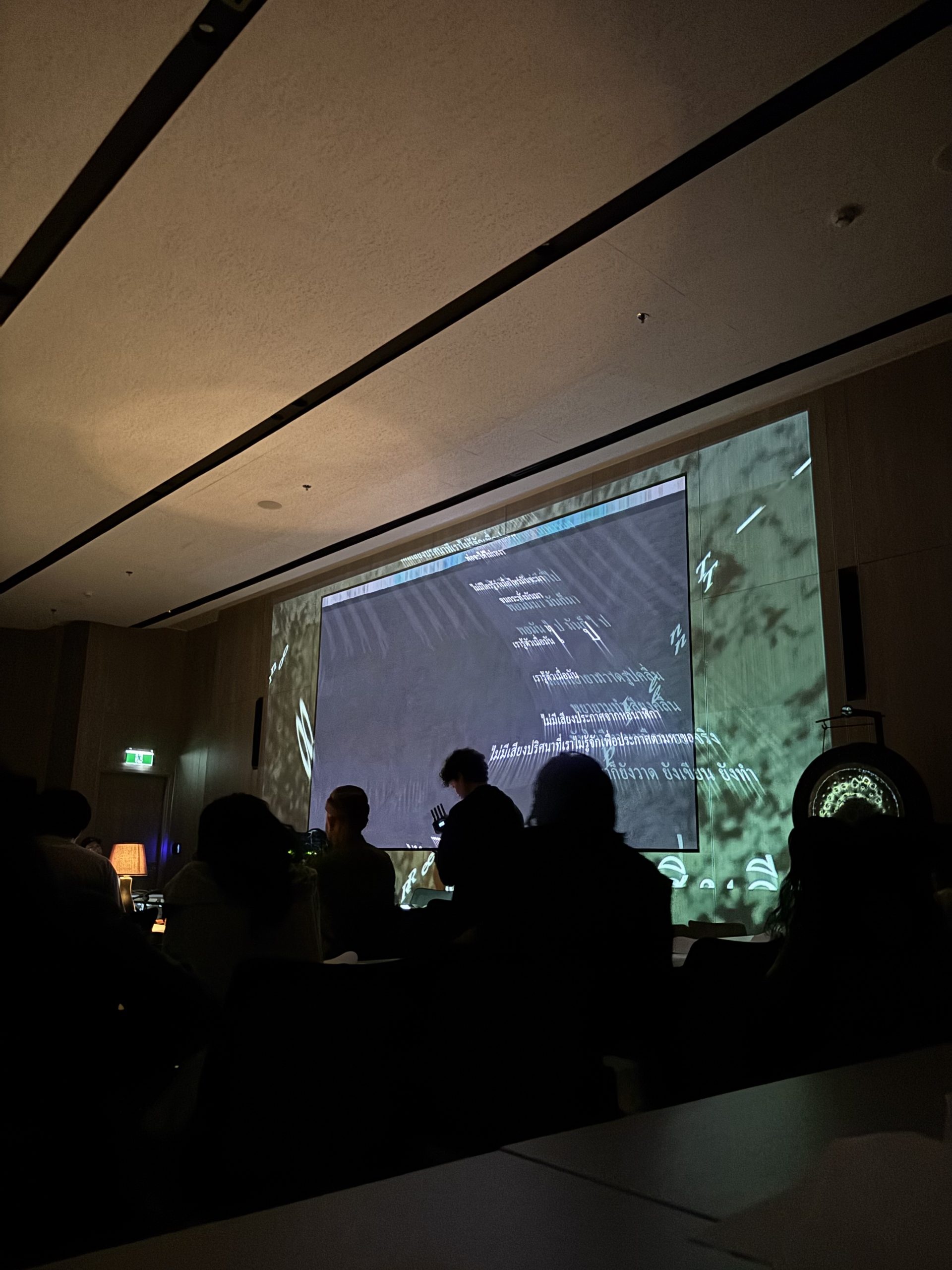
มุมหนึ่งในห้องจัดงาน Velvet Kingdom (2567) ซึ่งผู้ชมจะนั่งล้อมอยุ่รอบนักแสดงโดยบนโต๊ะก็จะมีบทวางไว้ให้เปิดอ่านตามได้คนละ 1 ชุด
~~~
“จริงๆ พี่โรสเป็นเด็กเรียนเก่งใช่มั้ย” ส่วนหนึ่งคือการเดาไปเรื่อยของเรา แต่อีกส่วนก็ค่อนข้างมั่นใจว่าคิดถูกพอประมวลจากเรื่องที่เธอเล่าให้ฟังระหว่างที่นั่งเปิดดูอัลบั้มรูปเก่าไปเรื่อยๆ “เก่ง ได้ที่ 1 แล้วก็เป็นคนเครียดแต่เด็ก” พอเห็นเราทำหน้าเริ่มมีคำถามเธอเลยอธิบายเพิ่ม “เพราะว่าได้ที่ 1 ทุกปี แล้วถ้าลงมาที่ 2 จะเครียดมาก” คำตอบนี้ของเธอทำให้เรากลับไปคิดถึงการเตรียมนิทรรศการ Neighbor ช่วงที่ผ่านมา จริงอยู่ว่าครั้งนี้ไม่ใช่การทำงานครั้งแรกกับแกลเลอรี่ แต่มันก็เป็นครั้งแรกที่งานของเธอจะถูกจัดแสดงในรูปแบบของนิทรรศการร่วมกับศิลปินอีกคน
“ในตอนนั้นที่แพรวมาคุยยังรู้สึกว่ามันต้องผลิตอะไร” เธอย้อนกลับไปถึงวันแรกที่เราขอนัดไปเจอที่ห้องใหม่ ในตอนนั้นเธอยังดูมีความกังวลปกคลุมอยู่
“เหมือนกับว่าพี่อาจจะไปคิดในความหมายของแกลเลอรี่ด้วยว่ามันคือมันคือการซื้อขาย แต่เราอาจจะมองไม่ออกว่าแล้วงานเรามันสามารถขายได้ไหมยังไง สำหรับพี่ตัวงานมันไม่ได้เป็นการขายอยู่แล้วยกเว้นแต่เราจะเขียนหนังสือขายเป็นเล่ม แล้วก็สำหรับการเข้าใจแกลเลอรี่หรือทำ exhibition ความรู้คือเป็นศูนย์ มันก็เลยเป็นความเครียดในช่วงแรก ซึ่งคนอื่นก็บอกว่าเราไม่ต้องคิดก็ได้ แต่พี่ก็จะมาคิดอีกว่าอันไหนเป็นงานได้บ้าง โดยเฉพาะอันที่เราคิดว่ามันเป็น archive”
ซึ่งในกระบวนการเตรียมงานของเธออันที่จริงแล้วมีของอีกหลายชิ้นมากที่พี่โรสคิดไว้ว่าตอนแรกอาจจะเหมาะ “อย่างมันจะมีของชิ้นหนึ่งที่พี่ชอบมากแล้วพี่ก็ไปทำชิ้นจำลองขึ้นมา แต่สุดท้ายมุมนึงก็คิดได้ว่าสิ่งนี้มันไม่ใช่สำหรับงานนี้”
“เหมือนมันมีจังหวะของมัน?”
“เออแพรวก็อาจจะใช้คำถูก จังหวะ แบบไหนที่เราจะเล่าสิ่งนี้ หรืออุณหภูมิแบบไหนที่เราจะจับมาอยู่ด้วยกัน”
ถ้าการอยู่ในพื้นที่ศิลปะแบบที่รู้สึกว่าประสบการณ์ไม่มากพอและอาจจะนำพามาด้วยความวิตกบางอย่าง เช่นนั้นแล้วพวงสร้อยมองการทำงานศิลปะแยกออกไปจากงานกำกับไหม “ไม่แน่ใจว่าว่าตอบถูกหรือผิดไหม แต่ว่าพี่ไม่แยก ไม่รู้ว่ามัน parallel กันไปหรือมันอยู่ในตัวพี่ทั้งหมดเลย การที่เรามาเห็นงานในนิทรรศการ Neighbor มันเหมือนได้เห็นวิวัฒนาการบางอย่าง และอาจจะเพราะงานของพี่ในนิทรรศการนี้มันคือการเขียนเป็นหลักด้วยแหละ เลยรู้สึกว่ามันเป็น dialouge ที่ไปด้วยกันกับการทำงานกำกับและการเขียน”
“ช่วงนี้และต่อไปหลังจากนี้พี่โรสอยากลองทำอะไร”
“อยากเขียนบทหนัง บทซีรีส์ คือความอยากมันขนานไปกับระหว่างที่ทำ Neighbor คืออยากเขียน บทที่มันเกิดขึ้นจาก material ที่เรารวบรวมไว้จากผ่านมา คงเพราะพี่อยากทำหนังหรืออยากลองทำซีรีส์มาโดยตลอด แต่มาถึงตอนนี้พี่มองว่ามันไม่ได้ personal ขนาดนั้นแล้ว ถ้าเทียบกับ นคร-สวรรค์ หรือ A Draft of Dead Bird (2567) แต่ต่อให้งานในอนาคต material จะมาจากตัวเอง แต่ก็พยายามดูอยู่ว่ามันสามารถขยับไปทางไหนได้บ้าง”
โน๊ต:
*เขียน วรรค และเว้นระยะห่างตามผลงานที่จัดแสดง
≋-≋-≋-≋-≋-≋-≋-≋-≋-≋-≋-≋
Interview with Tae Parvit
Story and photography by Praew–Kantida Busaba
Once, I had the chance to accompany Puangsoi to the recording of an interview program. I remember paying close attention when she spoke about writing, something she had been doing since childhood. But I cannot remember anything else. I could only console myself by thinking that I would listen to it again once the channel released it. But many things did not go as planned. In short, some technical issue prevented the recording from ever being released. Thinking back on it still feels like a pity. It makes me wonder what things were forgotten along the way, both intentionally and unintentionally.
Puangsoi, or Rose, may be the only person with that name I will ever encounter in this lifetime. The distance between us was once separated by a screen, seats, and the darkness of a movie theater. Who is Puangsoi? What does she look like? I did not know her at all. All I remember are the things I watched in the cinema and a brief conversation between myself and the person at the ticket counter. As far as I can remember now, even that has become faint.
“Oh, you’re a student coming to watch Nakorn-Sawan (2018)? I’ll give you a special price. I want to support filmmakers like this too.”
I was curious but did not ask further. What kind of filmmaker made work that would be screened in an alternative cinema like this?
The next distance between us and Puangsoi was mediated by pages and letters. I read her first book (which is not to say the first book she ever wrote) during a period when books recounting the experiences of students studying abroad were popular. Her account of life in Germany—although we know that feelings, whether happiness, suffering, pressure, or sadness, often exceed what language is capable of holding—in the position of a reader, I remain grateful to this writer for helping to give greater dimension to the imagination of life elsewhere.
The final distance, before distance no longer felt like distance, was perhaps separated by a table and a Thai BBQ grill. That was during the preparation period before her first performance at BANGKOK CITYCITY GALLERY in 2024.
~~~
“Praew, is there anything you’d like to eat? Or should I buy some soy milk for you?”
The message popped up while I was on my way to meet Rose—Puangsroi Aksornsawang—after work. Her new place was not very far from the previous one, yet the surrounding environment made it feel quite different.
“I haven’t been here that long. I’m still adjusting,” she said.
When I asked to visit Rose, I described it as a period of rest. As far as I understood, she had just come through a project in Chiang Mai, commercial work that seemed to require an entirely different set of skills to navigate, and health issues that had recently brought her to the operating table. Her voice was therefore slightly nasal that day.
“I still have the piece of bone they removed during surgery. I haven’t even cleaned the blood off it yet.”
Among the things she showed me, besides belongings moved from her previous room, were letters, videotapes, drawings from childhood, and even an employee punch-card rack.
“It happened to coincide with preparing for this exhibition, so I had the chance to go back and search through the house. I found many things that sometimes I didn’t even know existed.”
The exhibition she referred to was Neighbor, presented together with Tae—Parvit at BANGKOK CITYCITY GALLERY.
“From the time I got sick through preparing the work until now, it’s felt a bit like a reunion with my family. My aunts and uncle came to stay with me at the hospital. Then, when I had to work on Neighbor, I had to go home, dig through things, look for this and that. And it happened to be the same period when my younger sister came back. For me, this exhibition carries the atmosphere of a graduation ceremony.”
The home she was referring to was both her family’s residence and workplace during her childhood, located in the eastern part of Bangkok. The area has changed considerably since she grew up there. People, houses, and businesses have come and gone. Yet Rose can still remember experiences and events that once took place there, even if they now seem very distant.
“For me, home is very fragmented.”
“Is that because you’ve moved so often?” I asked, referring to Rose’s many relocations—from her grandparents’ house in Satun (a town in Southtern Thailand) before moving up to Bangkok, to a townhouse, then a house combined with a garment factory, and eventually to rooms she lived in on her own.
“Partly. And if we think of home as a physical space, I don’t feel a sense of solidity. It’s as though I haven’t had that for a very long time. By that I mean a house that’s actually on the ground, with a yard and some space around it, where someone in the family is in one room while I’m working in another. I’ve been so far removed from that kind of life that I can barely remember it. So it feels like a memory now.”
For me, it’s a kind of nostalgia, though not because I’m romanticizing it or longing for it. It’s an actual memory, one that may contain more negatives than positives because it involves other people too—not just me and the house.”
“Even though that house was built with love, once it disappeared, both as a house and as the human relationships that disappeared alongside it…”
Listening to her talk about home made me think of Two Birds (2026), one of the paper works exhibited in Neighbor, in which Rose writes about her home and the imaginary neighbor who lived nearby. I imagine part of it came from what she remembered about that place during a particular moment of childhood.
“The basketball court used to flood. I remember a school shoe of a boy floating on the water.
With nowhere to go, from nowhere.
I don’t know whose it was, which house it belonged to.
Did it belong to a neighbor?”*
And this basketball court must truly have stayed with her, because on another day, when we happened to drive past the area where her old home once stood, Rose pointed it out and told me that although she had always seen it there, she had never actually played on it.
~~~
“Who took all these photographs?”
In front of us sat cabinets neatly filled with photo albums, with more stacked on the table. Flipping through them revealed family albums, most of them featuring a young Puangsoi surrounded by the adults in her household.
“I’m not entirely sure. Probably my family took turns taking them. During the preparation for Neighbor, we came back here quite often and I asked my aunts to help sort out the photo albums.”
The “here” she refers to is the house where her two aunts and one uncle currently live. In the past, this place was a factory producing band T-shirts for both wholesale and retail. Each floor of the house still contains screen-printing equipment and printing screens, along with the artworks of a young Puangsoi, arranged across the walls alongside a few pieces by Uncle Kluay, a former student at College of Fine Arts and one of the current residents of the house.
“I think I was in kindergarten when I moved to Bangkok. My aunts were the one who mainly looked after me, driving me to and from school. My mother went out selling things with my father.”
The products were the band T-shirts produced in this house, with a storefront located in Ramkhamhaeng area. The band T-shirt also became the subject of one of the paper works, Gun N’ Roses (2026).
“Before writing which I had already been doing since I was a child—I drew. As a kid I loved drawing. That’s where all the pictures on the walls came from.”
Those works on the walls feel like a way of freezing time. If I had to guess, many of them were made when she was very young. Whether houses, cars, trees, or mountains, their forms were still constructed out of simple geometric shapes. A little later, perhaps a mermaid would appear. But beyond that, there is little evidence of increasing technical skill or artistic composition in the drawings. It is as though drawing never continued in the way writing did, remaining with her until today.
“Because I liked writing and had been doing it for so long, I once thought I wanted to study at the Faculty of Arts. At the time I saw my teen period of writing as training in using language. Looking back now, that kind of language I used is super cringe. Partly because my writing was also heavily influenced by what I was reading then.
Another thing is that I actually wanted to become a copywriter. I wanted to work in advertising because agency culture was booming at the time. So I veered in that direction completely. I think the important turning point was reading books from a book, a day and Sankratoon (Stimulus). I loved them so much. The latter was quite experimental. It was a magazine whose content and writing style felt very advanced. Even so, I never thought of myself as a writer. Maybe because I saw it more as a hobby.
So when it came time to apply to university and back then we still had to rank four choices, I put Communication Arts as my first three choices”
“The idea of being a copywriter stayed with me the whole time, but the turning point came when I didn’t see my name posted outside the English placement exam room. English was a required subject if you wanted to major in advertising. Otherwise you’d have to study for five years. Imagine it like a movie scene: a university student walking down to the cafeteria and sitting alone while leaves drift through the air. Then one of the professors said, ‘Oh, there’s Film. You don’t need English for that. You can take Advertising as a minor instead.’
At the time I was really stressed because I wasn’t someone who viewed the world through film. I liked watching movies and going to concerts and performances, but that was different. Yet in the end I became a Film major.
The next turning point came in my third year when there was a course that let us do a personal project. Looking back, it felt like the first time in my life that I could make absolutely anything I wanted. The piece I made was very dreamy and self-indulgent. I recorded my own voice while filming a glass, pouring water into it and repeatedly saying, ‘The glass is full. The glass is not full.’ It’s embarrassingly pretentious when I think about it now. It’s still kind of cringe. But that was the moment when I genuinely thought, ‘Wait, can this be considered as a moving image?’ It didn’t have to be a conventional film after all.
Another class I encountered and loved was screenwriting. So I returned to writing fiction, something I had done as a child. In the end it was still language, wasn’t it? It just had a different form.”
As a Film student, Rose worked on projects both inside and outside the university, eventually reaching a moment when she began to think that cinema might truly be her path.
“There was a Thai Short Film competition, and I won an award. Back then, film competitions were still quite niche. The Thail Film Archive would often submit student works to festivals that contacted them. They selected from student projects and sent one of my films to France for the first time. And I was like, ‘Holy shit, my film went to France?’ Though it was another one of those pretentious films. Very coming-of-age, very dreamy, all about relationships.
After that I became one of the organizers of Klang Jor (the graduation showcase for Communication Arts students at Chulalongkorn University). This was before Google Drive existed, so I burned CDs of everyone’s work and mailed them to the commentators. One of them was Nawapol Thamrongrattanarit. So after graduation he contacted me and asked something like, ‘Puangsoi, do you have a job yet? Would you like to be an assistant?’”
We may not have spent much time talking about her work or current projects together, but when Rose brought up writing, I became interested in a form of writing that is neither diary-keeping nor short fiction, but screenwriting—particularly the way a script exists within the process of developing a work and eventually manifests itself in the work itself. This led me to ask about Velvet Kingdom (2025), a live performance project presented as part of the 7th Bangkok Experimental Film Festival (Bangkok Experimental Film Festival 2025).
“For that project, I was interested in the in-between state that exists within the process of a read-through. It’s something completely normal in filmmaking, but audiences rarely get to see it. What becomes visible during that process is a kind of ambiguity on many levels—from an actor’s tone of voice to their gestures. When they’re reading the script, it feels as though they’re searching for their own voice. At the same time, the director is searching for their own voice as well.
For this project, the script became a kind of shared tool that everyone had in common. Everyone reads it, everyone sees the same sentences on the page together. But the interpretations, and the thoughts that emerge from them, may end up being entirely different things.”
“You actually were a really good student, right ?” Partly I was guessing, but I was also fairly confident after piecing together the stories she had been telling while we sat looking through old photo albums.
“I was. I came first in class. And I was a serious person from a very young age.”
Seeing the expression on my face, she elaborated.
“Because I came first every year. And if I dropped to second place, I’d get very stressed.”
Her answer made me think back to the preparations for Neighbor. It’s true that this wasn’t her first time working with a gallery. Yet it was the first time her work would be presented as part of an exhibition alongside another artist.
~~~
“When you first came to talk to me, I still felt like I had to produce something.” She was referring back to the first day we met at her new apartment. At the time, she still seemed to be carrying a certain amount of concern.
“I think I was also thinking about the meaning of a gallery—that it was about buying and selling. But I couldn’t quite see whether my work could actually be sold, or how. For me, the work itself wasn’t made to be sold in the first place, unless it was a book published and sold as a book. And when it came to understanding galleries or making an exhibition, my knowledge was basically zero. So that became a source of stress in the beginning. Other people would tell me not to think about it, but then I’d keep wondering which things could count as works, especially the things I thought of as archives.”
In fact, throughout the preparation process, there were many other objects that Rose initially thought might fit into the exhibition.
“There was one thing that I really loved. I even made a replica of it. But eventually, part of me realized that it wasn’t for this exhibition.”
“Like it has its own timing?”
“Yeah, maybe that’s exactly the right word. Timing. What kind of timing allows us to tell a particular thing? Or what kind of temperature allows different things to sit together?”
If working within an art context—one in which she sometimes felt she lacked experience and which occasionally brought its own anxieties—raised certain uncertainties, then did Rose see making art as separate from directing films?
“I’m not sure whether this is the right answer or the wrong answer, but I don’t separate them. I don’t know whether they’re running in parallel, or whether they’re all just part of me.
Seeing the works in Neighbor feels like seeing a certain evolution. And maybe because the work I contributed to this exhibition is primarily writing, it feels like a dialogue that runs alongside my directing and my writing practice.”
“What else would you like to try doing now, and in the future?”
“I want to write screenplays. Film scripts, series scripts. That desire has been running parallel to the process of making Neighbor. I want to write stories that emerge from the materials I’ve accumulated over the years. Maybe because I’ve always wanted to make films, or try making a series.
But at this point I don’t see it as being as personal as Nakorn-Sawan or A Draft of Dead Bird (2024). Even if future works still draw their material from my own life, I’m trying to see how far they can move beyond that, and where else they might go.”
Note:
*The artwork is presented in Thai and the text is literally translated from the original Thai text.