STUDIO VISIT 01 • DUSADEE HUNTRAKUL
04/03/2026
Create Your Own Distant • สร้างระยะการมองของตัวเอง กับ ดุษฎี ฮันตระกูล
Scroll down for English
≋-≋-≋-≋-≋-≋-≋-≋-≋-≋-≋-≋
เรื่อง และ ภาพ: แพรว – กานต์ธิดา บุษบา
การทำงานศิลปะของดุษฎีอาจให้นิยามได้ว่าเป็นการทำงานที่เชื่อในสายตา จัดการกับระยะความใกล้ ความห่างและเงื่อนไขการทำงานได้เหมาะสม ไม่ทิ้งตัวเองและความฝันตอนเด็กไว้ข้างหลัง
-1-
การตัดสินใจนัดสัมภาษณ์ แป๋ง—ดุษฎี ฮันตระกูล ศิลปินคนแรกสำหรับชุดบทสนทนา STUDIO VISIT ไม่ได้มีจุดเริ่มต้นที่ชัดมาก รู้แต่เพียงว่าต้องการอยากจะไปเห็นสตูดิโอ เพื่อคุยถึงความสนใจของเขาและถามถึงงานบางชิ้นที่ผู้เขียนชอบ แต่กลับไม่ยักเจอข้อมูลในเว็บไซต์ และถือเป็นโอกาสในการตรวจสอบความเข้าใจของผู้เขียนไปในตัวว่าสิ่งที่เคยเข้าใจในการทำงานศิลปะของคนคนหนึ่งนั้น วันนี้ มันเปลี่ยนไปเป็นอะไรบ้าง
ในวัยสี่สิบของดุษฎี เขายังเข้าทำงานที่ Double Rainbow สตูดิโอของตนเองแถวบางจาก แม้จะไม่ใช่ทุกวันแต่ก็บ่อยครั้งจนสามารถเรียกเป็นกิจวัตรได้ โดยปกติแล้วสิ่งที่เขาทำในกรณีที่ไม่ต้องเข้าสอนที่มหาวิทยาลัยก็คือ จัดการธุระส่งลูกช่วงเช้าเสร็จก็จะเข้าสตูดิโออยู่จนถึงบ่ายๆ แต่สิ่งที่เปลี่ยนแปลงไปในช่วง 5 ถึง 6 เดือนที่ผ่านมานี้คงจะเป็นการที่เขาขยับจากการทำประติมากรรม จับดินหรือประคองอุ้มก้อนดินที่ขึ้นรูปแล้วลงเตาเผามาเป็นการจับพู่กันทำงานเพ้นท์ติ้งและสร้างระยะในการมองของตนเองใหม่ ทำความเข้าใจกับเพื่อนเก่าอย่างผืนผ้าใบในขนาดกะทัดรัด
“จริงๆ ตอนปริญญาตรีเราเรียนเพ้นท์ติ้ง เราชอบเพ้นท์แต่ก็ยอมรับว่ามันยาก เพราะแน่นอนเป็นศิลปินมันก็ต้องหาตัวตน ต้องหาสไตล์ของตัวเอง เราก็พยายามเหมือนกันนะ มันเจอแต่ก็ปล่อย วางมันไว้ก่อน แล้วขยับมาดรออิ้งอะไรแบบนี้”
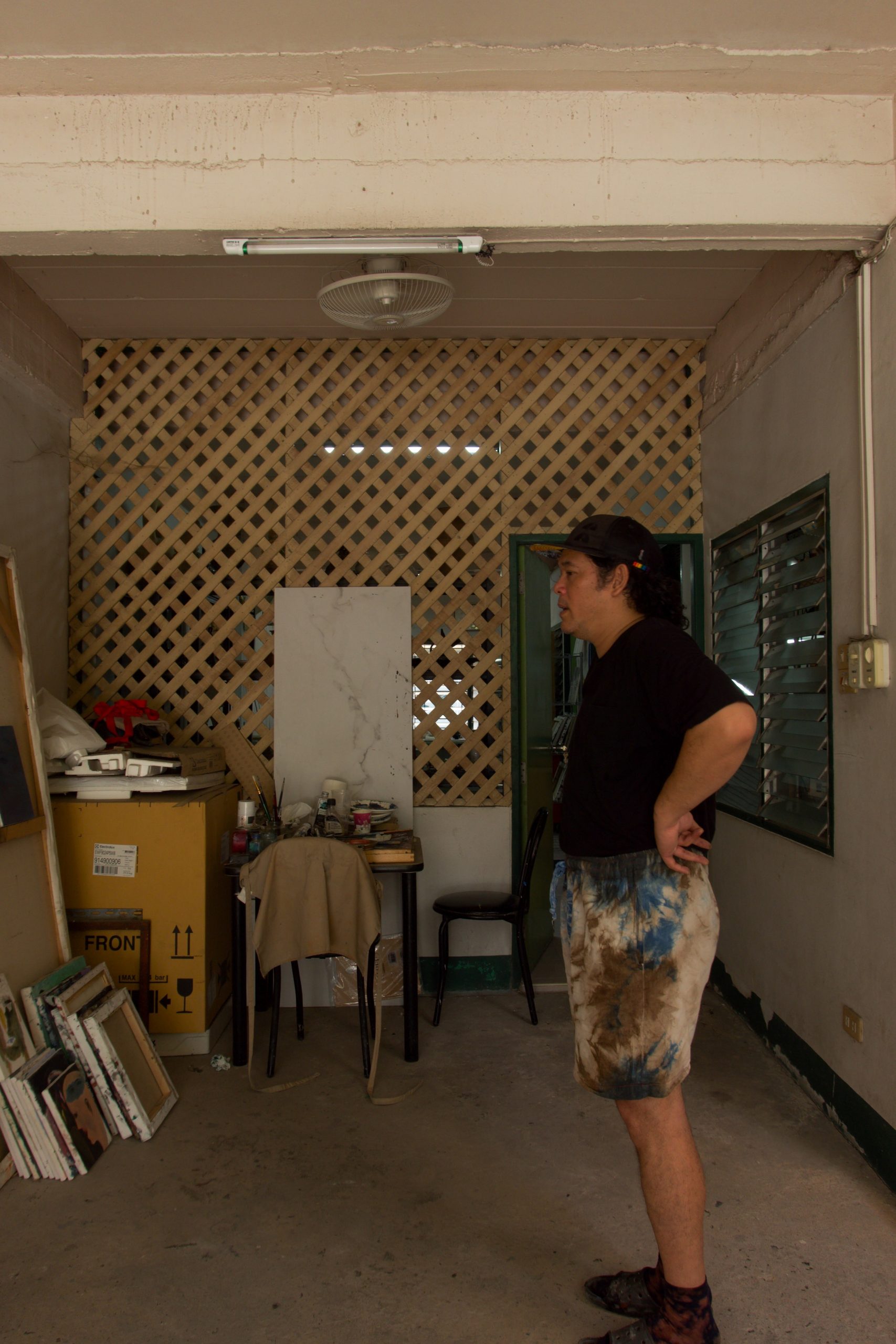
ท่ายืนประจำตัวของดุษฎีเวลาเขาถอยออกมามองภาพที่เพ้นท์ไว้ ซึ่งโดยปกติแล้วเขาจะใช้พื้นที่บริเวณหน้าบ้านตรงนี้ในการทำงานเพ้นท์ติ้งเนื่องจากต้องอาศัยแสงพระอาทิตย์
ซึ่งการขยับในช่วงเวลาตลอดสิบกว่าปีที่ผ่านมาของดุษฎี ก็ทำให้เขาได้เจอกับประติมากรรมควบคู่ไปกับการทำงานกับเทคนิคหรือวัสดุอื่นๆ ดูได้จากผลงานเช่น Empty Every Night (2559) ผลงานงานจัดวางในนิทรรศการ สองคนยลตามช่อง คนหนึ่งมองเห็นโคลนตม อีกคนตาแหลมคม เห็นดวงดาวพราวพราย นิทรรศการกลุ่มจัดแสดงที่หอศิลป์มหาวิทยาลัยศิลปากร งานภาพถ่ายและงานสเก็ตช์ในนิทรรศการ There are More Monsoon Songs Elsewhere (2561) ที่ 100 ต้นสนแกลเลอรี่ [ปัจจุบันคือ มูลนิธิ 100 ต้นสน] หรือจะเป็นงานวิดีโอและจัดวางเสียงที่จัดแสดงร่วมในโปรเจกต์ OFF-SITE นิทรรศการ The Piano Shop (2566) ซึ่งจัดโดยบางกอก ซิตี้ซิตี้ แกลเลอรี่ และอีกมากมายที่เข้าร่วมทั้งในไทยและต่างประเทศ
-
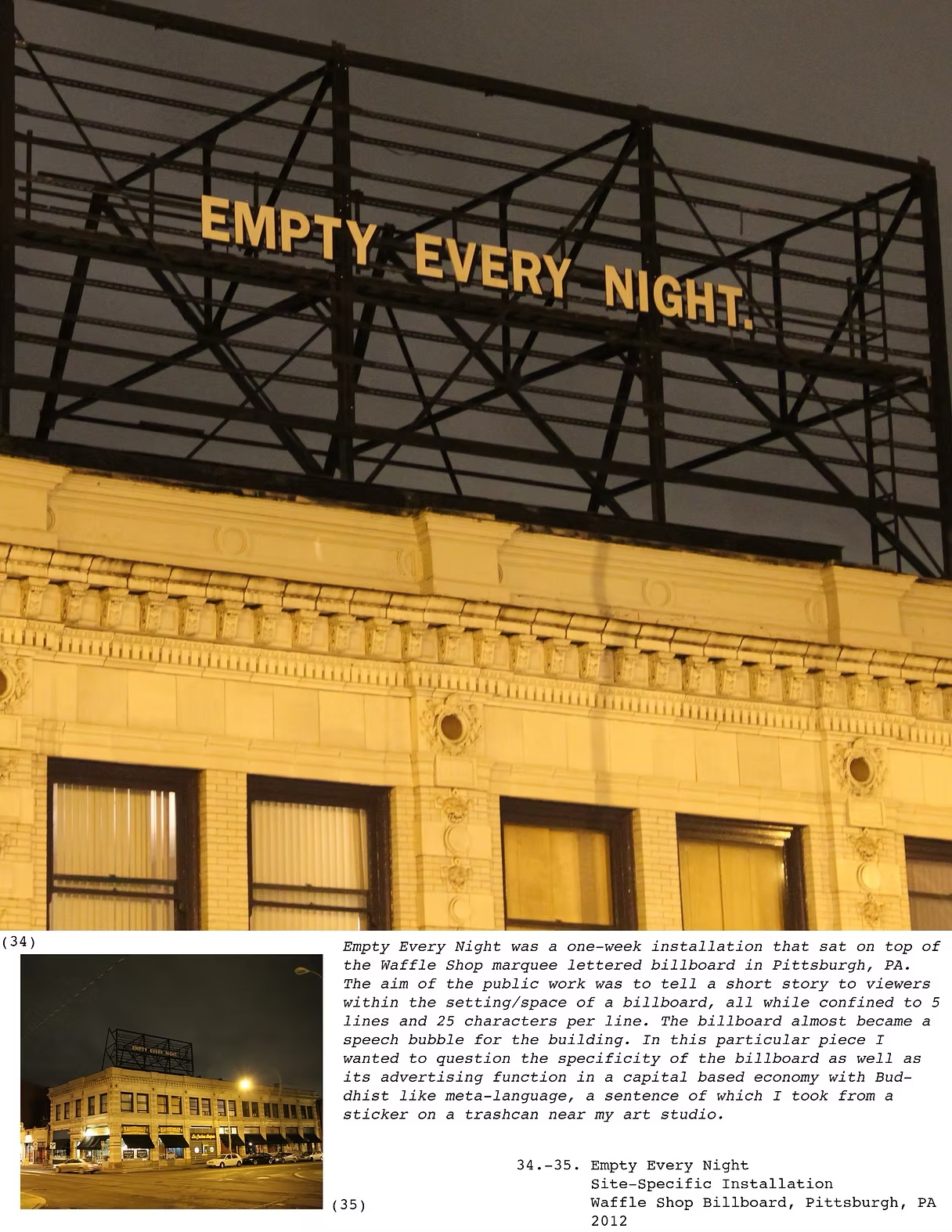
- ภาพถ่ายผลงานจากนิทรรศการ สองคนยลตามช่อง คนหนึ่งมองเห็นโคลนตม อีกคนตาแหลมคม เห็นดวงดาวพราวพราย (2559)
-
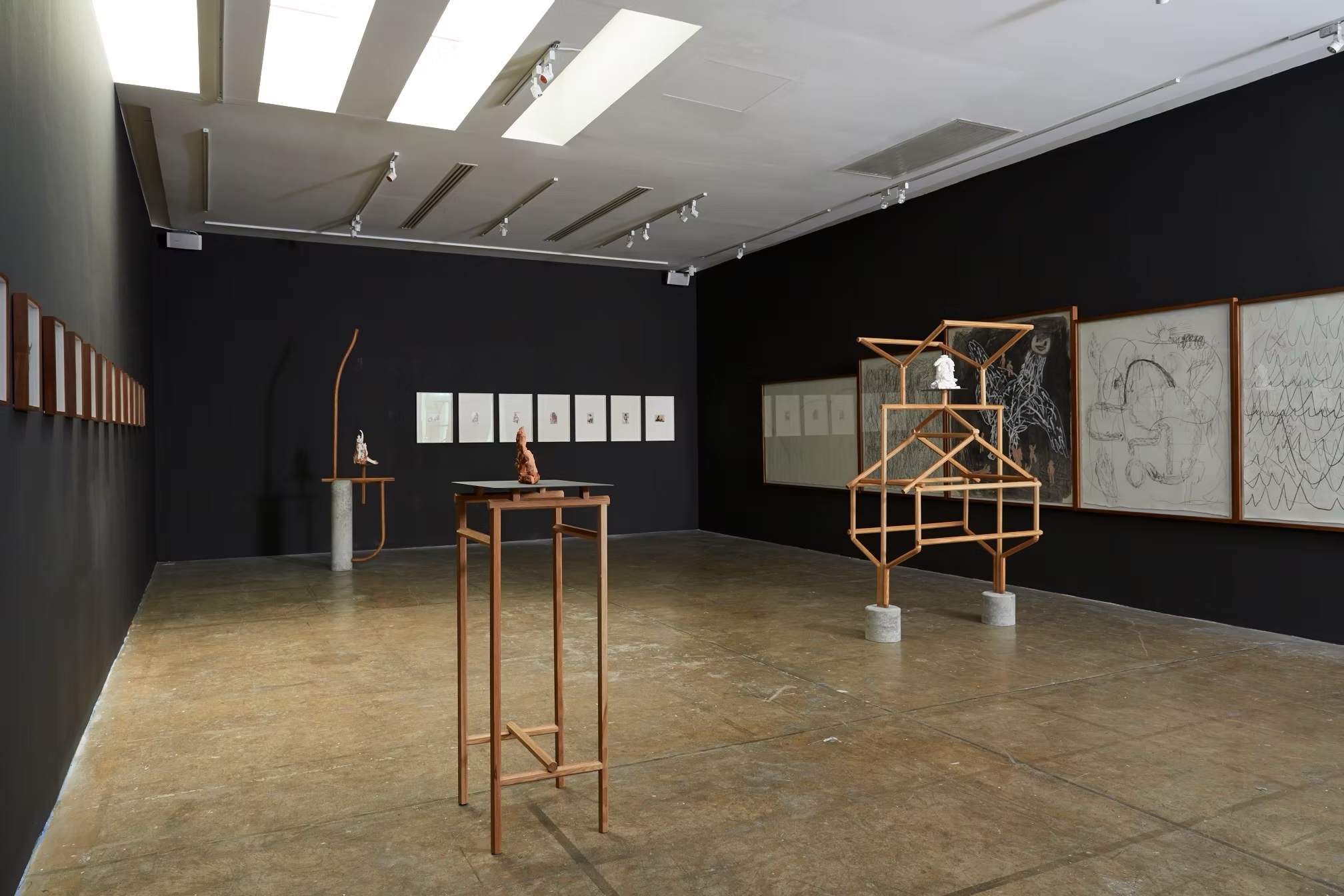
- ภาพถ่ายผลงานจากนิทรรศการ There Are More Monsoon Songs Elsewhere (2561)
-
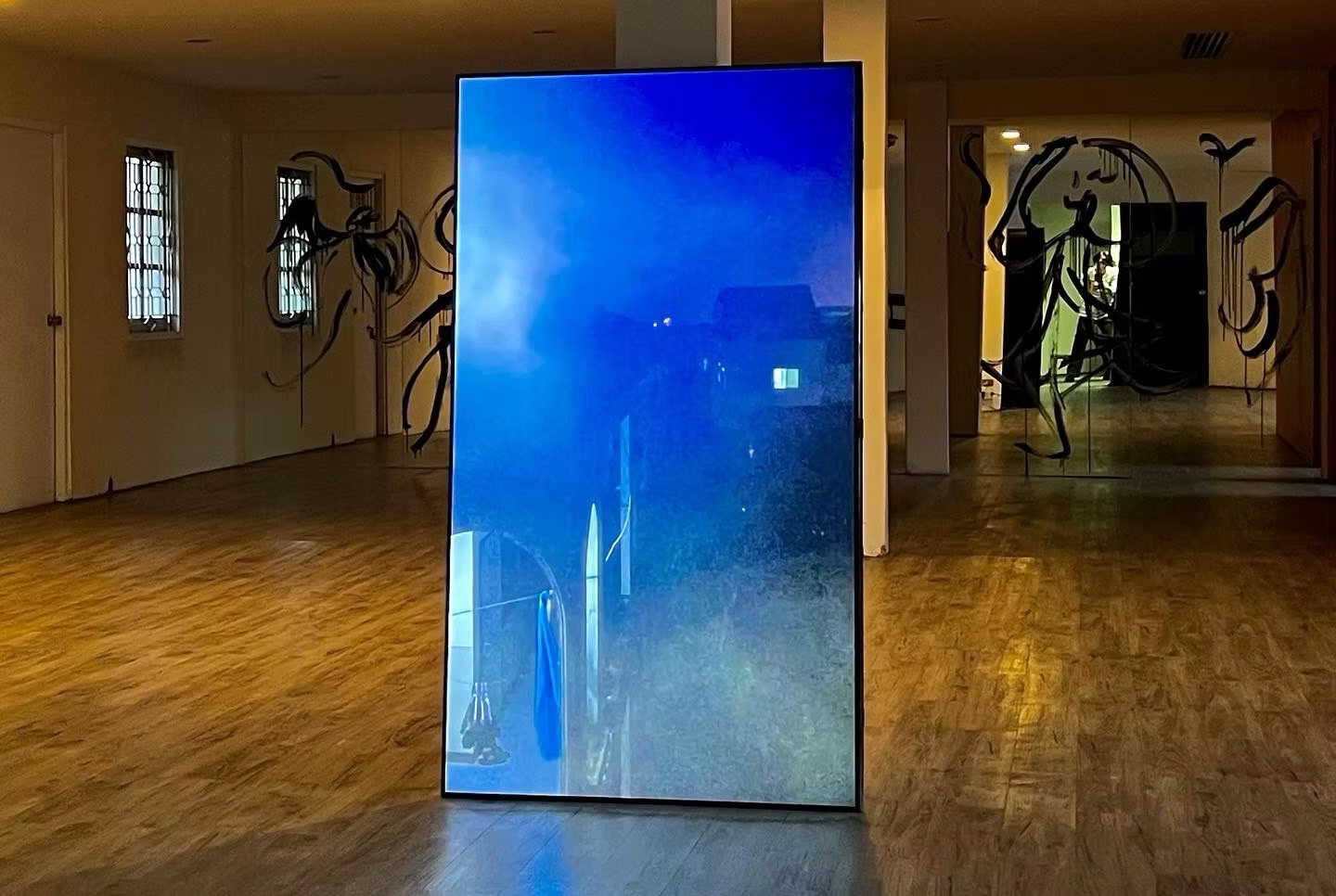
- ภาพถ่ายผลงานจากนิทรรศการ The Piano Shop (2566)
ท่าทีของผลงานที่ทั้งตอบรับและงัดข้อกับกรอบการทำงานของภัณฑารักษ์และบริบทของพื้นที่เพื่อสานต่อบทสนทนานั้นต่างกันออกไป มีอยู่บ่อยครั้งเหมือนกันที่ผู้เขียนเผลอเคยชินกับการได้เห็นชุดผลงานประติมากรรมของเขาจัดแสดงอยู่ในพิพิธภัณฑ์ที่เต็มไปด้วยวัตถุโบราณชิ้นอื่นๆ อย่างเช่นในกรณีการจัดแสดงในพิพิธภัณฑสถานเครื่องถ้วยเอเชียตะวันออกเฉียงใต้ หรือ พิพิธภัณฑสถานแห่งชาติ พระนคร โดยลืมเฉลียวใจไปว่าความคุ้นเคยดังกล่าวอาจกลายเป็นกรอบที่มาจำกัดวิธีการมองงานและการทำงานของศิลปิน
อย่างไรก็ดี หนึ่งในผลงานของดุษฎีที่ผู้เขียนชอบคือ I’m waiting on for the future of more water to come (2561) ซึ่งเป็นผลงานจัดวางที่ร่วมจัดแสดงในงานเทศกาลศิลปะไทยแลนด์ เบียนนาเล่ กระบี่ [ค้นเจอไฟล์แคตาล็อกของเทศกาลแบบออนไลน์ สามารถอ่านเพิ่มเติมได้ที่ ลิ้งก์นี้] ในคราวนั้นดุษฎีเลือกที่จะเอาสปริงบอร์ดและบันไดสระว่ายน้ำไปติดตั้งบนโครงสร้างคอนกรีตทิ้งร้างที่พอกะจากความสูงแล้วอาจจะมีฟังค์ชันเป็นแทงค์หรือบ่อเก็บน้ำขนาดเล็กไว้ใช้ยามฉุกเฉิน ทั้งนี้โครงสร้างดังกล่าวและงานของดุษฎีตั้งอยู่ในสวนสาธารณะซึ่งอาจจะต้องอาศัยระยะการแหงนคอหรือกวาดสายตาดูโดยรอบสักหน่อยถึงจะเจอ ผู้เขียนสนใจความรู้สึกผิดที่ผิดทางของงานชิ้นนี้เป็นพิเศษ จะเป็นโครงสร้างร้างก็ดีหรือจะเป็นบริเวณโดยรอบที่ไม่ได้มีอะไรมารองรับก็ตาม “พี่แป๋งอยากทำอะไรตอนนั้น เป็นหนึ่งในชิ้นที่อยากถามนานแล้ว แต่หาข้อมูลบนเว็บไซต์ก็ไม่เห็นเจอ”
ดุษฎีใช้เวลาคิดอยู่ครู่หนึ่งว่าผู้เขียนหมายถึงงานชิ้นไหน “งานที่กระบี่ตอนแรกจะเป็นอีกอย่างหนึ่ง แต่ระหว่างทางด้วยข้อจำกัดอะไรหลายอย่างมันก็เลยออกมาอย่างที่เห็น ตอนนั้นเรามีไอเดียเรื่องของที่นัดหมาย รวมตัวกัน น้ำท่วมโลก อะไรประมาณนี้ ก็เลยกะจะทำเป็นเหมือนแพลอยออกไปและมีสปริงบอร์ดกระโดดน้ำ แต่พอไม่ได้เกิดขึ้นก็น่าเสียดายเหมือนกัน ไม่รู้จะออกมาน่าสนใจมั้ย ไม่รู้ (หัวเราะ)”
-
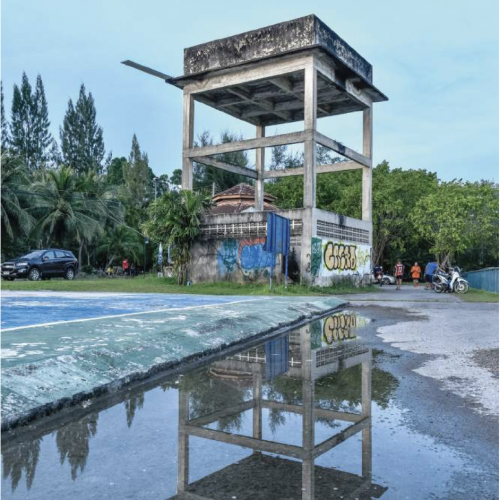
- ภาถ่ายจากแคตาล็อกรวมผลงานที่ร่วมจัดแสดงในเทศการศิลปะไทยแลนด์ เบียนนาเล่ กระบี่ (2561) สืบค้นวันที่ 3 เมษายน 2569
-
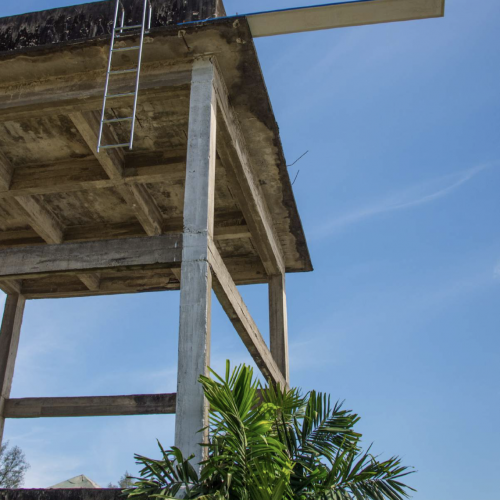
- ภาถ่ายจากแคตาล็อกรวมผลงานที่ร่วมจัดแสดงในเทศการศิลปะไทยแลนด์ เบียนนาเล่ กระบี่ (2561) สืบค้นวันที่ 3 เมษายน 2569
ระหว่างพูดคุยเราก็เคลื่อนย้ายตัวจากโซนหน้าบ้านที่ดุษฎีใช้ทำงานเพ้นท์ติ้งเข้าสู่ภายในบ้านที่อากาศจะเย็นกว่า ด้านในเต็มไปด้วยหนังสือ งานสเก็ตช์ อุปกรณ์ทำงาน งานกระดาษ และงานประติมากรรมชิ้นน้อยใหญ่นับไม่ถ้วนที่เขาเก็บสะสมมา นึกถึงบทสนทนาก่อนหน้านี้ที่ว่าด้วยเรื่องการทำงานกับหลายวัสดุ ดุษฎีคิดอย่างไรกับสิ่งนี้ “มันก็เหมือนการเจริญเติบโต คือเราไม่ได้มีชื่อเสียง แล้วเราก็ไม่มีความตายตัว หรือความคาดหวังที่ต้องทำตาม คือทั้งหมดที่ทำมาก็คือเรา มองว่าเราอาจจะกำลังโตขึ้นมา ดอกเราอาจจะยังไม่ได้ผุดโผล่มาบานสะพรั่ง แต่เป็นช่วงของการค่อยเป็นค่อยไป”
แล้วในระหว่างทางการเจริญเติบโตของดุษฎีมีอะไรบ้างที่เขาเรียนรู้อยู่เรื่อยๆ ? หากไล่เรียงสายตาไปตามสิ่งของที่อยู่ภายในบ้าน หนังสือที่วางอยู่ตามชั้นที่ดึงดูดสายตาผู้เขียนเป็นพิเศษ คงช่วยตอบอะไรได้บ้าง “หนังสือพวกนี้หลายเล่มเก็บมาตั้งแต่เรียน เราชอบกลับไปเปิดดูงาน Matisse (Henri Matisse) งานของแพร (แพร พู่พิทยาสถาพร) เล่มล่าสุดของเขาเราก็ชอบ ศิลปินอีกคนหนึ่งเราก็ชอบ Mamma Andersson เราซื้อหนังสือเขามาเยอะมาก บางทีเราคิดว่างานศิลปินเปิดกูเกิ้ลหาแล้วก็เจอ แต่มันไม่เจอหรอก อีกอย่างเดี๋ยวนี้เวลาซื้อหนังสือก็จะพยายามซื้อเล่มที่ตีพิมพ์ใหม่ๆ เพราะเราเอามาใช้เทียบดูสี เอามาใช้เรียนรู้ว่าภาพนี้ขยับแปรงแบบไหน ดู composition”
“แพรวคิดว่านี่คงเป็นข้อดีมากๆ ของการทำหนังสือประเภทแคตาล็อกแหละ อย่างน้อยที่สุดคือถ้ามันถูกคิดมาอย่างถี่ถ้วนทั้งในเชิงเนื้อหาและการออกแบบมาว่ามันสามารถเป็น reference ให้คนอื่นไปใช้ค้นดูข้อมูลต่อได้” อดไม่ได้ที่จะแชร์ให้เขาฟังเนื่องด้วยงานที่ผู้เขียนทำอยู่นั้นมีโอกาสได้ดูได้อ่านหนังสือศิลปะหลายประเภทบ่อยๆ หนังสือแคตาล็อกที่ดีในความหมายของตัวเองนั้นแน่นอนว่านอกเหนือจากข้อมูลเชิงประจักษ์ทั้งเนื้อหาและภาพครบถ้วนแล้ว การมีข้อเขียนเกี่ยวกับไอเดียของทั้งผลงาน นิทรรศการ หรือรวมไปถึงบทวิจารณ์จะได้แต้มบวกขึ้นไปอีก [ซึ่งเจอได้น้อยมาก และส่วนใหญ่หากมี ก็มักเป็นบทสัมภาษณ์]
-
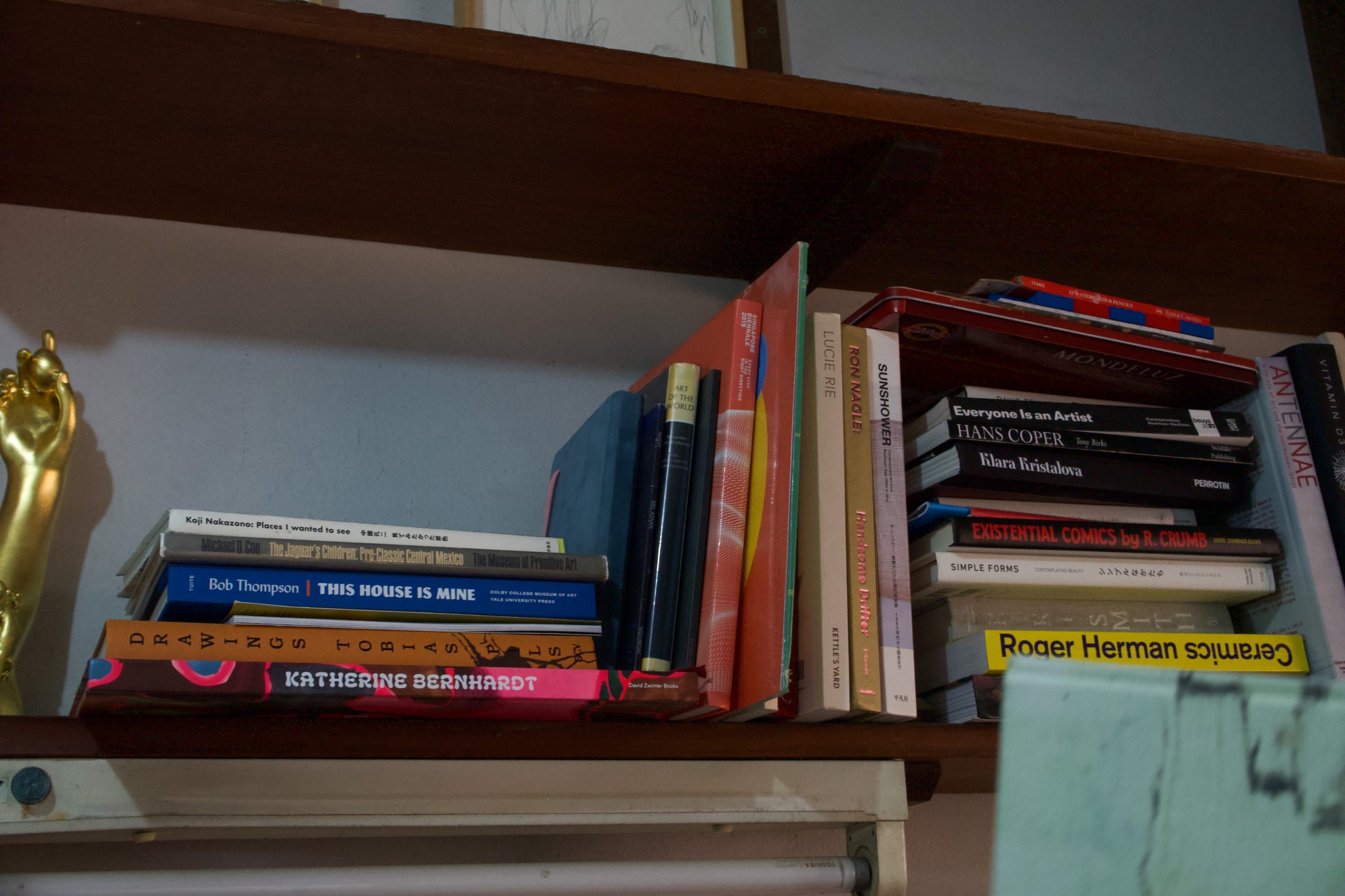
- บางส่วนของหนังสือที่เขานำมาไว้ที่สตูดิโอซึ่งส่วนใหญ่แล้วเป็นหนังสือของศิลปินที่เขาชื่นชอบ
-
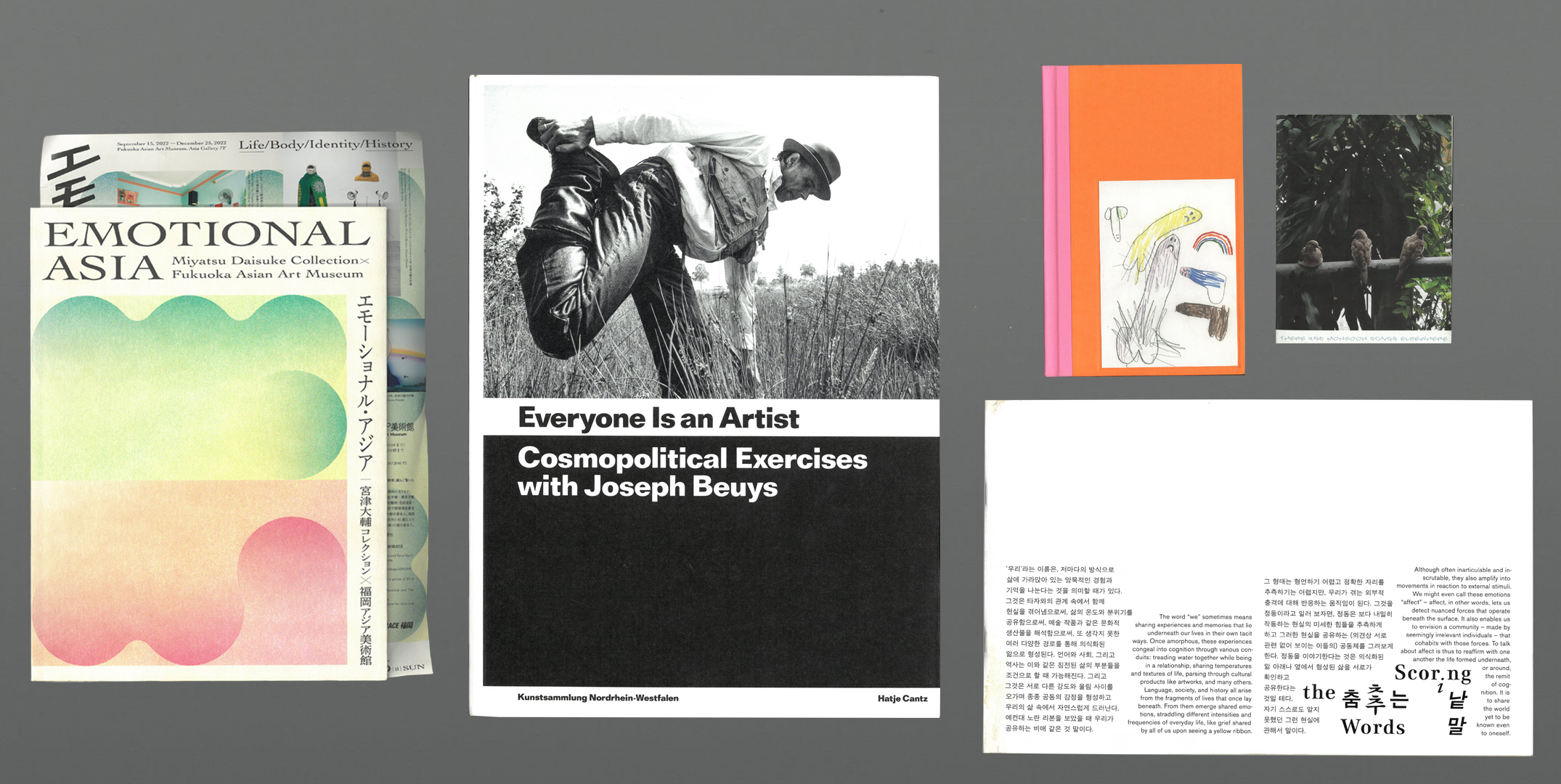
- หนังสือบางส่วนจากกล่องอาร์ไควฟ์ที่เก็บรวบรวมหนังสือที่เกี่ยวกับกับงานของดุษฎีทั้งหมด มีทั้งแคตาล็อกจากนทิรรศการที่เขาร่วมจัดแสดงและหนังสือของตนเอง
ผู้เขียนอยากจะขอย้อนอดีตของดุษฎีในช่วงที่เรียนจบปริญญาตรีแล้วกลับมากรุงเทพฯ สนองความอยากลากเส้นต่อจุดของเหตุการณ์ที่ตัวเองไม่ทันได้มีประสบการณ์ร่วมสักหน่อย “ตอนนั้นที่เรียนจบแล้วกลับมาก็พยายามทำความเข้าใจว่ามีใครอยู่ตรงไหน มีแกลเลอรี่อะไรบ้าง “ตอนที่เรากลับมาคือช่วงปลายของ about studio/about cafe หรือ VER กำลังเพิ่งสร้าง แล้วก็เริ่มดูว่าศิลปะร่วมสมัยที่นี่เขาทำอะไรกัน” ซึ่งช่วงเวลาเดียวกันสิ่งที่เกิดขึ้นในการทำงานศิลปะร่วมสมัยของกรุงเทพฯ กับในอเมริกาก็มีส่วนที่ต่างกัน “แนวคิดเกี่ยวกับเรื่องความหมายของชีวิต หรือมุมมองเรื่องความงามคงเป็นส่วนที่ต่าง แต่ขณะเดียวกันที่กรุงเทพฯ ก็ยังมีความเป็น international อยู่ ขึ้นอยู่กับว่าอยู่ในวงไหน ยกตัวอย่างเช่น VER ก็มีความเป็น international conceptual มากในวิธีการจัดการอีกแบบหนึ่ง หรือ 100 ต้นสน เขาก็มีวิธีการคิดถึงว่าอะไรเป็นศิลปะแล้วความน่าสนใจคืออะไร รวมไปถึงหอศิลป์ของมหาวิทยาลัยอย่าง ม.กรุงเทพฯ ศิลปากร หรือที่ จุฬาฯ ก็แตกต่างกันไป อย่างงานที่เคยโชว์ที่จุฬาฯ [นิทรรศการ Dusadee + Dusit + Lovers + Dead Ones (2559) หอศิลปวิทยนิทรรศน์ สำนักงานวิทยทรัพยากร จุฬาลงกรณ์มหาวิทยาลัย] มันก็เป็นการทดลองใช้ material ดูว่าจะเป็นยังไง มันเป็นวิธีการมองเห็นของเราในตอนนั้น เห็นว่าอันนี้มันน่าสนใจ มันมีความหมาย แต่ว่าเวลามันก็เปลี่ยนไป ของบางชิ้นมันเปลี่ยนไป แต่ก็มีบางชิ้นที่ยังเหมือนเดิม ก็เหมือนความรู้สึกคน มันก็เปลี่ยนไปอยู่ตลอดเวลา”
พอถามถึงเรื่องการเรียนต่อแล้ว ดุษฎีเองมองว่าตัวเขาไม่ได้มีความรู้มากพอว่าการเรียนที่อื่นเป็นยังไง การได้กลับไปในที่ที่เขาเองในเวลานั้นว่าดีที่สุดและน่าจะเป็นไปได้ เขาเลยเลือกเรียนต่อปริญญาโทที่สหรัฐอเมริกา มองสิ่งที่อยู่ตรงหน้าคือ จะไปเรียนหนังสือ ทำงานศิลปะให้ดีที่สุด จบออกมาขายงานได้ หากินได้ ซึ่งพอผู้เขียนถามต่อว่าแล้วความเป็นไปของศิลปะร่วมสมัยในกรุงเทพฯ หลังกลับมาหลังเรียนจบปริญญาโทรอบนี้ต่างออกไปมากน้อยแค่ไหน “มันก็เป็นตัวละครเดิม แต่ความเข้าใจของเรามันใหญ่ขึ้น มองเห็นการจัดการของ regional เห็นสิงคโปร์ อินโดนีเซีย ฟิลิปปินส์ มาเลเซีย มองเห็น hub ของมัน มองเห็นความเป็นไปได้อยู่”
มาคุยถึงเขาในบทบาทของอาจารย์บ้าง ปัจจุบัน ดุษฎี สอนอยู่ที่ภาควิชาออกแบบการสื่อสาร (Communication Design) หลักสูตรนานาชาติ คณะสถาปัตยกรรมศาสตร์และการออกแบบ มหาวิทยาลัยเทคโนโลยีพระจอมเกล้าธนบุรี ซึ่งเขาก็พูดให้ฟังอย่างตรงไปมาว่าบทบาทของอาจารย์นั้น มันช่วยการันตีความมั่งคงทางรายได้ แต่ถึงอย่างงั้นก็ตาม ดูเหมือนตลอดการทำงานที่ผ่านมา ดุษฎียอมที่จะให้และใช้เวลาในการทำความเข้าใจวัสดุที่ตัวเองหยิบจับอยู่ในมืออย่างเต็มที่ ราวกับว่าศิลปะไม่เคยเป็นงานอดิเรก? “ใช่ คือว่าเราคิดถึงศิลปะอยู่ตลอดเวลา แต่ไม่ได้ถึงขนาดที่ว่าเวลาสอนหนังสืออยู่แล้วในหัวคิดถึงเรื่องอื่น คือเราก็เตรียมการสอนตามปกติ แต่ทั้งหมดทั้งมวลของการสอนคือได้ทำความรู้จักเด็ก ได้แลกเปลี่ยนความรู้ หรือคอนเนกชั่น หรือแนะให้นักเรียนไปลองดูว่ามีอะไรเกิดขึ้นอยู่ที่ไหนบ้าง แล้วคือนอกเหนือจากการสอนแล้วมันยังมีเรื่องอื่นๆ อีกที่ต้องจัดการ ต้องทำเอกสาร ส่งคะแนน ปัญหาส่วนตัวของนักเรียน ซึ่งแต่ก่อนจะเป็นสิ่งที่ยากมาก เพราะเราเอาตัวเองใส่เข้าไปเยอะ แต่ตอนนี้ค่อยยังชั่ว เราก็ไม่เป็นแบบนั้นแล้ว ให้เขาคิดของเขาเองโดยที่เราก็พยายามหาความเป็นไปได้ในแบบที่เขาคิด หน้าที่ของเราก็คือสนับสนุน เอาแบบนั้นแหละ อยากได้แบบไหน เออดี! ”
“บางทีเราก็ต้องมีโอกาสได้ทดลอง เพราะว่าเราก็ต้องการเจริญเติบโต และการจะมีความรู้ขึ้นมาได้ เราก็ต้องทำผิด ทำถูก ลองว่าเป็นไปได้ยังไง” เขากล่าวเพิ่มเติม
มาถึงตรงนี้ก็กระตุ้นความสนใจของผู้เขียนตามประสาคนไม่เคยได้รับการศึกษาจากที่อื่นนอกจากในประเทศนี้ อยากรู้ว่าสิ่งที่ดุษฎีได้จากการที่เคยได้เรียนทั้งในไทยและไปเรียนและเติบโตที่ต่างประเทศคืออะไร เขาสอนนักเรียนเหมือนที่ตัวเองเคยเรียนมาหรือเปล่า “คือการศึกษาเป็นแค่ส่วนหนึ่งของชีวิต มันเป็นเรื่องของโครงสร้างทางสังคม เป็นเรื่อง infrastucture ของสังคมไม่ว่าจะเป็น บ้านถูกสร้างยังไง อาหารกินอะไร ซื้ออาหารที่ไหน รถติดไม่ติด ขนส่งมวลชนเป็นยังไง อะไรแบบนี้เป็นส่วนหนึ่งของชีวิตทั้งหมด แล้วพอมากลับมาที่ไทย แน่นอนว่า infrastructure มันก็ต่าง วิธีการคิด การกระทำอะไรก็ต่าง สิ่งที่เราได้จากการศึกษาตรงนั้นคงเป็นเรื่องของอุดมการณ์บางอย่างที่มันพูดถึงอิสรภาพทางความคิด ความเป็นมนุษย์ เรื่องวินัยในการทำงาน”
และเมื่อถามถึงประเด็นเรื่องความรู้สึกเป็นอื่นที่เขาเคยแลกเปลี่ยนให้ฟัง เมื่อครั้งให้สัมภาษณ์กับ John Tung ภัณฑารักษ์ชาวสิงคโปร์ ที่คิวเรทนิทรรศการ The Commoner’s House (2565) ดุษฎีก็อธิบายเพิ่มเติมว่า “มันก็ยากมากเพราะตอนเราไป ก็พูดไม่รู้เรื่อง คือเราไม่สามารถที่จะเข้าถึงและสื่อสารถึงความหมายได้ และพอทำมันไม่ได้แล้วเราก็จิตตก พูดติดอ่าง นอกจากในการสื่อสารแล้ว ในการอธิบายทางความคิดก็ยากมาก ทำไมมันถึงยากขนาดนั้น แล้วพอถึงช่วงหนึ่งของชีวิตมันก็เป็นการปรับใช้ ฝึกให้มันใช้ได้ดีขึ้น คือมันไม่ใช่แค่เรื่องของภาษาไทยหรือภาษาอังกฤษ หรือการเขียนได้ไม่ได้ แต่มองว่ามันเป็นการจัดการทางความคิดด้วย”
-2-
คงไม่ผิดนักหากบอกว่าดุษฎียังคงเป็นผู้ใช้งาน Facebook ที่ค่อนข้างแอคทีฟนอกเหนือไปจากแชร์อัพเดทงานนิทรรศการ ภาพถ่ายอาหารการกิน สัตว์บ้างในบางครั้ง บ่อยครั้งจะได้เห็นคลิปวิดีโอที่เขาเล่นดนตรีกับปริญญ์ลูกชาย ดุษฎีเป็นมือกีต้าร์ และปริญญ์เป็นมือกลอง
“จริงๆ แล้วเราอยากเป็นนักดนตรี ที่บ้านก็มีดนตรีและเราก็ชอบมานานแล้ว แต่ว่ามันก็มีปัญหาอีกแหละก็คือว่าไม่ได้เรียนดนตรีแบบจริงจังมาตั้งแต่เด็ก การจะเข้ามหาวิทยาลัยด้านดนตรี ส่วนใหญ่จะเป็นเด็กที่เทรนมาประมาณหนึ่ง โดยมีความรู้พื้นฐาน สามารถเรียบเรียง และฝึกฝนในเครื่องดนตรีนั้นๆ มาประมาณหนึ่งแต่เราคือเล่นได้งูๆ ปลาๆ ก็เลยไม่ได้ไปต่อกับการเรียนดนตรี ซึ่งก็น่าเสียดายเหมือนกันนะ เพราะเราสามารถเข้าถึงองค์ความรู้ตรงนั้นได้เลยถ้าเราจะเข้าไปตอนเด็ก คือเราก็ไม่ได้มีผู้ใหญ่ มี mentor ที่แนะนำว่ามีอะไรอยู่ตรงไหน เราก็มั่วๆ เอาเอง วิ่งตามเทรนด์ หาดูว่าคนเขาเล่นอะไรกัน แต่เราเป็นคนชอบดูของสวยๆ งามๆ มาตั้งแต่เด็ก เคยสะสมแสตมป์ ส่วนตอนนี้ของที่สะสมไว้เยอะที่สุดคือหนังสือ”
พูดจบก็ผายมือชี้ไปรอบห้อง จินตนาการไปว่าถ้าจะรีโนเวทห้องนี้ จะเพิ่มชั้นตรงไหนบ้าง เพื่อที่จะได้ขนหนังสือมาเพิ่มเพราะที่เห็นตรงนี้เป็นแค่หนึ่งส่วนสิบจากทั้งหมดที่มีอยู่ “เห็นหนังสือบนชั้นมั้ย ถ้าได้กลับไปทำงานปั้นนะ อยากจะ cast ปั้นเซรามิคเหมือนเป็นหนังสือเลยนะ แล้วเอาพวกตุ๊กตุ่นมาไว้ด้วยข้างบน”
“ตอนนี้ก็มีความสุขกับการเล่นดนตรีนะ มันก็เป็นความฝันของเราตอนเด็กที่หายไป แต่จริงๆ เราไม่ได้อยากจะทำอะไรมาก แค่ต้องการอยากจะมีเพลงของเราที่เพราะๆ ที่เราแต่งเอง แค่นั้นแหละ”
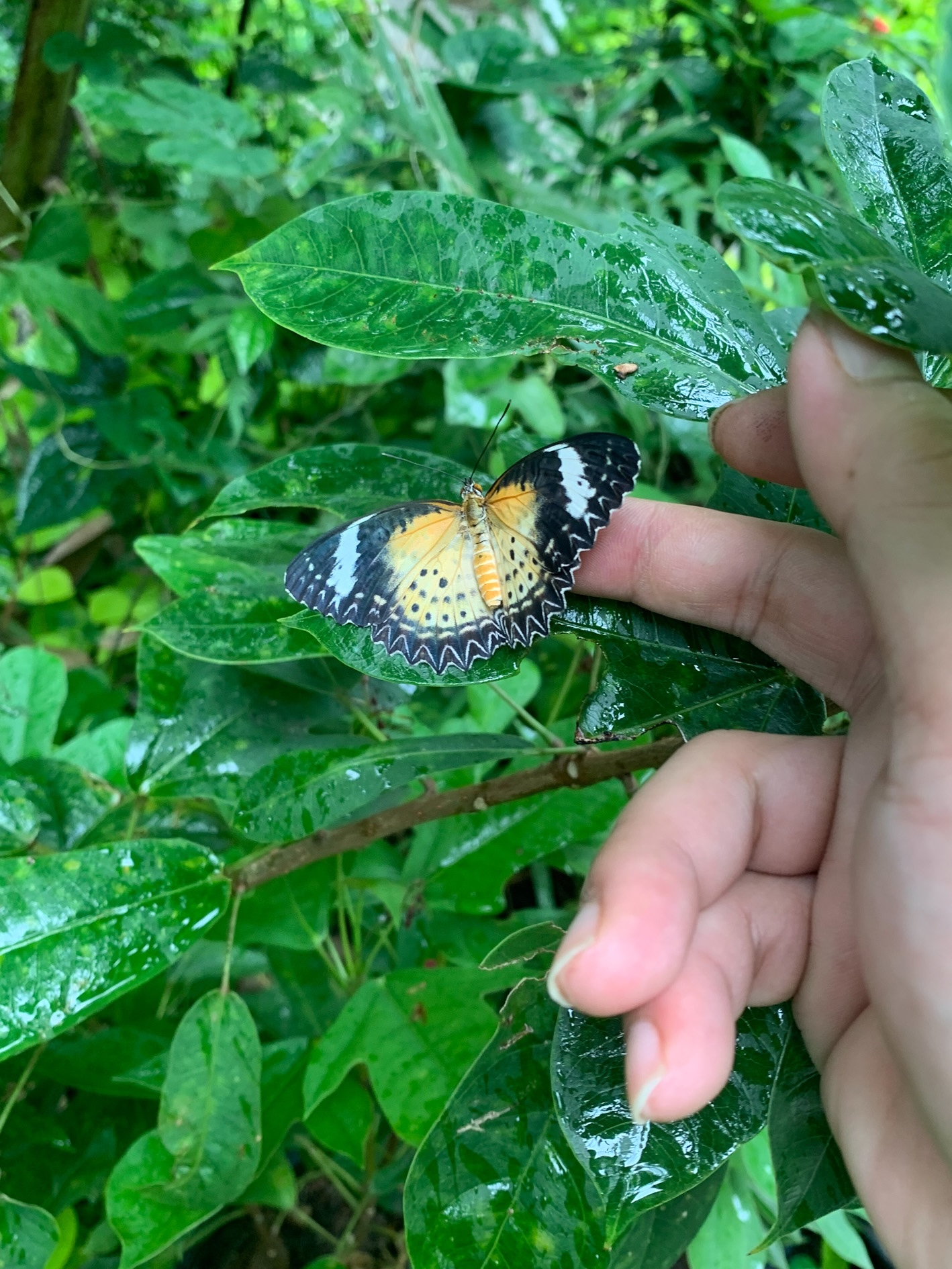
ภาพถ่ายกับแมลงที่ดุษฎีถ่ายเก็บไว้ด้วยกล้องโทรศัพท์ เขาเล่มเพิ่มเติมว่าบ้านหลังที่ถ่ายรูปนี้จะเป็นหลังที่อยู่กับครอบครัวช่วงโควิด นั่นเป็นสาเหตุหนึ่งที่ทำให้ได้เห็นแมลงมากขึ้น ก่อนที่จะพัฒนากลายเป็นงานในชุด UNIVERSE IN THE GARDEN
โบราณคดี, มานุษยวิทยา และสิ่งแวดล้อมในเมือง คือ 3 คำในประวัติโดยคร่าวของดุษฎีที่นำมาใช้อธิบายวิธีการทำงานและความสนใจของเขา คำนามสามคำนี้ในตัวมันเองคือศาสตร์ที่บรรจุวิธีวิทยา มีกระบวนการทำงาน ลำดับขั้นตอน และการวัดคุณค่าเฉพาะตัว แต่ไม่ว่าในเชิงวิชาการจะมีความหมายว่าอย่างไร ทั้ง 3 ล้วนให้ความสนใจกับความเป็นมนุษย์ ทั้งนี้สำหรับตัวดุษฎีเองเขาเชื่อมโยงคำพวกนี้กับวิธีการทำงานศิลปะของตนเองอย่างไร? “มันเป็นเรื่องของชีวิตทั้งหมด แล้วอย่างคำสุดท้ายมันคือการดู สังเกตเห็นชีวิตและสิ่งแวดล้อมในเมือง ซึ่งมันคิดต่อมาจากการทำงานชุดแมลง [ชุดผลงาน UNIVERSE IN THE GARDEN] แล้วมันบอกอะไรเราหลายอย่าง ถ้าเราสามารถถอดรหัสออกมาได้ว่า สิ่งมีชีวิตรอบตัวเรามันใช้ชีวิตร่วมกันได้ยังไง หมายความว่า ต้นไม้ต้นหนึ่ง มันมีส่ิงชีวิตรอบตัวมันเองแบบไหนบ้าง แล้วต้นไหนถูกเลือกไปอยู่ที่ตรงไหน สิ่งแวดล้อมตรงนั้นเป็นยังไง แล้ววิธีการจัดการของเมือง การจัดการกับผัง มันทำให้เห็นว่าในเมืองที่มีคนอยู่เยอะๆ เนี่ย มันมีสิ่งชีวิตอะไรบ้าง แล้วมันก็เป็นการฝึกให้คุณค่า การมองสังเกตใกล้ๆ ถ้าพูดย้อนกลับไปงานถ่ายแมลง อย่างแรกเลยคือเราต้องเห็นมันก่อน ซึ่งพอเห็นแล้วก็เหมือนเปิดประตู แมลงจะมีให้เห็นอีกเยอะมากๆ อันนี้ก็ส่วนหนึ่ง ส่วนการที่เราจะเข้าไปถ่ายแมลงใกล้ๆ ได้ เพราะว่าเราใช้กล้องมือถือถ่ายเนอะ แล้วระยะมันแคบนิดเดียวเอง แล้วสิ่งมีชีวิตพวกนี้มันเป็นคนละมิติกับเราและมันไวมาก เพราะฉะนั้นเราก็ต้องทำตัวให้สามารถเข้าไปใกล้ได้ เพราะเราไม่ได้ซูมจากไกลๆ เราเลยมองว่ามันเป็นการฝึกฌาณนะ จิ้งจกก็เหมือนกัน เราต้องหลบ ชิว หรือมองกับมันสักพักเพื่อที่จะหาทางเข้า มันก็ต้องสร้างความรู้สึกที่ผ่านสัญชาตญาณของเรากับสิ่งที่เราเห็น”
“อย่างที่เราบอกว่าชอบมองดูของ แล้วเราก็ชอบนั่งเหม่อ มองดูไปข้างหน้า แต่ในหัวมันก็ zoning out มีพื้นที่ว่างขึ้นมา อย่างงานเพ้นท์ตอนที่เราเริ่มภาพ เอาสีมาละเลง ก็ไม่รู้หรอกว่าจะเป็นแบบไหน แต่เราเริ่มเห็นแล้วว่ามันมีโครงหน้า ตรงนี้เป็นตา อันนี้เป็นจมูก ปากอยู่ตรงนี้ ซึ่งเราก็อยู่ในขั้นที่กำลังเรียนรู้กับการเพ้นท์อยู่ ดูความร้อนความเย็นของสี สีไหนอยู่กับสีไหน แล้วแน่นอนมันก็มีคิดเรื่อง aesthetic เรื่องประวัติศาสตร์ศิลปะด้วย แต่ทั้งมวลเราก็กลับมาดูว่าตัวเองมองเห็นอะไรอยู่ตรงไหน เรามองว่างานเพ้นท์มันเป็นเรื่องของเวลา ความลึกของชั้นสี แล้วก็ยังเป็นเรื่องของการจัดการกับ materials ว่ามันสามารถที่จะเป็นตัวเองได้ ในขณะเดียวกันก็ represent สิ่งอื่นอย่างอื่นด้วย คิดว่าสิ่งที่สำคัญคือมันจะมีความลึก มีชีวิต มีความรู้สึก ซึ่งเราก็พยายามหาตรงนั้นว่ามันคืออะไรกันแน่”
ผู้เขียนเองก็มีความเชื่อว่าหากฝึกฝน ลงมือทำอะไรไปจนกลายเป็นชีวิตประจำวัน เราจะสามารถจับทางถูกหรือมีพัฒนาการที่ดีขึ้นไปได้เรื่อยๆ พอได้จังหวะเลยถามตรงๆ ว่าในช่วงเปลี่ยนผ่านจากการทำงานประติมากรรม เพื่อกลับมาหาเพ้นต์ติ้งนั้น ดุษฎีมีการคิดถึงเรื่องของ muscle memory ในการทำงานประติมากรรมหรืองานที่ใช้วัสดุอื่นๆ บ้างหรือเปล่าในการทำงานตลอดสิบกว่าปีที่ผ่านมา “มันก็เหมือนกันการเล่นกีฬาหรือเล่นดนตรี ที่ถ้าไม่ได้ฝึกฝนหรือจัดการกับมันในทุกๆ วันก็คงจะหายไป แต่มันก็เป็นเรื่องของการดูอีกเหมือนกัน อย่างการทำ sculpture คือดูว่ามันทำงานยังไง อยู่แบบไหนในพื้นที่ ซึ่งมันต้องอาศัยพื้นที่รอบๆ ในการดู เพราะว่าเป็น 3 มิติ เราจะไม่สามารถเห็นได้รอบหมดทุกด้านในการมอง 1 ครั้ง และตัวมันเองก็ต้องการพื้นที่ด้านนอก แต่ถ้าเป็นเพ้นท์ติ้ง สเปซด้านนอกอาจจะไม่ได้มีส่วนร่วมอะไรมาก เพราะเราก็อาจจะมองเข้าไปในรูป มันคือระยะของความลึกระหว่างเรากับเพ้นต์ติ้ง แล้วก็เราที่เข้าไปในตัวเรา แต่มันจะไม่ได้เป็นเหมือน sculpture ที่อาศัยว่าข้างนอกมันคือะไรกันแน่ สำหรับเรามันอาจจะต่างกันตรงนั้น”
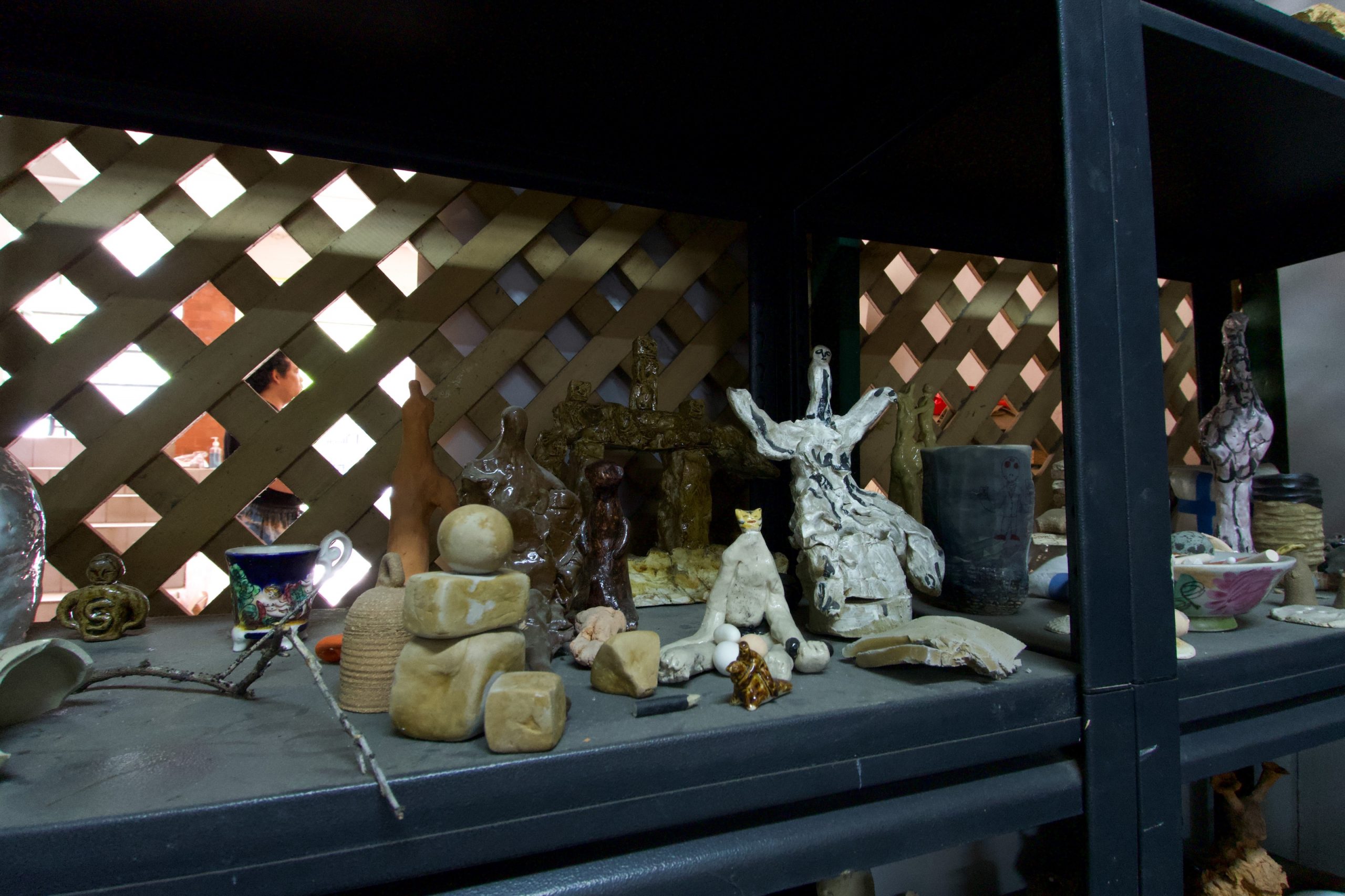
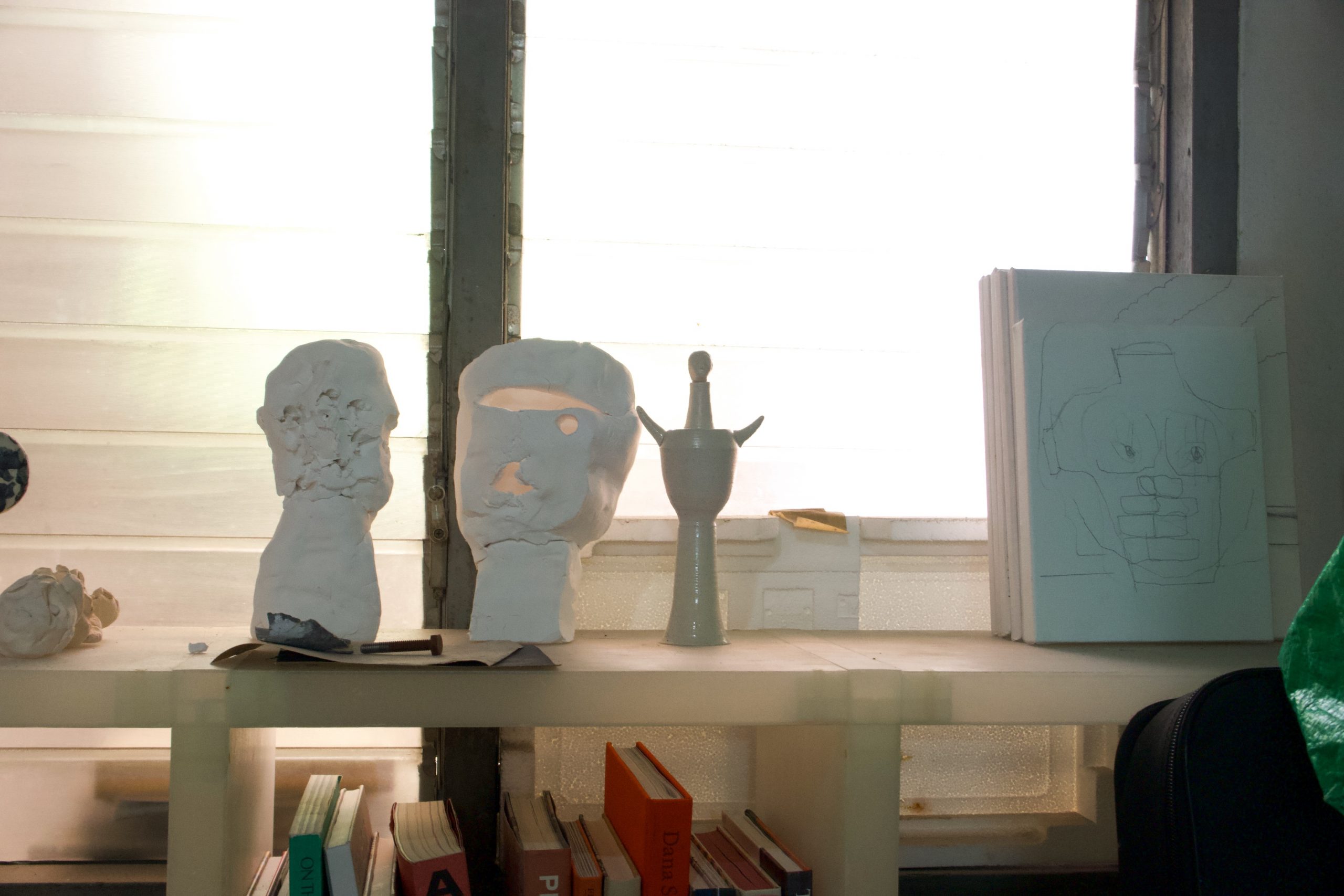
งานปั้นชิ้นเล็กที่มีเยอะมากในสตูดิโอหลังนี้ บางชิ้นคลับคล้ายคลับคลาราวกับเป็นต้นแบบให้กับงานจริงที่เคยเห็นในนิทรรศการ
“คือทุกอย่างที่เราทำมันก็บวกบวกกันนะ มันมีความต่างในวัสดุที่ทำแต่จริงๆ ก็เหมือนการเดินทาง หมายถึงบางทีเราก็ตัน ก็ไปทำอันนั้น ตันอีกก็กลับมาต่ออันนี้ แต่ทั้งหมดทั้งมวลสิ่งที่ศิลปะให้กับเราคือมันให้ความสุข ให้อิสระบางอย่าง มันอาจจะไม่ใช่ practice โดยรวม แต่ว่าเมื่อมันเข้าไปข้างในแล้ว ระหว่างที่ทำหรือดู มันคือพื้นที่ว่างที่ต้องการอยากจะมีชีวิตอยู่” ดุษฎีพูดทิ้งท้ายไว้ก่อนที่บทสนทนาครั้งนี้จะจบลงเพื่อจะล้อหมุนไปกินก๋วยเตี๋ยวปลาเจ้าเด็ดที่เขาพูดไว้อย่างเป็นมั่นเป็นเหมาะว่าถ้ามาถึงบางจากแล้วไม่อยากให้พลาดร้านนี้
≋-≋-≋-≋-≋-≋-≋-≋-≋-≋-≋-≋
Interview and photograph by Kantida Busaba
Huntrakul’s artistic practice might be described as one that places trust in the act of seeing—one that carefully negotiates distance and proximity, as well as the conditions of working, without leaving behind the self or the dreams once held in childhood.
-1-
The decision to arrange an interview with Dusadee Huntakul—the first artist in the STUDIO VISIT conversation series did not have a particularly clear starting point. I only knew that I wanted to visit his studio (I’ve never had the chance to visit the studio since we first started working together in 2019), to talk about his interests, and to ask about certain works that I personally like but could not find much information about online. It also felt like an opportunity to revisit and reassess my own understanding how what I once thought I knew about an artist’s practice might have shifted over time.
Now in his forties, Huntakul still regularly goes to Double Rainbow, his studio in the Bang Chak area. Often enough to call it a routine. Over the past five to six months, however, something has changed: he has moved from handling clay, shaping and carrying formed pieces into the kiln to holding a paintbrush, creating distance in order to look again, and to re-familiarize himself with an old companion of modest scale—the canvas. “Actually, I studied painting during my undergraduate years. I liked it, but I admit it was difficult. As an artist, you’re expected to find your identity, your own style. I tried—it was there, but I let it go, put it aside for a while, and moved into drawing or something else instead.”
This progression in Hutrakul’s practice has led him to explore sculpture alongside other techniques and materials over the past decade-plus. Examples include Empty Every Night (2016), an installation in the group exhibition Two men look out through the same bars : one sees the mud, and one the stars at Silpakorn University’s art gallery; foud images and sketch works in There are More Monsoon Songs Elsewhere (2018) at the 100 Tonson Gallery [Now 100 Tonson Foundation]; video and sound installations in the OFF-SITE project The Piano Shop (2023), organized by Bangkok CityCity Gallery; and many more participations both in Thailand and abroad.
His ways of respond to curatorial frameworks and spatial contexts, extending ongoing conversations in different ways. There was a time that I become accustomed to seeing sculptural works presented in museums that emphasize historical artifacts such as exhibitions at the Southeast Asian Ceramics Museum or the National Museum Bangkok. Yet this familiarity can also become a constraint, limiting how to see both the works and the artist’s practice.
One of his works that I am particularly drawn to is I’m waiting on for the future of more water to come (2018), an installation presented during the Thailand Biennale Krabi. [I later came across a digital version of the festival catalogue, which can be read at this link.] For that project, he chose to install a diving board and a pool ladder onto an abandoned concrete structure, whose height suggested that it might once have functioned as a small water tank or emergency reservoir. Both the structure and the work were located within a public park, requiring a certain degree of looking, tilting one’s head upward or scanning the surroundings to even notice it. What interests me is the sense of displacement in the work like how it seems out of place, whether in relation to the abandoned structure itself or the surrounding environment that offers no clear support. “What did you want to do at the time? It’s a question I’ve been wanting to ask for a while, but I could never find any information about it online.”
He takes a moment to recall which work I am referring to. “The piece in Krabi was originally going to be something else, but along the way, due to various limitations, it ended up as what you saw. At the ti;me, I was thinking about ideas of gathering points, coming together, a kind of Judgement day scenario, something along those lines. I had imagined making it like a raft drifting out, with a diving board for jumping into the water. But since that didn’t happen, it’s a bit of a shame. I’m not sure whether it would have turned out interesting or not, who knows.” (laughs)
As we continue talking, we gradually move from the front area of the house where he works on his paintings into the inside area, where the air is a bit cooler. Inside, the space is filled with books, sketches, tools, works on paper, and countless sculptures of varying sizes that he has accumulated over time. It brings me back to our earlier conversation about working across multiple materials, and I find myself asking: how does he think about this? “It’s like growth. I’m not famous, and I don’t have a fixed identity or expectations to follow. Everything I’ve done is just me. Maybe I’m still growing. My flower hasn’t fully bloomed yet. It’s a gradual process.”
What, then, has he been learning along the way? Looking around the house, those books in the shelves might offer some answers. “Many of these books I’ve kept since my student days. I like going back to Matisse’s work. I also like Prae’s (Prae Pupityastaporn) latest work in this book. Another artist I admire is Mamma Andersson; I’ve bought many of her books. Sometimes people think you can just Google artworks but you can’t really find them that way. These days, when I buy books, I try to get newly published ones, so I can compare colors, study brushwork, and look at composition.”
“I think this is one of the real strengths of catalogue-type publications,” I couldn’t help but share with him. Given that my work often involves with various kinds of art books, it feels worth mentioning. “At the very least, if they are thoughtfully developed both in terms of content and design, they can serve as references for others to continue researching from.” For me, a good catalogue is not only one that provides complete factual information both text and images but also one that includes writing that engages with the ideas behind the work, the exhibition, or even critical essays. Those tend to be a real added value. [Though they are quite rare; more often what we get instead are interviews.]
At this point, I find myself wanting to revisit a moment from his past specifically the period after he completed his undergraduate studies and returned to Bangkok, partly to connect the dots of events that I did not personally witness.”After graduating with my bachelor’s degree and returning to Bangkok, I tried to understand who was doing what and which galleries existed. It was the tail end of about studio/about café, and VER was just getting established. That’s when I started observing what contemporary art here was up to.” Around the same time, contemporary art scenes in Bangkok and the U.S. had clear differences. “There are differences in thinking about life’s meaning or views on beauty. But Bangkok still has an international aspect. It depends on the circle you’re in. For example, VER has a very international, conceptual approach in its management. 100 Tonson Foundation thinks differently about what art is and what’s compelling. Even university galleries like Bangkok University, Silpakorn, or Chulalongkorn all vary”
“For a show at The Art Center, Chulalongkorn University (Dusadee + Dusit + Lovers + Dead Ones, 2016), it was an experiment with materials. It reflected how I saw things at the time and what felt meaningful then. But time changes things. Some works change; some stay the same. Like human feelings they’re always shifting.”
Huntrakul admits he didn’t know much about studying elsewhere at the time when I ask about further studies, but when deciding to pursue further education, he chose what seemed the best and most feasible option then: a master’s degree in the United States. His focus was pragmatic—what was right in front of him: study hard, make the best art possible, graduate, sell work, and make a living. So how much has Bangkok’s contemporary art scene changed since this return? ‘It’s the same characters, but my understanding has deepened. Now I see regional dynamics—hubs in Singapore, Indonesia, the Philippines, Malaysia, and the possibilities.”
Turning to his role as a teacher as he currently teaches in the Communication Design international program at King Mongkut’s University of Technology Thonburi. Teaching for him provides financial stability. Still, he has consistently devoted time to the materials he works with as if art has never been just a hobby. “I think about art all the time. But not to the point that I’m distracted while teaching. Teaching is teaching and I prepare them as usual. But through it, I get to know students, exchange knowledge, connections, suggest what they might explore. Beyond teaching, there are administrative tasks, grading, students’ personal issues. It used to be very difficult because I got too involved. Now it’s better. I let them think for themselves while supporting their possibilities. My role is to support whatever they want to pursue. Sometimes we need the chance to experiment. To grow, we need to make mistakes, try things out, see what’s possible.”
This, in turn, sparks my curiosity as someone who has never studied outside of this country. I find myself wondering what he has gained from having studied both in Thailand and abroad, and whether the way he teaches reflects the way he himself was taught. “Education is just one part of life. It’s part of a social structure. It is an infrastructure like how houses are built, what people eat, traffic, public transport. When I came back to Thailand, the infrastructure was different, and so were ways of thinking and acting. What I gained from studying abroad were certain ideals, freedom of thought, humanity, discipline in working.”
Somehow I recall his conversation with John Tung, a curator who curated Huntrakul’s solo show The Commoner’s House (2022). In that conversation they mentioned how Huntrakul felt ‘powerless’ or in another word would be ‘otherness’ perhaps. “It was very difficult. When I first went, I couldn’t communicate. I couldn’t access or express meaning. It made me anxious and I stuttered. Not just language, but expressing ideas was hard. Why was it so difficult? Eventually, it became a process of adaptation and training myself to function better. It’s not just about Thai or English, or writing, it’s about organizing thought.”
-2-
It wouldn’t be wrong to say that Huntrakul is quite active on Facebook. Alongside exhibition updates and occasional food or animal photos, he often shares videos of himself playing music with his son, Prin. Huntrakul plays guitar; Prin plays drums. “Actually I wanted to be a musician. There was always music at home. But I never studied it seriously as a child. To enter a music university, most students are already trained. I just played casually, so I didn’t continue. It’s a pity that I could have accessed that knowledge if I’d started young.”
“I didn’t have mentors guiding me. I figured things out on my own, followed trends, watched what others were doing. But I’ve always loved beautiful things. I used to collect stamps. Now, what I collect most is books.”
Then he started to imagining where to add more shelves. “See those bookshelves? If I go back to sculpture, I’d like to cast ceramic pieces shaped like books and maybe place small figurines on top.”
“I’m happy playing music now. It’s a childhood dream that faded, but I don’t want much just to have a few beautiful songs that I’ve composed myself.”
Archaeology, anthropology, and the urban environment—these are three terms that appear in Huntrakul’s biography, they were used to frame both his working methods and his interests. Each of these fields carries its own methodologies, processes, sequences, and systems of evaluation. Yet regardless of their academic definitions, all three are ultimately concerned with the human condition. For Huntrakul, how do these terms connect to his artistic practice?
“It’s about life as a whole. The last one, urban environment, is about observing life in the city. It developed from my insect series (UNIVERSE IN THE GARDEN). If we can decode how living beings coexist like how a tree supports different life forms, why certain plants are placed where they are. It tells us about urban planning, about life in dense cities. It trains us to observe closely, to assign value.”
“With insect photography, first you have to see them. Once you see them, it opens up so much more. But to photograph them up close with a phone, you have to get very near. These creatures exist in a different dimension. They’re fast. So you have to adjust yourself, almost like meditation, to approach them.”
“I like looking at things, zoning out. When I paint, I don’t know what it will become at first but then I start to see forms emerge: a face, eyes, a nose. I’m still learning about color temperature, composition, art history. But ultimately, I return to what I see. Painting is about time, layers, material. It must have depth, life, feeling. I’m still searching for what that really is.”
I’ve always believed that through repetition through practicing something until it becomes part of daily life—we begin to find our way, to develop and refine our approach over time. So I ask him directly that during the transition from sculpture back to painting, has he ever thought about muscle memory? And how it might carry over into his current practice?
“It’s like sports or music that if you don’t practice or engage with it every day, it fades. But it’s also about the act of looking. Doing sculpture means observing how it functions and sits within a space. Because it’s 3D, it requires physical room to be seen; you can’t see every side in a single glance. It demands an external environment. With painting, however, the external space doesn’t play as much of a role. You look into the image. It’s about the distance and depth between us and the painting, and then us going into ourselves. It doesn’t rely on what exactly is happening on the outside the way sculpture does. For me, that’s where the difference lies.”
“Everything I’ve done so far eventually adds up. There are differences in the materials I use, but it’s really like a journey. Sometimes I hit a dead end, so I move to something else. When I’m stuck there, I come back to continue this. But overall, what art gives me is happiness and a certain kind of freedom. It’s not just about the general practice; it’s about what happens once you go inside. Whether you are creating or observing, it is a vast, open space where I simply want to be alive.” As our conversation comes to a close, Huntrakul leaves me with this parting remark just before we head out to get a bowl of fish noodles at a spot he proudly recommend not to be missed if you ever find yourself in Bang Chak.