STUDIO VISIT 02 • NAWIN NUTHONG
04/04/2026
Floating Stories • ไหลหลายเรื่อง กับ นวิน หนูทอง
Scroll down for English
≋-≋-≋-≋-≋-≋-≋-≋-≋-≋-≋-≋
เรื่อง และ ภาพ: แพรว – กานต์ธิดา บุษบา
บางครั้ง การอธิบาย นวิน หนูทอง ว่าเป็นนักเล่าเรื่องที่ทำงานศิลปะ เผลอๆ อาจจะเข้าใจได้ง่ายกว่าการนิยามว่าเป็นศิลปินเพียงอย่างเดียว บทสนทนานี้เป็นการย้อนกลับไปทวนถามความสนใจของเขาอีกครั้ง และพิจารณาที่ทางของสิ่งเหล่านั้นในงานที่เขากำลังทำอยู่
..
Early cinema
ritual
stage
Possible scenarios
Civic imagination
“hope & curiosity”
….
ข้างบนคือกลุ่มคำบางส่วนที่เลือกมาจากแอปจดบันทึกในโทรศัพท์มือถือของผู้เขียนเองที่ตั้งชื่อไฟล์ว่าไว้ NN หรือตัวย่อจากชื่อเต็มในภาษาอังกฤษของ แทน – นวิน หนูทอง ซึ่งเป็นไฟล์ที่ค่อนข้างจะแอคทีฟอยู่เสมอเนื่องจากใช้จดทั้งไอเดีย สิ่งที่คิดต่อ รวมถึงเรื่องที่ไม่แน่ใจว่าจะมีวันเข้าใจหรือไม่ ต้องยอมรับว่าในช่วงแรก ย้อนกลับไปประมาณ 6–7 ปีที่แล้ว การคุยกันเรื่องศิลปะกับนวินต้องดึงพลังงานแบบที่เด็กมหาวิทยาลัยปีสุดท้ายไม่คุ้นชินออกมาใช้ การถามคำถามนวินซึ่งในเวลานั้นสวมหมวกภัณฑารักษ์ควบคู่ไปการเป็นสมาชิกของคอลเลกทีฟ Speedy Grandma และตำแหน่งเจ้าของโรงงานสกรีนที่ดูแล้วต้องทำเพื่อความจำเป็นของชีวิต มองจากระยะไกลแล้วดูเป็นเรื่องยากสำหรับเขาพอตัวในการแบ่งเวลามาให้กับการทำงานศิลปะ
การพูดคุยในอดีต ส่วนใหญ่ผู้เขียนมักโดนถามกลับเรื่องความสนใจ practice การทำงาน การมองงานศิลปะและประสบการณ์ในพื้นที่ทั้งในฐานะคนดูและคนเรียนประวัติศาสตร์ศิลปะ แม้จะมีบางเรื่องที่ต่อให้เป็นวันนี้ก็ยังไม่สามารถให้คำตอบนวินกลับไปได้อย่างชัดเจน แต่สิ่งที่ได้รับจากเขาและอยากพัฒนาให้เป็นทักษะส่วนตัวของผู้เขียนเช่นกันคือการย้อนถามกลับและพาบทสนทนาไปต่อ อย่างไรก็ดี บทสัมภาษณ์ชิ้นนี้ที่ผู้เขียนส่งให้เขาช่วยอ่านอีกตา นวินยังอดไม่ได้ที่จะแซวตัวเองว่าถามสะเปะสะปะ มีแต่ curious engine…
-1-
ครั้งล่าสุดที่เจอนวินเป็นช่วงที่เขากำลังเตรียมงานเพื่อไปจัดแสดงในนิทรรศการกลุ่ม Site-seeing (2569) ที่ Para Site ฮ่องกง กลับมาเจอกันครั้งนี้บ้าน/สตูดิโอ เลยได้เห็นว่าพื้นที่ทำงานของเขาที่ขนาดมีอยู่เท่าเดิม เพิ่มเติมคือของเหมือนจะเยอะขึ้นเรื่อยๆ ทั้งของที่ทดลองทำระหว่างการหาข้อมูลสำหรับงานถัดไป ของจากโปรเจกต์ก่อนหน้า หนังสือในตู้อัดแน่นนับไม่ถ้วน ตลอดทั่วห้องหรือที่จริง เกือบๆ จะทั้งบ้าน แบ่งสรรปันส่วนกันกับของเล่นชิ้นน้อยใหญ่มากมายทั้งของเขาและอาจารย์ ลูกชายที่ก็โตขึ้นเรื่อยๆ ไม่ต่างกับตัวเขาเองที่ความรับผิดชอบก็มากขึ้นในฐานะศิลปิน
“พอเริ่มทำงานและแสดงในพื้นที่ศิลปะที่ดูจะ global ก็พยายามทำความเข้าใจมัน สิ่งที่เราสนใจคืออะไรที่ปรากฏเยอะที่นั่น คุณค่าศิลปะที่ค่อนข้าง subjective มันลงรอยอย่างไรในพื้นที่แห่งนั้น แล้วไม่ใช่แค่งานมันคุยกะใคร แต่ตัวมันเองกำลังบอกอะไร และ ความสนใจของเราคืออะไร? ชุดความคิดเรื่อง คุณค่า คืออะไรกันแน่?
“เคยแชร์กับคนไปว่ามันต้องอาศัยเวลาปีถึงสองปีในการจะรู้ว่าตัวเองชอบไม่ชอบ หรือ รู้สึกอย่างไรกับงานที่ทำไป เพราะเรามักจะเอาความสงสัยในเนื้อหามาใช้ทำงานเพื่อสำรวจไปพร้อมกัน การกลับไปมองมันเลยเหมือนเห็นร่องรอยหรือหลักฐานการตะเกียกตะกายถามคำถามในงานนั้นๆ ของตัวเอง”
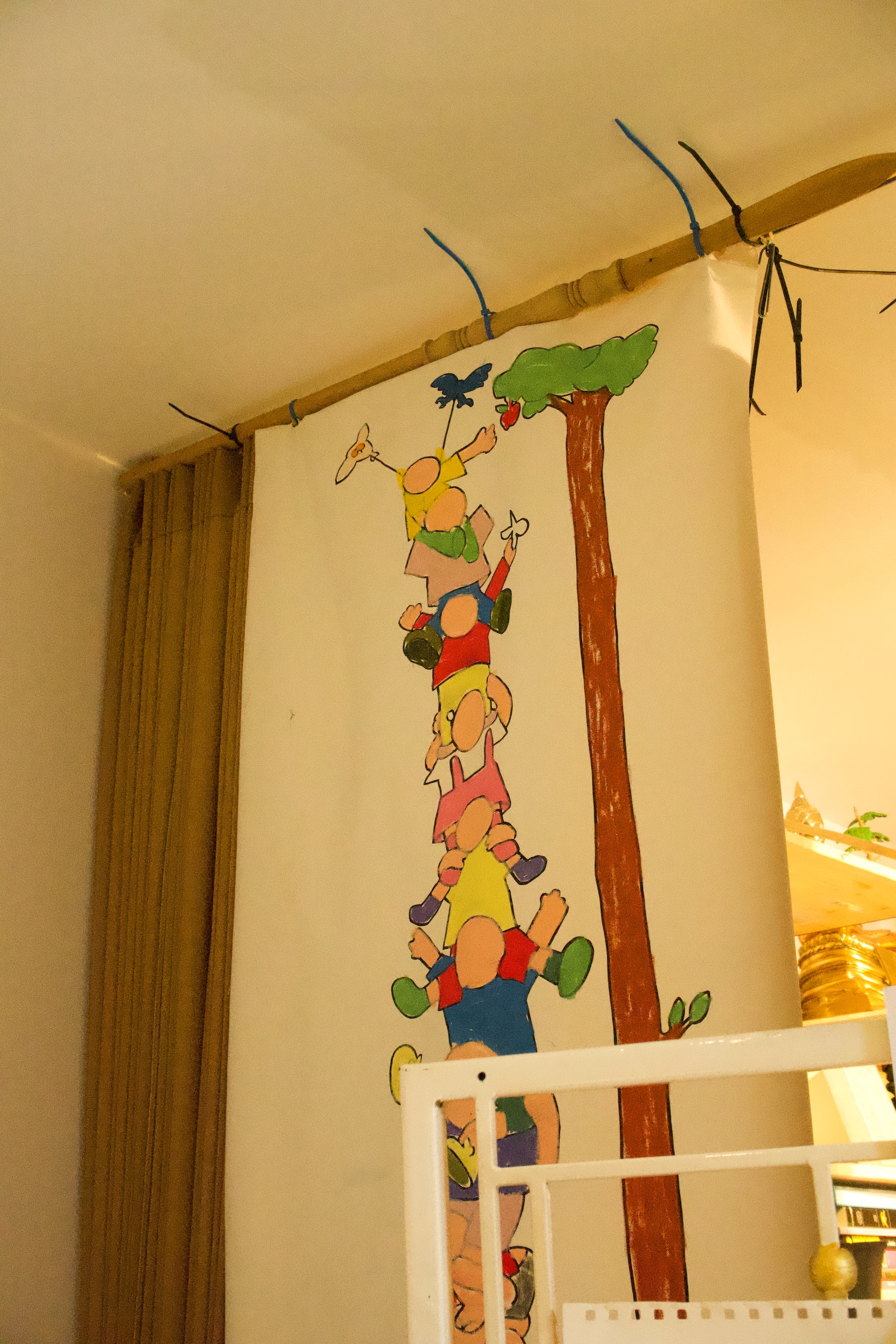
หนึ่งในผลงานสเกตช์ที่องค์ประกอบคุ้นเคยอยู่ครบ เด็ก ต้น ไม้ อีกา คงเพิ่งนำมาแขวนไว้ในห้องได้ไม่นาน คราวก่อนยังไม่เคยเห็นรูปนี้ และห้องก็ไม่จัดแบบนี้
เราอยากให้ลองย้อนไล่ดูว่าประสบการณ์ทำงานกับวงศิลปะร่วมสมัยในประเทศอื่น การได้ไปใช้เวลาทำความรู้จักทั้งคนทำงานและคนดูแม้จะเป็นช่วงระยะเวลาสั้นๆ แต่ละที่ให้อะไรกับนวินบ้าง “เป็นครั้งแรกที่ได้ยินคนพูดว่าซีนที่มาเลเซียจะเป็น collector driven ต่างจากกรุงเทพฯ ที่เป็น artist driven ตอนไปอยู่ที่โชว์ เวลามีคนดูเข้ามาคุยเรื่องงาน บทสนทนาจะถูกลากต่อไปเรื่อยๆ เหมือนมันมีการใส่หมวก critic ในการดูงาน แทนสนใจการทำงานของคนบางรุ่นที่ทำงานกับ private แต่ก็มีความ critical และผลิตวาทกรรมด้วย
ส่วนที่ญี่ปุ่น สิ่งที่สนใจมากๆ คือคนทำงานภัณฑารักษ์ พวกเขาทำอะไรกัน statement ของพวกเขาคืออะไร ความ rational เป็นยังไงในสายงานนี้และด้วยความที่งานภัณฑารักษ์และคนทำหน้าที่นี้มันมีหลายรุ่นชัดเจนก็เลยสนใจด้วยว่ามันมีการส่งต่อ thesis กันยังไง
สำหรับที่สิงคโปร์ เคยฟังคลิปสัมภาษณ์ T.K. Sabapathy และคิดว่าเขาพูดชัดว่าที่สิงคโปร์มันไม่มีพื้นที่ทำงาน หมายถึงไม่มีพื้นที่สำหรับสตูดิโอศิลปิน มันมีแต่พื้นที่สำหรับงานที่คิดมาเสร็จแล้ว คือศิลปินที่เป็นที่รู้จักดีในระดับนานาชาติสามารถทำได้แต่ศิลปินใหม่ๆ หรือ underground ไม่มีที่อยู่ แต่ทั้งนี้ทั้งนั้นการที่ได้ไปในที่เหล่านี้คืองาน GIF พาไปหมดเลย”
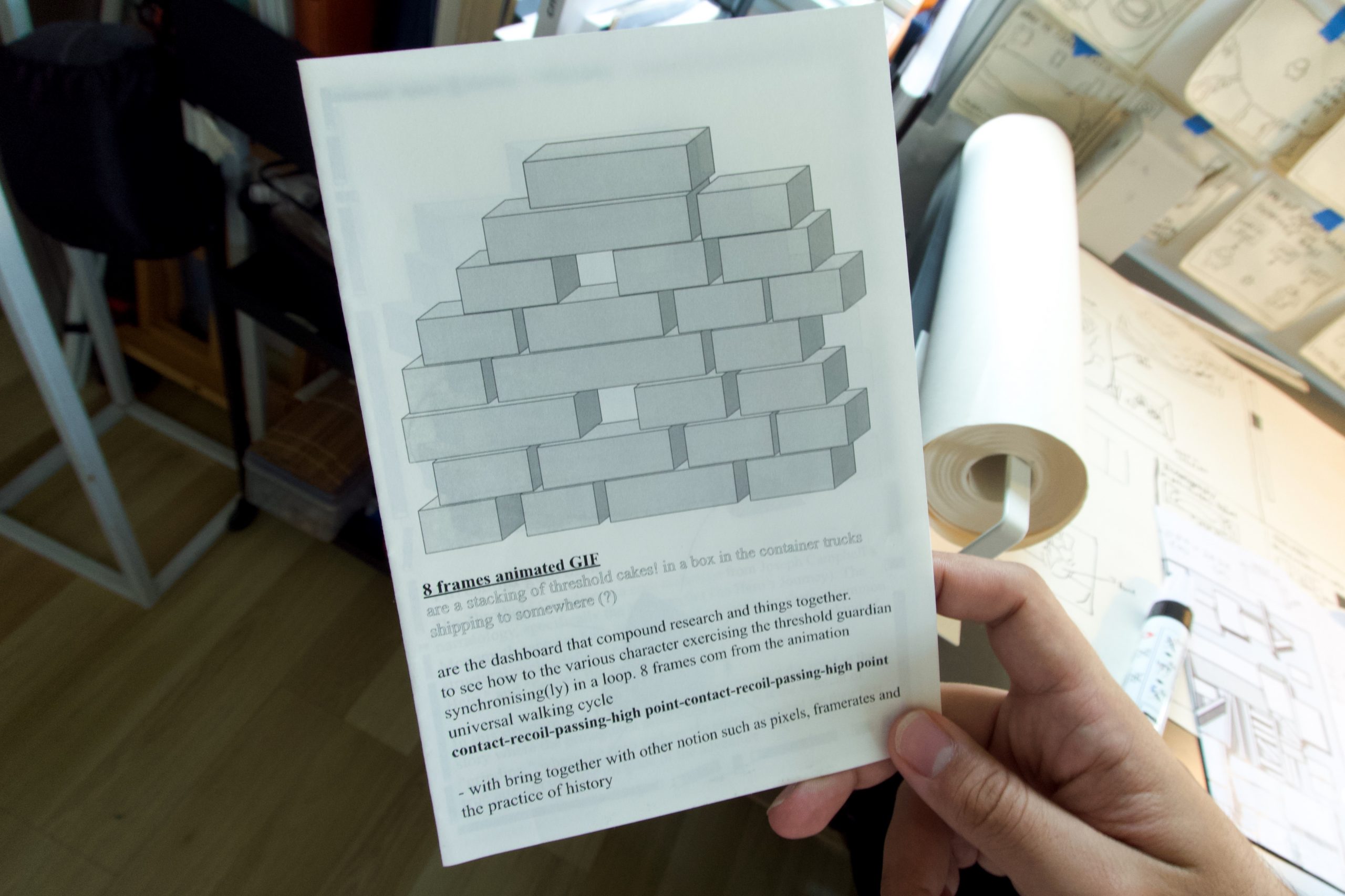
ซีนเล่มล่าสุดที่พิมพ์ออกมาสำหรับนิทรรศการ Site-seeing ที่ฮ่องกง นวินนับเป็นคนที่ทำซีนออกมากค่อนข้างบ่อย บางครั้งเขาก็ใช้เครื่องปริ้นท์ของตัวเองพิมพ์ดิจิทัลบ้าง หรือพิมพ์ริโซกราฟบ้าง
ในการทำงานกับไฟล์ดิจิทัลอย่าง GIF และการทำแคนวาส ความต่างนอกจากพื้นที่ของการทำงานและขนาดของมันแล้ว มันมีอะไรอีกและจุดไหนที่มันคอยดึงให้นวินกลับไปหาสิ่งนี้ “GIF เป็นเหมือน pool of data ที่เก็บรวบรวมหลายอย่าง และในตัวมันเองเป็นเหมือนสื่อที่ช่วยเราตั้งคำถามใหม่ๆ ได้ตลอด และมีความสามารถที่จะ transform ตัวเองไปได้เรื่อยๆ แต่สำหรับการทำเพ้นท์ติ้งคือสิ่งที่ตอนนี้อยากให้เวลากับมันมาก อยากนั่งอยู่ข้างหน้าแคนวาส ซึ่งเรามองมันเป็นกระดานดำ เหมือนวาดเขาวงกต แล้วก็ลองเล่นอยู่ในนั้น ได้เห็นตัวละครแล้วก็เลยวาดเพิ่ม ซึ่งที่ต่างคือมองงาน GIF ที่มัน expressive กว่าแต่แคนวาสมันเหมือนเป็นการออกแบบ มันทำงานเป็นป้าย เหมือนกับเราเดินไปรอบห้องที่มีป้ายขนาดเท่าเดิม แต่งาน GIF คือในตัวมันเองไม่ได้มีเวลา ยิ่งทำยิ่งลายตา ถ้าที่ไม่พอก็คีย์ให้ขนาดมันใหญ่ขึ้น”
ตัวผู้เขียนเองมองว่าคงเป็นที่เข้าใจกันไปโดยปริยายอยู่แล้วว่าถ้าพูดเรื่องมูลค่า ทั้งในฝั่งตลาดและฝั่งวัฒนธรรม งานมีเดียไม่ได้อยู่ในระดับเดียวกันงานเพ้นท์ติ้ง และมันก็ไม่ใช่เรื่องของความน่าเห็นใจหรืออะไรที่ศิลปินต้องทำงานกับหลายวัสดุ หากไม่ใช่คนที่มีระบบของสถาบันศิลปะ (สถาบันที่หมายถึงทั้งระดับบุคคลและองค์กร) มาให้การรองรับ บทบาทของผู้ผลิตงานทางวัฒนธรรมแบบนี้ ไม่ว่าทางใดก็ทางหนึ่งก็คือแรงงานที่ก็ต้องหาทางเอาตัวรอดทางเศรษฐกิจ
อย่างไรก็ตามนวินแชร์เพิ่มเติมว่า “อีกมุมองหนึ่ง จากการที่แทนเป็นคนทำธุรกิจโรงงานมาก่อน ก็เห็นว่าการซื้อขายหรือการทำของสู่ตลาด มันมีอะไรมากกว่าการแลกเปลี่ยน ตลาดมันเต็มไปด้วยเวทมนตร์หลายอย่างที่เราเองก็อยากจะทำงานด้วย และ ก็พยายามที่จะหาคำถามที่น่าสนใจในมันให้ได้ แม้แคนวาสที่เราทำมันไม่ได้ถามคำถามเหล่านั้นโดยตรง แต่ก็หนีไม่พ้น เพราะขนาดของมัน กับอายุการทำงานเราถูกเทียบวัดด้วยไม้บรรทัด จนราคาออกมาโดยการกำหนดของตลาด ส่วนในห้องทำงาน ขนาดเท่าประตู 180 x 66 ซม. ของมัน ก็ถูกเราเปรียบเทียบอยู่ตลอดถึงคำถามที่เราทำลงไปในแต่ละอัน ว่ามันเท่ากันในปริมาตรเนื้อหาหรือเปล่า ประตูบานหนึ่งเป็น single comic ตะโกนการเมือง ส่วนประตูบานข้างๆ ก็เป็น ป่าลึกที่ค่อนข้าง expressive ก็ถูกเราเปรียบเทียบอยู่ตลอดถึงคำถามที่เราวาดลงไปในแต่ละอัน ว่ามันเท่ากันในปริมาตรเนื้อหาหรือเปล่า”
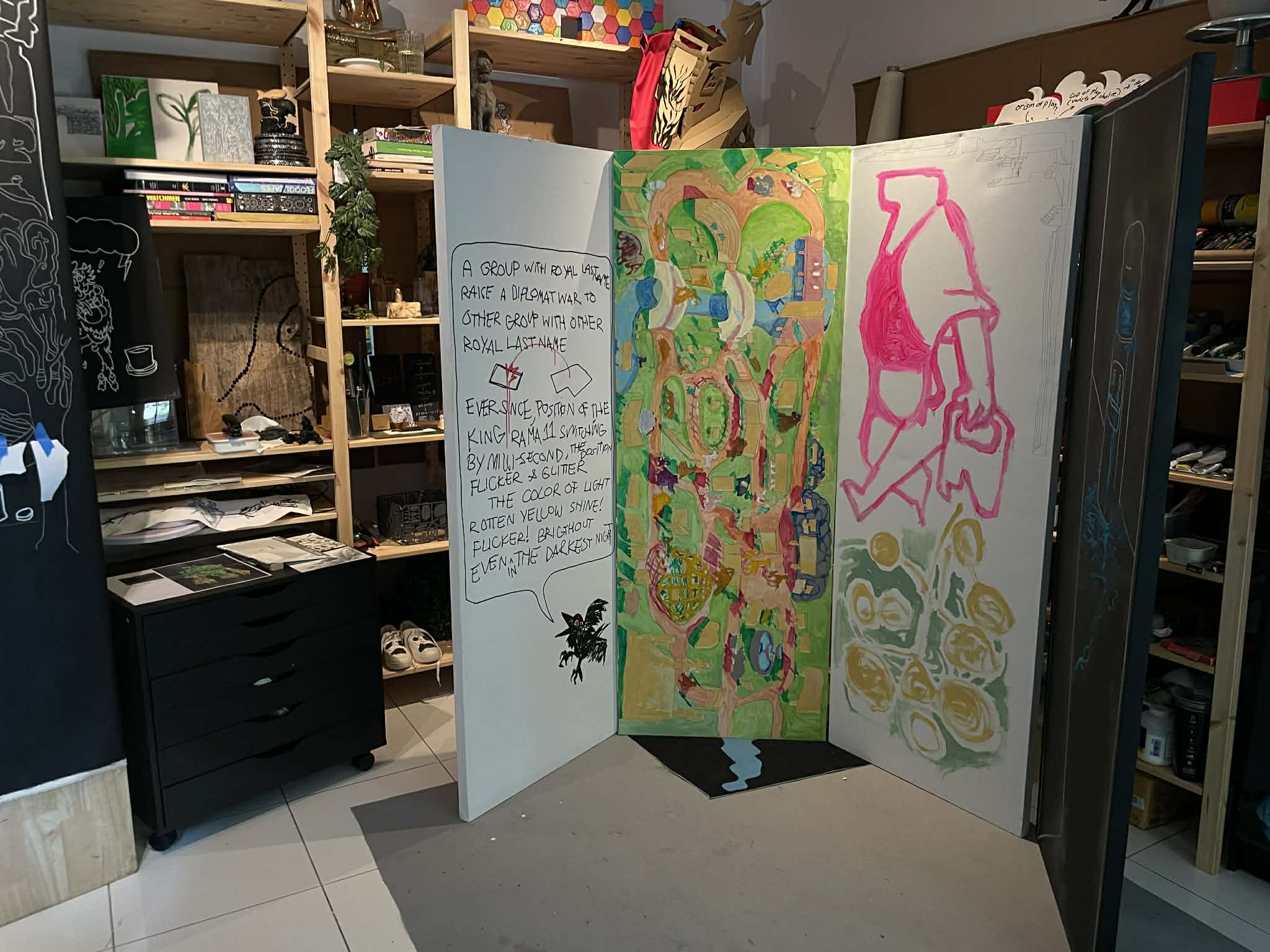
แคนวาสแนวตั้งทรงคล้ายประตูตามที่นวินว่าไว้ อันที่จริงแล้วผู้เขียนเดาว่าเขาน่าจะเสียแคนวาสไปหลายชิ้นอยู่กว่าจะรู้สึกมั่นใจและอยากที่จะนั่งใช้เวลากับมัน แบบที่เป็นอยู่ตอนนี้
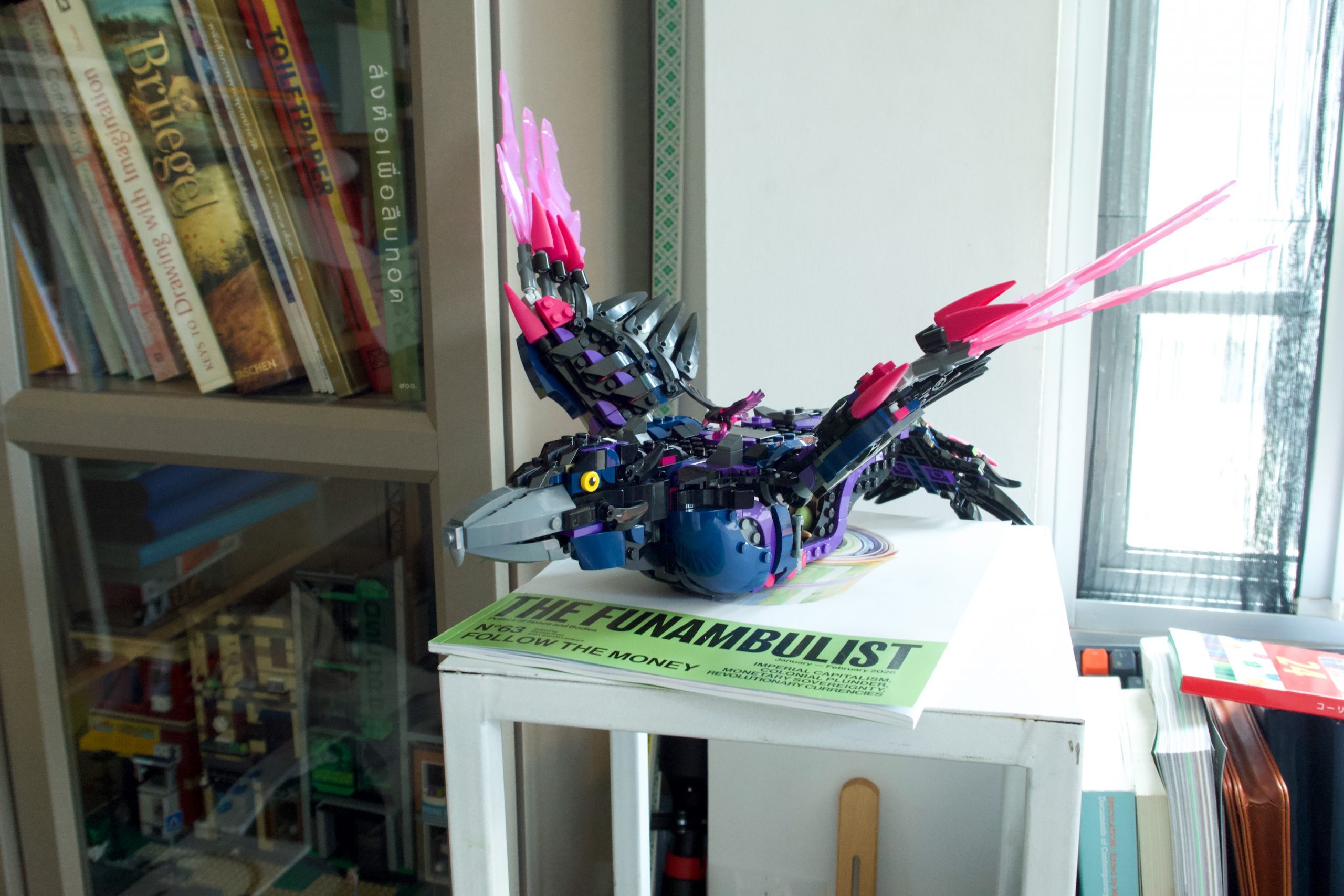
ตัวต่อรูปนกอีกหนึ่งชิ้นในห้องทำงาน ด้านล่างคือนิตยสาร The Funambulist ฉบับนี้ว่าด้วยเรื่องของเงิน ซึ่งคิดว่าคงถูกจริตความอยากรู้ของนวินเลยแนะนำให้อ่านและซื้อกลับไปตอนเจอกันรอบก่อนหน้าที่แกลเลอรี่
-2-
แล้วนวินวางประวัติศาสตร์ศิลป์ไว้ในงานตัวเองยังไงบ้าง “แทนบริโภคมันเยอะ คือโต๊ะตอนเรียนมัธยมพวกเราจะมีเก๊ะเนอะ ของแทนก็จะมีหนังสือเล่มนี้ (Art: The Definitive of Visual Guide) เปิดทิ้งไว้ แล้วหน้านี้ที่วาดโดย Pieter Bruegel the elder จะเปิดบ่อยมาก”
ปากพูดไปพลางมือก็ไล่เปิดหาภาพที่ต้องการจะโชว์ให้ดู หนึ่งในหน้าที่นวินต้องการนั้นเป็นภาพอธิบายความเคลื่อนไหวทางสังคมยุคเรเนซองส์ทางเหนือในศตวรรรษที่ 15 และ 16 “บางครั้งเวลาคนเห็นงานหรือพรีเซนต์แทนจะบอกว่าเห็นว่างานมันเชื่อมโยงกับประวัติศาสตร์ศิลป์ ก็ไม่รู้ว่ามันหมายความว่าอะไร แต่ก็มีสถิติบอกแล้วว่าถ้าศิลปินทิ้งประวัติศาสตร์ศิลป์แล้ว อย่างน้อยความเป็น international มันอาจจะหายไป ในปีนี้แทนได้รับมอบหมายให้คิวเรตงานประวัติศาสตร์ศิลป์ มันทำให้กลับมาคิดอะไรหลายอย่าง 2 คำถามที่ชัดที่สุดคือ เราคาดหวังประวัติศาสตร์ศิลป์ให้ทำงานกับผู้คนอย่างไรได้บ้าง และ ประวัติศาสตร์มันทำงานอย่างไรกันแน่กับคนทำงานศิลปะร่วมสมัย หลายครั้งเราเห็นศิลปะร่วมสมัยอ้างอิง format และ frame จากภาพวาดในหนังสือพวกนั้น มันทำให้ดูสากลขึ้นหรอ? มนตร์และคาถาของประวัติศาสตร์ศิลป์ คืออะไรกัน” ส่วนที่คิดต่อและถามนวินกลับไปก็คือเราไม่ปฏิเสธการมองประวัติศาสตร์ศิลป์ที่ผูกอยู่กับบริบททางประวัติศาสตร์ของตะวันตก แต่ผู้เขียนไม่แน่ใจนักว่าตัวเองเห็นด้วยกับการให้เหตุผลว่ามันเป็น international หรือถ้าเราคนทำงานศิลปะอยากจะคุยกับคนในจำนวนที่กว้างเยอะกว่า การเล่าไปกับกรอบของตะวันตกคือคำตอบเดียวจริงๆ หรือเปล่า และนั่นหมายถึงศาสตร์นี้ เรื่องเล่าของมันเอง จะไม่สามารถหลุดจากตะวันตกหรือเปล่า หรือเราไม่สามารถแยกตัวออกและมีชีวิตใหม่จากสิ่งนี้ได้หรือเปล่า ได้แต่สงสัยกันไปโดยยังไม่ได้มีอะไรแลกเปลี่ยนออกมาแบบที่จับต้องได้
เมื่อคุยมาถึงประเด็นนี้ สิ่งหนึ่งที่ผุดขึ้นมาและลองตั้งสมมติฐานให้นวินฟังคือในฐานะคนดู คือ ที่ทางของประวัติศาสตร์ศิลปะในงานของนวิน แทนที่จะเป็นรูปแบบของตัวชิ้นงานศิลปะเอง ผู้เขียนมองว่ามันคือรูปแบบของสังคม ปฏิสัมพันธ์ของผู้คนที่ตัดสลับกับประเภทของสินค้าอุปโภคบริโภคหรือแม้กระทั่งสิ่งของทางวัฒนธรรมและศาสนา ที่เล่าออกมาภาพบรรดาภาพจิตรกรรมในยุคนั้นและเขาในฐานะคนบริโภคมันก็นำมาเล่าต่อ ยกตัวอย่างเช่น การมี setting ของตลาดหรือสถานประกอบพิธีทางศาสนา เรื่องเล่าที่มีตัวละครเป็นกลุ่มเด็กและหญิงชรา สัญญะในที่นี้คงทำงานผ่านสื่อกลางอีกแบบหนึ่ง ซึ่งเขาก็ดูคิดตามพร้อมกับเล่าเพิ่มว่า “มันจะมีรูปภรรยาที่เปิดไบเบิ้ลทิ้งไว้ ทำท่าเหมือนจะอ่านแต่ตามองไปที่ผัวที่กำลังนับเหรียญอยู่ หมายถึงว่าตลาดมันมาแล้ว เศรษฐกิจในชนชั้นกลางเกิดขึ้นแล้ว ชั้นมีไบเบิ้ลอ่านเองแล้วเราจะต้องการโบสถ์ไปทำไม มันเต็มไปด้วย narrative พวกนี้ที่คิดว่าชอบ”
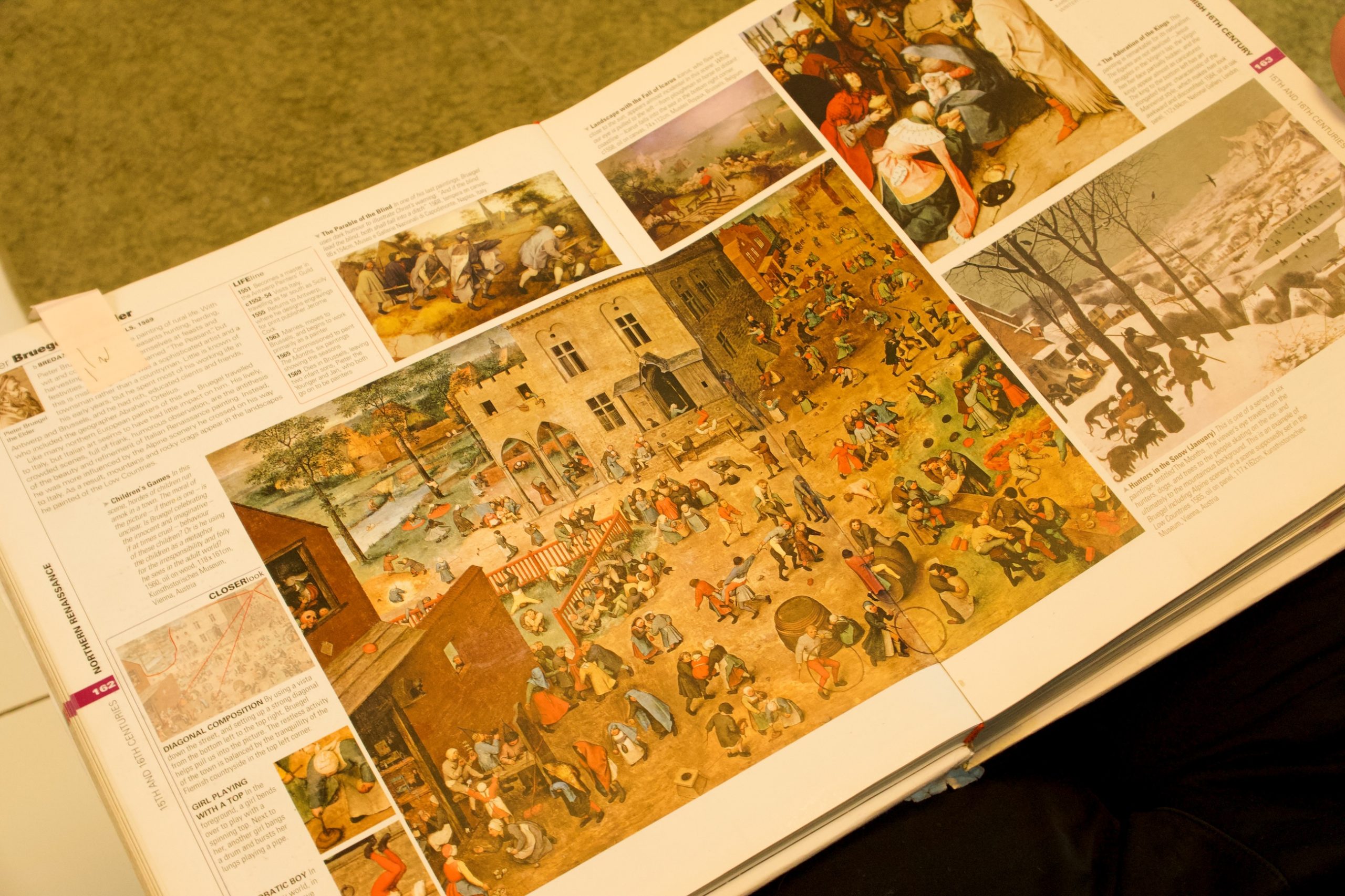
ตัวอย่างงานของ Pieter Bruegel the Elder ที่เขายกตัวอย่างให้ฟัง ดูจากร่องรอยบนหนังสือแล้ว เขาคงจะเปิดมันบ่อยจริงๆ อย่างที่ว่า
มีงานหลายชิ้นหรือเกือบจะทุกชิ้นของนวินที่ผูกกับความเป็นเรื่องเล่าและมีเรื่องเล่าของตัวเอง ไม่ว่าเรื่องพวกนั้นมันเป็นเรื่องเล่าที่ส่งต่อมาในระดับกลุ่มคน หรือจะเป็นเกร็ดของประวัติศาสตร์ที่ถูกถอดรูปใหม่ การเล่าถึงงานของนวิน มันมีทั้งการผสมข้อเท็จจริงในเชิงที่มาที่ไปของเรื่องเล่าและเรื่องแต่งที่เป็นการตั้งสมมติฐานราวกับเป็นการโยนหินถามทางเพื่อที่จะดูว่าเรื่องนี้จะไปต่อในรูปแบบไหน เขามักจะเอ่ยถึงคำบางชุดที่ไม่แน่ใจจริงๆ ว่าเขาให้ความหมายกับคำนั้นอย่างไร และเพื่อไม่ให้บทสนทนาไปต่อโดยที่ความเข้าใจยังไม่ตรงกัน ผู้เขียนเลยขอเบรกและถามถึงคำที่เขาได้พูดไว้ “Cognitive History” ในที่นี้ นวินหมายถึงอะไรกันแน่
“มันคือสิ่งที่คิดว่าอยู่ในงานมาตลอดแต่มันอาจจะเพิ่งมาชัด ต่อจากเรื่องประวัติศาสตร์บนโต๊ะกินข้าวที่เคยเล่า (อ่านเพิ่มเติมได้จากบทความ Nawin Nuthong on Archaeogaming, Dinner Table Histories and Building Multiverses of Curiosity จาก Object Lessons Space) Cognitive History มันกำลังเล่าเรื่องมีเดีย เพราะมีเดียหลายอันมี cognitive ไม่เหมือนกัน เช่น เฟรมเรต 24 ต่อวินาที ภาพสไลด์ หรือการเล่าเรื่องรอบแคมป์ไฟ
ลองมาดูระดับสั้นหลังจากช่วงเวลาโพสต์โมเดิร์นเป็นต้นมา ในสังคมที่ประกอบไปด้วยคนหลายเจนเนอเรชั่น และแต่ละเจนใช้เมีเดียคนละอย่าง เทปคาสเซต บูมเมอร์ใช้เพราะเป็นเทคโนโลยีเดียวที่มี แต่เด็กรุ่นใหม่อาจจะใช้เพราะชอบ มันถูกผลิตมาไม่เหมือนกัน หรือว่าภาพซีเปียที่มีคุณปู่ทวดหน้าบึ้ง ภาพนั้นใช้เวลา 15 นาทีในการถ่าย เพราะฉะนั้นเขาจะยิ้มไม่ได้ แต่ว่าเรากลับรู้สึกว่าคนรุ่นนั้นดุ คือมีเดียมันอยู่รอบตัว ซึ่ง cognitive มาจากส่วนของสมอง มาจากเบ้ารับ อย่างเราไปนั่งดูคนแก่เล่น Playstation 1 แล้วรู้สึกจะเป็น motion sickness หรือเด็กชอบ TikTok มาก รู้สึกว่ามัน haptic มาก
Cognitive มันก็พูดถึงเรื่องนี้แหละ ซึ่งมองว่ามันพยายามทำความเข้าใจโลกทั้งทางมานุษยวิทยาไปด้วยกันกับประสาทวิทยาด้วย มันพูดถึงของที่เป็นตัวกลางของเรื่องเล่า ที่อยู่แบบสะเปะสะปะและไม่ได้เคารพเวลา”
คอนเสปต์และความคิดมากมาย แต่เหมือนนวินก็อดไม่ได้ที่จะเล่าเกร็ดเล็กๆ ให้ฟังเพิ่ม “แทนเคยคุยกับแพม (แพม วิรดา) กับเจ้ (เจแปน – วิจฉิกา อุดมศรีอนันต์) ว่ามันมี conceptual god อยู่นะ หน้าเขาจะเป็นเหมือนเจ้าจีนๆ หน่อยผสมกับ John Baldessari วิธีไหว้เขาก็คือต้องจัดบ้าน ถ้าจัดบ้านปุ๊ปเขาจะมอบ conceptual bless ให้ ซึ่งเราอาจจะงงว่าจะถูก bless ตอนไหนใช่ไหม มันจะมาตอนที่เราทำงานไปแล้วอยู่ดีๆ ก็จะมี element ซ้ำๆ เกิดขึ้นมา แทนก็เลยเชื่อเรื่องความ honest กับ research และการทำมันอย่างต่อเนื่อง”
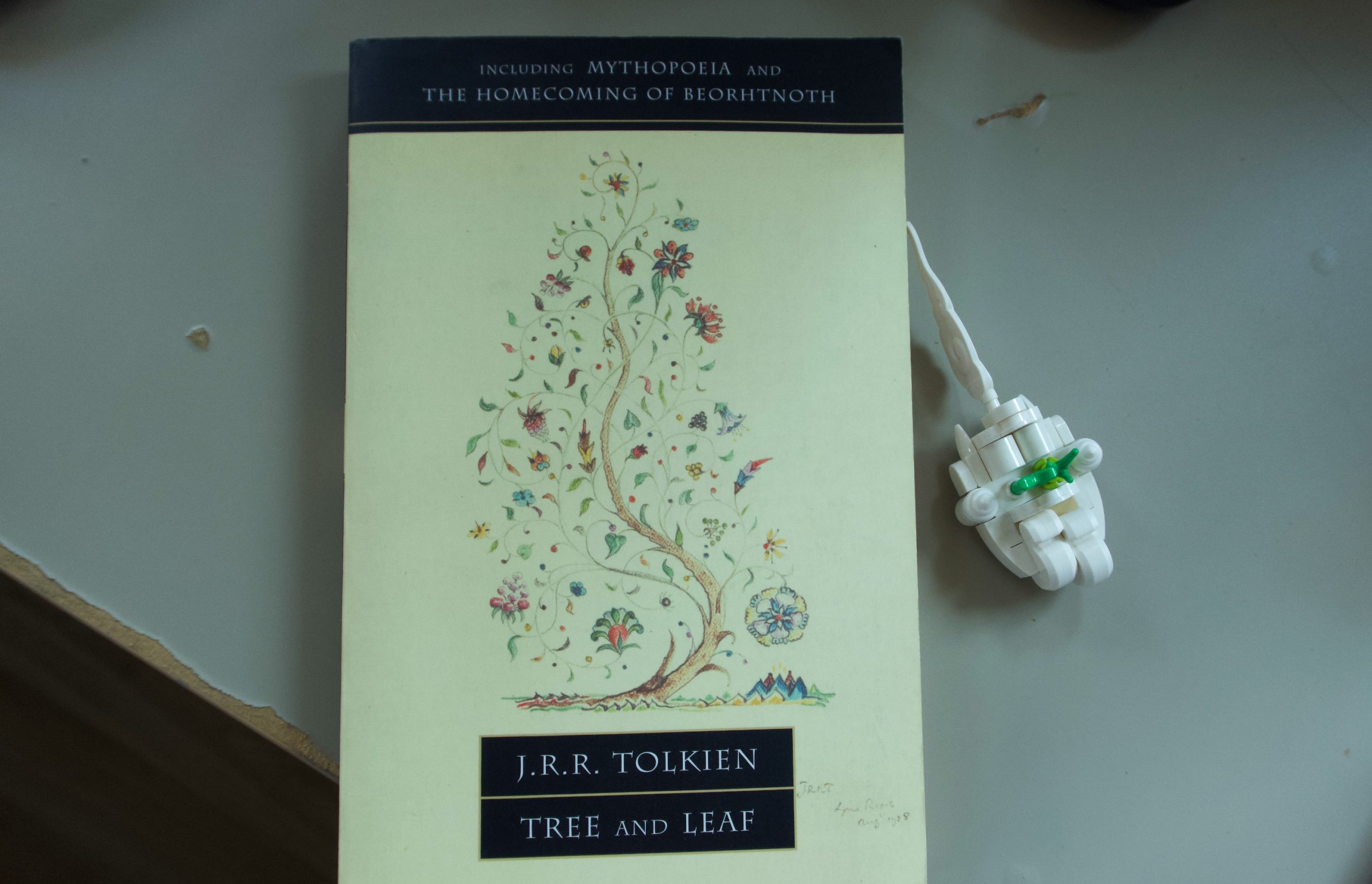
จังหวะที่เขาเล่าเรื่องย่อของเล่มนี้ให้ฟังก็นึกในใจว่า ไม่เสียทีที่เด็กโรงงาน สกิลขายของและการเล่าเรื่องไม่เคยตกชั้น
ผู้เขียนจินตนาการว่าว่าในช่วงเวลานี้นวินมีต้องพัฒนาและผลิตงานหลายโปรเจกต์มาก แต่ก็อยากรู้ว่ามันมีเรื่องอื่นที่เขาเองอยากจะหาเวลาให้มันได้แทรกตัวเข้ามาไหม “ช่วงนี้แทนพยายามจะกลับไปอ่านฟิคชั่น คืองานเขียนช่วง 1890 – 1990 แถวนั้นมันคือ Tolkien (John Ronald Reuel Tolkien) มันคือช่วงคนเพิ่งเห็นว่าเรามาชำระ folklore กันดีกว่า มันจะมีหนังสือเรื่อง Tree and Leaf ของ Tolkien ที่น่าสนใจ มันไม่หนามาก อยากจะแนะนำถ้าอยากจะเข้าใจ default ของเรื่องเล่าที่เรามีอยู่ในทุกวันนี้ คือเล่มนี้มันกลับไปทำความเข้าใจฟิคชั่น ว่าแฟรี่มันเป็นแฟรี่ได้ยังไง แฟรี่มันเกิดในเยอรมันในช่วงที่ตลาดเกิดพอดี เหมือนคนเขียนพยายามจะทำเข้าใจ folklore ที่มันดำเนินมาเช่นเขาอธิบายว่าแฟรี่มันตามกับองค์ประกอบของกลิตเตอร์ ซึ่งมันเป็นความพยายาม tokenize เวทมนตร์”
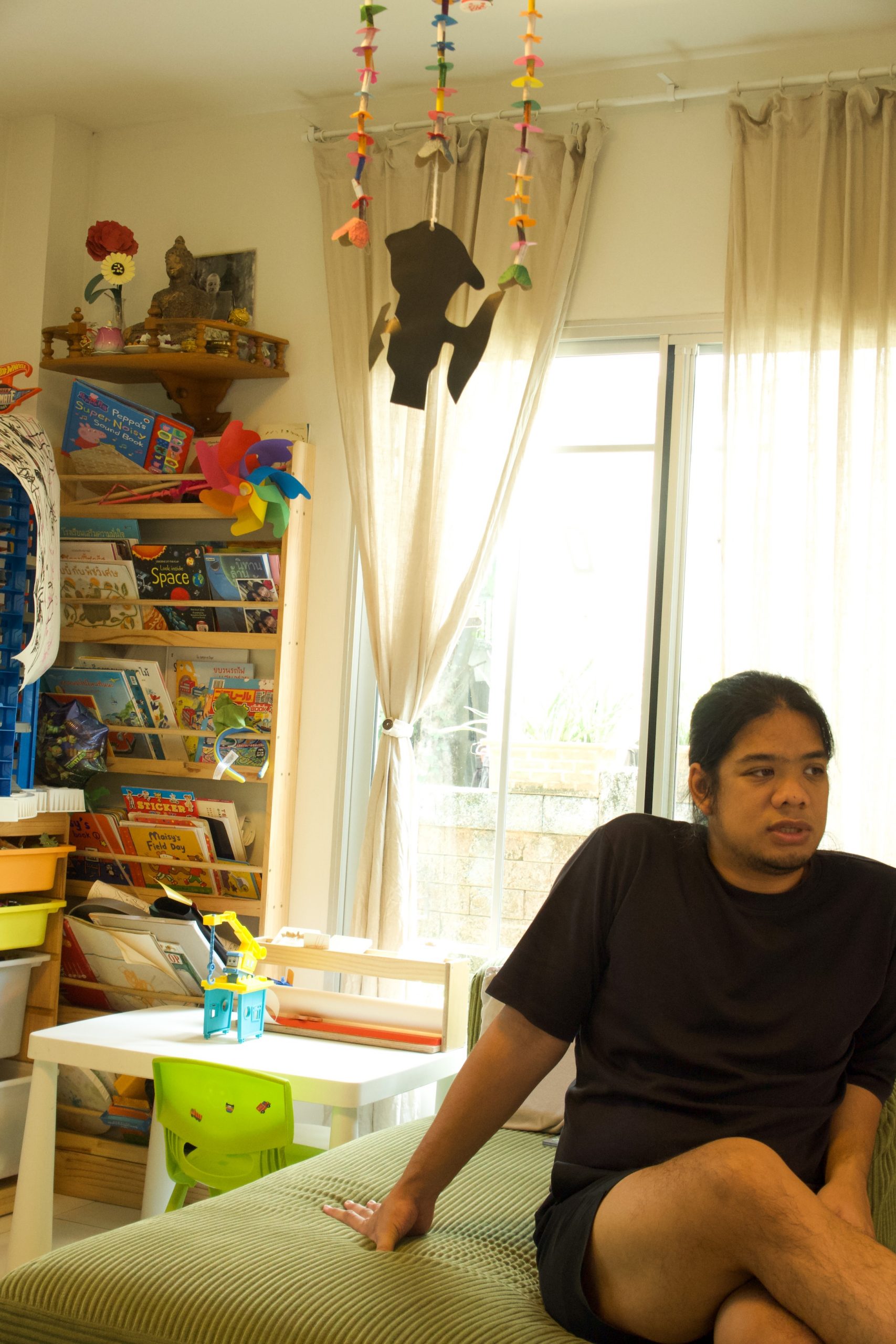
ด้านหลังของนวินเป็นแค่หนังสือเด็กและของเล่นเศษเสี้ยวส่วนหนึ่งที่มีทั้งหมดในบ้าน ด้วยความที่ภรรยาของเขา ณัชนาถ กระแสร์ชล เป็นนักศิลปะบำบัด จึงทำให้หนังสือและของเล่นสำหรับอาจารย์ ลูกชายของพวกเขา มีเนื้อหาหรือองค์ประกอบที่ช่วยเสริมสร้างทักษะทั้งทางกายและทางอารมณ์ที่เหมาะสมสำหรับเด็ก
อ้างอิงจากที่นวินบอกว่าตัวเขาเองต้องอาศัยระยะเวลาในการมองสิ่งที่ทำพอสมควร แม้จะผ่านมาหลายปีแล้วแต่ผู้เขียนก็อยากรู้ว่า จากการทำนิรรศการ Fountain Foundation (2568) ที่บางกอก ซิตี้ซิตี้ แกลเลอรี่ มาจนถึงตอนนี้ที่ได้สั่งสมประสบการณ์ ลงมือทำโปรเจกต์สเกลเล็กใหญ่มาจนอาจจะพอจับทางได้แล้ว เขาคิดว่าสิ่งที่ตนเองสนใจมันขยับขยายไปถึงตรงไหนบ้าง “แทนคิดกับตัวเองเยอะว่าคนได้อะไรจากงาน GIF คนได้ยินอะไรจากงานพวกนั้นแล้วทำไมมันไปได้เอง และเราจะทำงานแบบไหน คือมันยังไม่ได้อะไรสรุป แต่เหมือนกับเราฟังมากขึ้นมากกว่าว่าศิลปะร่วมสมัยมันเป็นอะไรได้บ้าง คนที่วาดรูปเก่งที่สุดเป็น digital painter อยู่ในอุตสาหกรรมทำเกมนิ คนที่เล่นเน็ตเก่งสุดตอนนี้ก็อยู่ในเกมเหมือนกัน แล้วศิลปะร่วมสมัยคืออะไร เพราะมันมีหลาย value มาก เวลาคนมองงาน มันอาจจะมาจากคนที่อิน figurine คนที่อิน sclupture คนเหล่านี้ก็จะบอกว่าชอบงานเรา แต่เขาไม่เคยชอบงาน digital เลย เหมือนทั้งหมดคือการพยายามทำความเข้าใจว่าวิธีการมองหรือทำความเข้าใจงานแต่ละแบบมันเกิดขึ้นได้ยังไง”
-
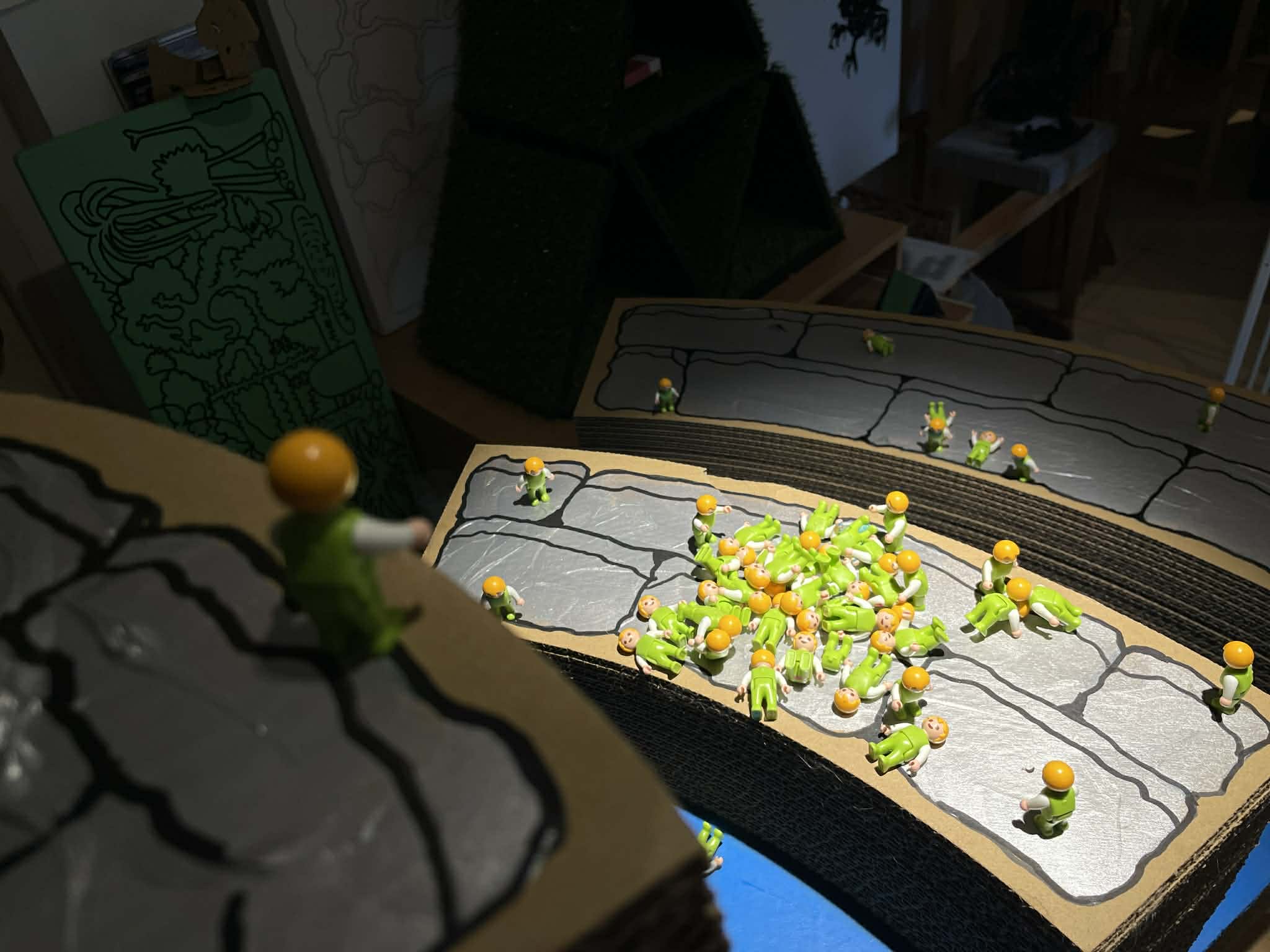
- กองทัพตุ๊กตาเด็กกองกันอยู่บนชิ้นส่วนของน้ำพุที่ทำจากกระดาษลัง
-
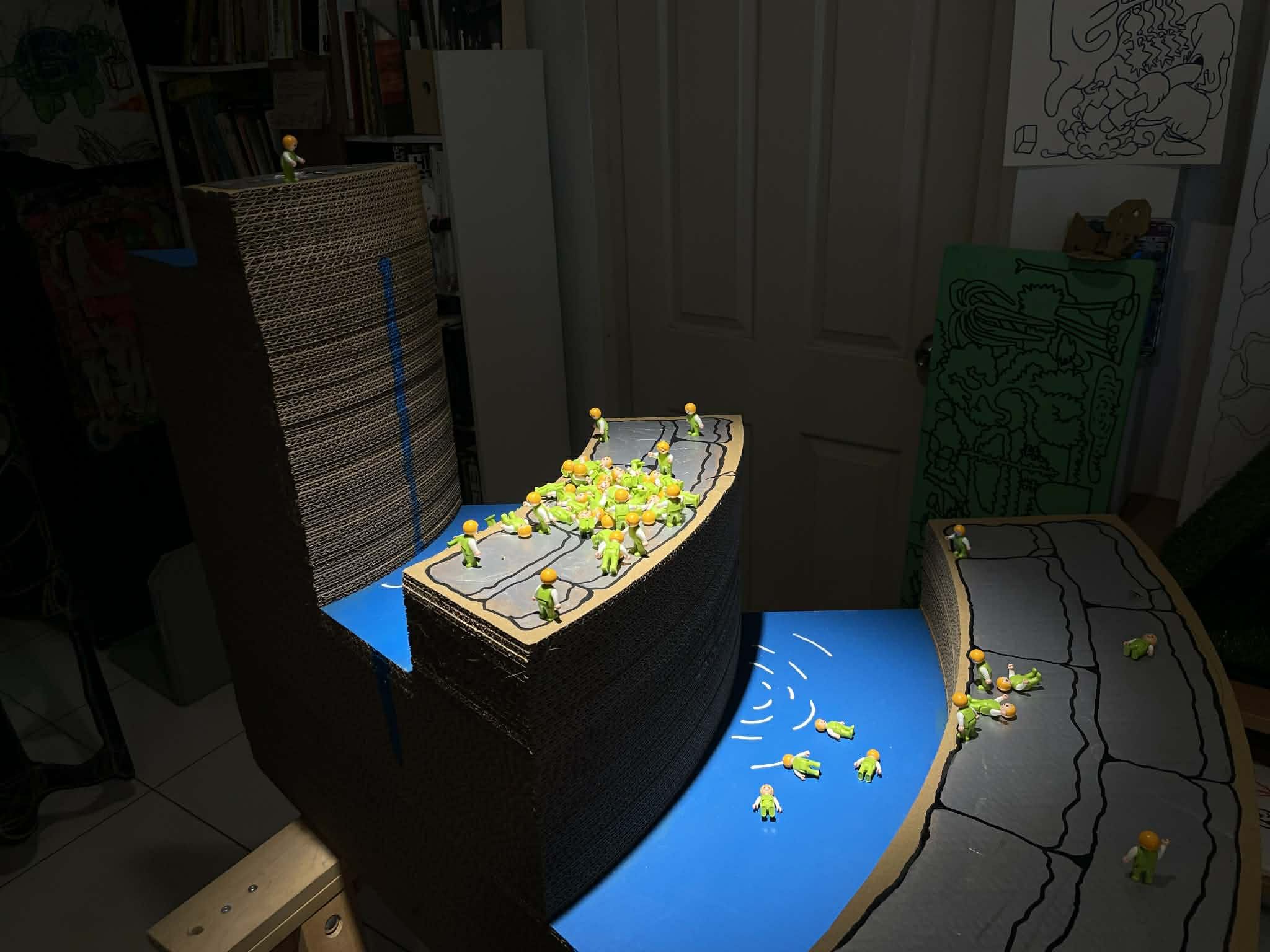
- ความเป็นจริงก็คือนวินบอกว่าอยากให้มีอยู่ในเนื้อความพราะอยากให้รู้ว่ายังคงคิดกับน้ำพุเรื่อยๆ
≋-≋-≋-≋-≋-≋-≋-≋-≋-≋-≋-≋
Interview and photograph by Kantida Busaba
At times, describing Nawin Nuthong as a storyteller who works with art might, perhaps, be easier to grasp than simply calling him an artist. This conversation looks back and revisits his interests, and where those interests situate themselves within what he is currently doing.
..
Early cinema
ritual
stage
Possible scenarios
Civic imagination
“hope & curiosity”
….
Above is a selection of keywords taken from my own notes app on a mobile phone, saved under the file name “NN,” an abbreviation of Nawin Nuthong’s full English name. This file remains fairly active, as it is used to jot down ideas, ongoing thoughts, as well as questions that one is not sure will ever be fully understood. I have to admitted that in the early days around six or seven years ago, talking about art with Nuthong required a certain kind of energy that a final-year university student myself cannot do very well. Asking him questions at the time—when he was wearing the hat of a curator, while also being part of the Speedy Grandma collective, and at the same time taking on the role of a screen factory owner out of life’s necessities made it seem, from a distance, quite difficult for him to divide his time and dedicate it to artistic practice.
In those earlier conversations, I often found themselves being asked in return about my own interests, practice, my ways of engaging with art, and also my experiences within various contexts both as a viewer and as a student of art history. Even now, there are still questions that remain difficult to answer clearly. However, one thing gained from these exchanges and something that I hopes to develop as a personal skill is the ability to respond with questions and to carry the conversation forward.
That said, in this interview after being asked to review the text—Nuthong couldn’t help but tease himself, saying that his questions were scattered, driven only by a kind of curios engine…
-1-
The last time I met Nuthong, he was preparing work for the group exhibition Site-seeing (2026) at Para Site in Hong Kong. This time at his home/studio, the workspace size remains the same, but the stuff keeps piling up like experimental items from research for upcoming projects, remnants from past ones, books crammed into overflowing shelves throughout the room (or really, almost the whole house), shared with a vast collection of toys both his own and his young son’s, Ajahn, who’s growing up just like his dad, with increasing responsibilities as an artist.
“Once I began working and exhibiting in what might be considered global art spaces, I tried to make sense of them. What interested me was what tends to emerge repeatedly in those contexts—how these rather subjective notions of artistic value circulate and take shape there. It’s not only about what a work communicates to whom, but also what the work itself is saying. And at the same time, what are my own interests? What, really, is this whole idea or framework of value?”
“I’ve shared with some people before that it takes a year or two to know if I like or feel anything about the work that I’ve done. Because I often formulate the questions about the content and I explore through making. Looking back feels like seeing traces or evidence of my own struggles questioning within those pieces “
Looking back on your experiences working within contemporary art scenes abroad, having spent even a short time getting to know both practitioners and audiences then my question might be: what did each place offer you?
“It was my first time hearing someone say that Malaysia’s art scene is collector-driven, unlike Bangkok’s, which is artist-driven. While I was there at exhibitions, when viewers came in to talk about the work, the conversations would keep unfolding, as if they were putting on a critic’s hat when engaging with art. I was also interested in observing how some practitioners working within the private sector still maintain a critical stance and continue to produce discourse. In Japan, what fascinated me most was curatorial practice like what exactly do curators do? What are their statements, and what kind of rationale operates within this field? With clearly defined generational layers among curators there, I became interested in how theses or ideas are passed down across generations. As for Singapore, I once watched an interview with T.K. Sabapathy, and I think he put it very clearly: there is no working space there. There are no artist studios, only spaces for finished works. Well-established international artists might be able to manage, but emerging or underground artists have nowhere to stay.
Ultimately, all of these opportunities to travel came through GIF works.”
On working with digital files like GIFs and canvas beyond space and scale differences, what else draws him back? “GIFs are like a pool of data collecting everything, a medium that lets you ask new questions endlessly and transform itself. But painting is the thing that I wanted to devote my time to. I wanted to be in front of canvas. It is like a chalkboard for me. I’m drawing mazes, playing in them, adding characters as they appear. GIFs feel more expressive, canvas more designed like signs. You walk around a room of same-sized signs. GIFs have no fixed time; they dazzle the eyes more. If it’s not enough, I can just add more layers so the bigger canvas is.”
It’s probably already understood that, in terms of both market and cultural value, media-based works don’t occupy the same position as painting. And this isn’t about sympathy, nor about artists choosing to work across multiple mediums. Without the support of institutional structures whether at the level of individuals or organizations, cultural producers like artist inevitably become a kind of labor that must find ways to sustain themselves economically. “From another perspective, drawing from my background in factory business, I see that buying and selling—bringing things into the market is about more than simple exchange. The market is full of its own kinds of magic, which I’m interested in working with, in trying to locate compelling questions within it. The canvases I make don’t directly pose those questions, but they can’t escape them either. Their size and even the span of our working lives ends up being measured against a kind of ruler, until a price is assigned by the market. In the studio, works sized like doors at 180 × 66 cm are constantly being compared. I find myself asking whether the questions embedded in each piece carry an equivalent ‘volume’ of content. One panel might be a single political comic, loudly declarative; the next, a deeply expressive forest scene. And yet they are still measured against each other: do they hold the same weight of meaning?”
-2-
What about Art History? How does Nuthong position Art History within his work then? “I consume it a lot. Back in high school, I had a desk with a compartment, and I always kept this book in it [Art: The Definitive Visual Guide], usually left open to this page by Pieter Bruegel the Elder.”
As he speaks, he flips through the book to find the page he wants to show. One of the spreads he points to illustrates social movements during the Northern Renaissance in the 15th–16th centuries. “Sometimes when people see my work or presentations, they say it connects to art history which I’m not sure what that really means. But there are statistics suggesting that if artists abandon art history, at the very least, their sense of ‘internationality’ might diminish.
This year, I was invited to curate an exhibition related to art history, and it made me rethink many things. Two key questions emerged: What do we expect art history to do in relation to audiences? And how does it actually function in relation to contemporary art practitioners? Like, we often see contemporary art borrowing formats and frames from images in those books. Does that make it more universal? What is the real magic or spell of art history?”
That may be true from one perspective but does that mean this field, and its narratives, cannot move beyond the West? Or that we cannot break away from it and begin anew? I wonder.
At this point in the conversation, I shared with him my tentative thought from the position of a viewer: in Nuthong’s work, art history may not operate through formal styles, but rather through social forms, through human interactions interwoven with consumer goods, as well as cultural and religious objects. These are retold through imagery drawn from paintings of earlier periods, which he consumes and re-narrates. For instance, recurring settings such as marketplaces or religious rituals, and characters like groups of children or elderly women, seem to function as narrative devices. Nuthong follows this line of thought and adds “There’s an image of a wife with a Bible open in front of her as if she’s reading but her eyes are on her husband, who’s counting coins. It suggests that the market has arrived, that a middle-class economy has emerged. If they can own and read a Bible themself, why would they still need the church? I’m drawn to these kinds of narratives.”
Many or actually all of his works are closely tied to storytelling whether in the form of tales passed down within communities or fragments of history that have been reinterpreted. The way he speaks about his work blends factual origins with speculative elements, as if testing possibilities like throwing out a stone to see how the path ahead might unfold.
At times, he introduces certain terms without fully clarifying what he means by them. To avoid misunderstanding, I pause our conversation to ask him to elaborate on one in particular: “Cognitive History”, what does it mean in his own terms? “It’s something that has always been present in my work, but perhaps only recently become more explicit. Following on from the idea of ‘dinner-table histories’ [as discussed in Nawin Nuthong on Archaeogaming, Dinner Table Histories and Building Multiverses of Curiosity by Object Lessons Space], Cognitive History is about narrating media—because each medium carries a different kind of cognition. For example: 24 frames per second in film, slide projections, or storytelling around a campfire, each operates through a distinct cognitive mode.
If we look more recently, since the postmodern period, society is made up of multiple generations, each engaging with different media. Cassette tapes, for instance, boomers used them because they were the only available medium, while younger generations might use them for aesthetic reasons. The same object, but with entirely different purposes. Or take those sepia photographs of a great-grandfather who never smiles. Those images took fifteen minutes to capture, so of course he couldn’t smile. Yet we often interpret people from that generation as stern. Media is everywhere, and cognition comes from how our brains receive and process these forms. For example, watching older people play PlayStation 1 games might make us feel motion sickness, while children are drawn to the haptic, immersive feel of TikTok.
Cognition, in this sense, is about trying to understand the world through both anthropology and neuroscience. It looks at the mediums through which stories are told, fragmented, scattered, and unconstrained by linear time.”
Concepts abound, but another Nuthong tiny tales bubble up. “I once talked with Pam (Pam Virada) and Je (Japan – Vichchika Udomsrianan) that there’s a conceptual god who has a Chinese deity face mixed with John Baldessari. I have to worship him by tidying the studio and then he will grant a conceptual blessing. You might ask how we can know that we got blessings from him. Well, it actually comes when you see some elements keeping on repeat. This is also the reason why I do believe in honesty, research and continuity.”
Understanding that he is currently occupied with developing and producing multiple projects, I wonder if there is still room for other pursuits. “Recently, I’ve been trying to return to reading fiction. There were particular works from around 1890 to 1990, which you could think of as the Tolkien era. It was a period when people began to consciously revisit and systematize folklore.
There’s a book by Tolkien, Tree and Leaf, which I find interesting and would recommend if you want to understand the ‘default settings’ of the narratives we inherit today. For instance, how fairies came to be understood as fairies. The figure of the fairy emerged in Germany around the same time that market economies were developing. It feels like Tolkien was trying to understand how folklore continues and evolves like when he describes fairies as being associated with elements like glitter, as a way of ‘tokenizing’ or materializing magic.”
Referring back to what Nuthong mentioned earlier that it takes time for him to fully process his own work. Even though some time has passed, I am curious where he now locates his interests following his second solo exhibition, Fountain Foundation (2025) at BANGKOK CITYCITY GALLERY. After accumulating experience through both small- and large-scale projects, perhaps he has begun to find his bearings. “I often ask myself what people actually get from my GIF works like what they are hearing from them, and why they seem to sustain themselves the way they do. And what kind of work I should be making. There’s still no definitive answer, but it feels like I’m becoming more attuned to what contemporary art can be. The best painters today are digital painters working in the game industry; the most advanced programmers are there as well. So what, then, is contemporary art? It operates across so many different value systems. When people respond to my work, some come from backgrounds in figurines or sculpture they say they like my work, even though they’ve never been interested in digital art at all. In the end, it feels like I’m trying to understand how different modes of perception are formed and how each way of seeing and understanding emerges.”